ドラゴンボール超 ブロリー
"A new adventure to become the strongest begins."
Dragon Ball Super: Broly - Ending Explained
⚠️ Spoiler Analysis
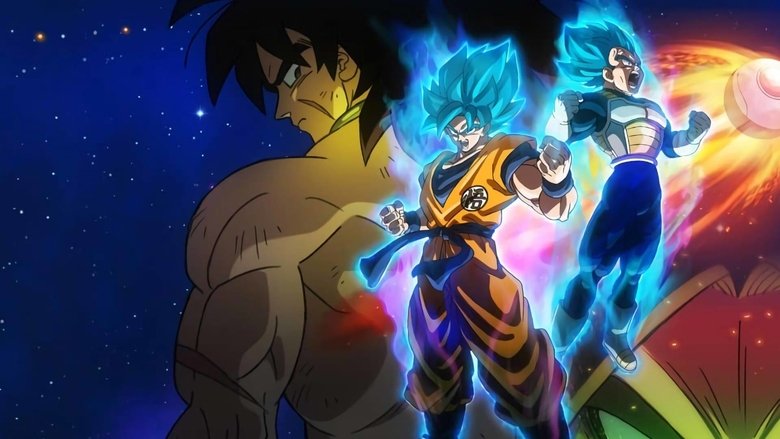
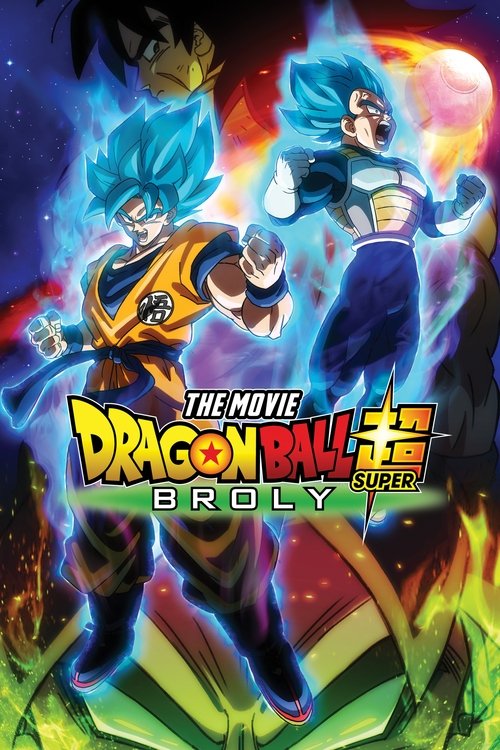
The plot of Dragon Ball Super: Broly culminates in a battle of unprecedented scale. As Broly's power grows exponentially through his fights with Vegeta and then Goku, he quickly surpasses their Super Saiyan Blue forms. Frieza, seeking to push Broly even further, murders Paragus, which triggers Broly's emotional trauma and causes him to transform into a Legendary Super Saiyan. In this state, Broly is an uncontrollable force of destruction, overwhelming both Goku and Vegeta completely.
Realizing they cannot win alone, Goku and Vegeta retreat to Piccolo's location. There, Goku teaches a reluctant Vegeta the Fusion Dance. After two comical failed attempts (resulting in the fat and skinny forms of 'Veku'), they successfully merge into the supremely powerful warrior, Gogeta. Gogeta returns to the battlefield and engages Broly in a dimension-shattering fight. As Gogeta, in his Super Saiyan Blue form, prepares to deliver a final, lethal Kamehameha to the defeated Broly, Cheelai uses the Dragon Balls she had collected to wish for Broly to be sent back to the planet Vampa, saving his life. The hidden meaning in this climax is the triumph of empathy over pure power. While Gogeta's strength was necessary to stop the rampage, it is Cheelai's compassion that provides the ultimate resolution, breaking the cycle of violence. The film ends with Goku visiting Vampa, not as a victor, but as a potential friend, offering to help Broly learn to control his power. Goku's request for Broly to call him by his Saiyan name, 'Kakarot', signifies his acceptance of his own heritage and his recognition of Broly as a fellow Saiyan, not an enemy, setting a new, positive trajectory for a character once defined by pure rage.
Alternative Interpretations
While the film's primary interpretation is quite direct, several fan theories and alternative readings offer different perspectives:
- Broly as a symbol of repressed trauma: One interpretation views Broly's uncontrollable rage not just as a Saiyan trait, but as a physical manifestation of his lifelong abuse and trauma. His transformations are seen as dissociative episodes, where he loses his sense of self due to the immense emotional pain inflicted by his father. His eventual calming down at the end is therefore not just a defeat, but the beginning of a healing process now that his abuser is gone.
- Broly's Wrath State as a canonical Super Saiyan 4: A popular fan theory posits that Broly's green-tinted 'Wrathful' form, which channels the power of a Great Ape in his humanoid state, is Akira Toriyama's official reinterpretation of the Super Saiyan 4 transformation from the non-canonical Dragon Ball GT. Both forms draw on the primal power of the Oozaru, have distinct visual cues (like altered eye color), and grant immense strength, leading fans to believe this is a canonical nod to the beloved GT-exclusive form.
- The film as a critique of Saiyan culture: Some viewers interpret the film as a critique of the hyper-masculine and power-obsessed culture of the Saiyans. King Vegeta's actions are driven by pride and fear of being surpassed, while Paragus embodies the toxic desire to achieve greatness through his child, regardless of the cost. Goku's eventual friendship with Broly represents a new, more empathetic path forward for the Saiyan race, one that values connection over pure strength and dominance.