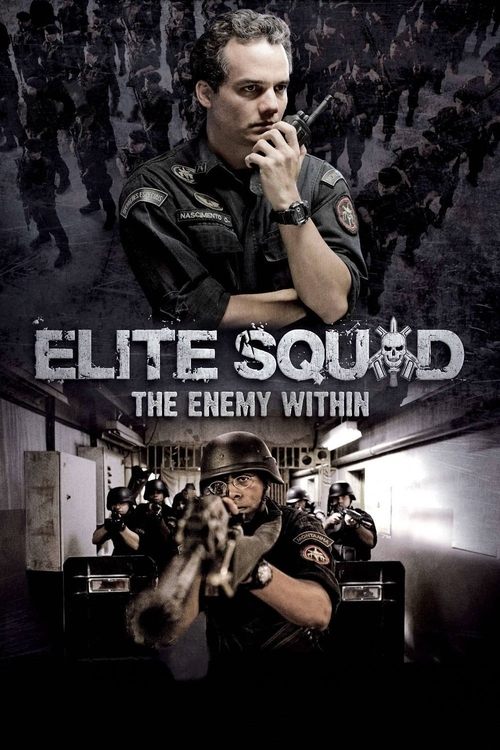
Tropa de Elite 2
Director: José Padilha
Cast: Wagner Moura, Irandhir Santos, André Ramiro, Pedro Van-Held, Maria Ribeiro
Elite Squad: The Enemy Within — Movie Quotes
Memorable Quotes
O inimigo agora é outro.
Context
This is a recurring idea in Nascimento's narration as he pieces together the new power structure in Rio after his crackdown on the drug trade inadvertently creates a vacuum for the militias to fill.
Meaning
Translated as "The enemy is now another," this line is the film's original subtitle and its core thesis. It signifies the shift in Nascimento's understanding of the conflict, from a war against drug dealers to a battle against a corrupt political system and the militias it fosters.
O sistema é foda, parceiro.
Context
This line is delivered in Nascimento's voiceover, often after he has witnessed a setback or a new level of political depravity, summarizing his growing disillusionment throughout the film.
Meaning
Translated as "The system is a motherfucker, partner." This quote encapsulates Nascimento's ultimate realization of the scale and complexity of the corruption he faces. It's a statement of cynical resignation, acknowledging that "The System" is an impersonal, pervasive, and seemingly unbeatable force.
Um policial não puxa o gatilho sozinho.
Context
Nascimento says this during a confrontation, likely with a politician or Fraga, to explain that the violence on the streets is a symptom of a much deeper political disease.
Meaning
"A cop doesn't pull the trigger by himself." This statement reflects Nascimento's matured understanding of responsibility. He realizes that a police officer's actions are the final result of a long chain of political decisions, media pressure, and systemic failures. It's his argument against blaming individual officers for a problem created and sustained by politicians.
Explore More About This Movie
Dive deeper into specific aspects of the movie with our detailed analysis pages