
シン・エヴァンゲリオン劇場版:||
"Bye-bye, all of EVANGELION."
Evangelion: 3.0+1.0 Thrice Upon a Time - Easter Eggs & Hidden Details
Easter Eggs
The final battle between Shinji and Gendo takes place on a series of elaborate sets, including a perfect recreation of Misato's apartment and the Tokyo-3 cityscape from the original TV series, which are then physically deconstructed to reveal they are on a film soundstage.
This is a major meta-reference to the entire franchise. By showing the environments as literal film sets, Anno breaks the fourth wall, acknowledging the fictional nature of the story and signaling his and the audience's departure from it. The inclusion of cameras operated by PlayStation controllers is a nod to the actual production techniques used by Studio Khara.
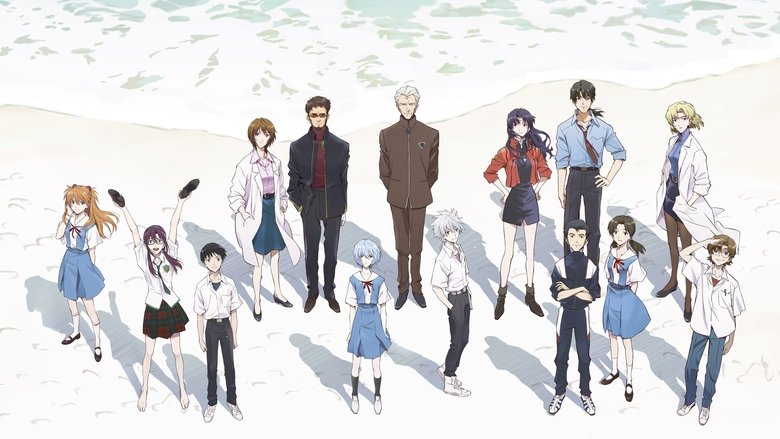
Asuka's final scene with Shinji takes place on the same desolate beach from the infamous ending of 'The End of Evangelion' (1997).
This directly references and provides a new, healthier resolution to one of the most debated endings in anime history. In 'The End', Shinji and Asuka are left in a state of ambiguous hostility. Here, Shinji offers her closure and a gentle goodbye, signifying growth and rewriting a painful moment from the past.
During the final montage of the new world, there is a subtle cameo of a poster for 'Nadia: The Secret of Blue Water', one of Hideaki Anno's earliest directorial works.
This is a fun nod to Anno's long and influential career, placing 'Evangelion' within the broader context of his creative history as he bids farewell to the franchise.
The name of the ship Misato commands, the AAA Wunder, is a reference to the German term for "wonder" or "miracle," fitting for a vessel designed to combat god-like beings.
This continues the series' tradition of using German terminology for its military hardware and organizations, adding to the world's unique aesthetic and lore.