墮落天使
"The night's full of weirdos."
Fallen Angels - Ending Explained
⚠️ Spoiler Analysis
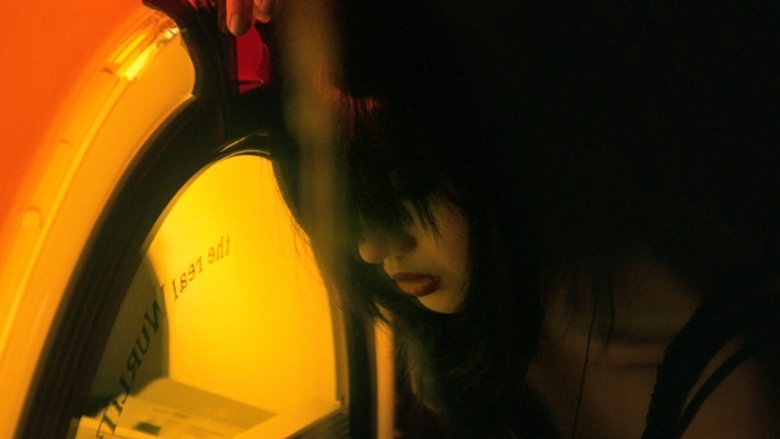
The narrative of Fallen Angels culminates in the tragic intersection of its characters' desires and fatalistic paths. Wong Chi-Ming (the Hitman) ultimately decides to quit the assassination business to regain his agency. He meets his Agent face-to-face in a cafe, leaving her a coin for the jukebox to play the song 'Forget Him,' definitively signaling the end of their partnership and rejecting any potential romance.
Devastated and vindictive over this unspoken rejection, the Agent arranges one final, impossibly dangerous job for him. Wong Chi-Ming takes the job, fully aware it might be a setup. In a hyper-stylized, slow-motion shootout, he is gunned down. His death is an existential paradox: he finally made a choice for himself, but that choice led directly to his demise.
Meanwhile, He Zhiwu (the mute ex-con) runs into Charlie months after her heartbreak. She is now dressed as a normal corporate professional and completely ignores him, pretending not to know him or remember their midnight adventures. Heartbroken but resilient, He Zhiwu accepts that their connection has expired.
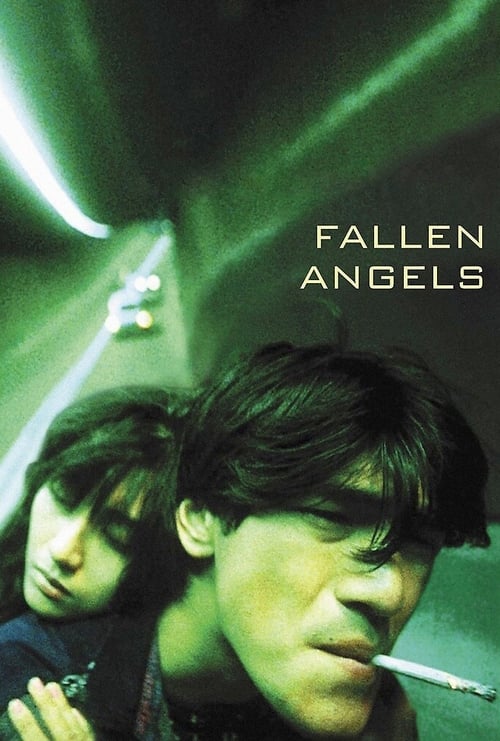
In the final scene, the grieving Agent seeks refuge in the late-night diner where He Zhiwu now works. He offers her a ride home on his motorcycle. The film ends on a strangely uplifting, bittersweet note: as they ride through the cross-harbor tunnel, the Agent leans her head on He Zhiwu's back. She acknowledges that the ride will end soon, but for this brief, fleeting moment, she feels genuine warmth. The film's ultimate twist is its thematic resolution: permanence is impossible, but transient moments of connection are enough to survive the night.
Alternative Interpretations
The Purgatory Reading: Some critics interpret the distorted, exclusively nocturnal Hong Kong of Fallen Angels as a literal or metaphorical purgatory. The characters are 'fallen angels' trapped in endless loops of repetition—the Hitman repeating assassinations, the Agent repeating her voyeuristic rituals, and He Zhiwu repeatedly breaking into stores. The extreme wide-angle distortion creates a dreamlike, unearthly atmosphere, suggesting these are lost souls who cannot ascend until they make a genuine connection or embrace death.
The Handover Allegory: The film is frequently read as a sociopolitical allegory for the 1997 handover of Hong Kong to China. The characters' lack of agency, profound displacement, and desperate search for identity mirror the anxieties of Hong Kong citizens transitioning from British to Chinese rule. The Hitman's desire to quit but ultimate tragic fate can be seen as a pessimistic view of the city's future, while the fleeting warmth found by the Agent at the end suggests a need to embrace temporary comforts amid inevitable, uncontrollable change.
The Metacinematic Dream: Another interpretation posits that the characters are projections of Wong Kar-Wai's own filmmaking process, existing in a shared metacinematic universe with Chungking Express. Wong himself stated the characters are 'inter-reversible.' He Zhiwu might literally be Cop 223 from the previous film, having suffered a mental break. The constant presence of the camera, the voiceovers, and the direct addresses to the audience break the fourth wall, implying the characters are aware they are performing in a tragic spectacle.