Farewell My Concubine
An operatic historical drama's tragic crescendo, painting a half-century of Chinese turmoil through the unrequited love between two performers whose stage identities bleed into reality.
Farewell My Concubine

霸王别姬

"The passionate triangle of two lifelong friends and the woman who comes between them!"

01 January 1993 China 171 min ⭐ 8.0 (633)
Director: Chen Kaige
Cast: Leslie Cheung, Zhang Fengyi, Gong Li, Lü Qi, Ying Da
Drama
Identity, Gender, and Sexuality Art vs. Life Betrayal and Political Turmoil Tradition vs. Modernity
Budget: $4,000,000
Box Office: $6,400,000

Farewell My Concubine - Ending Explained

⚠️ Spoiler Analysis

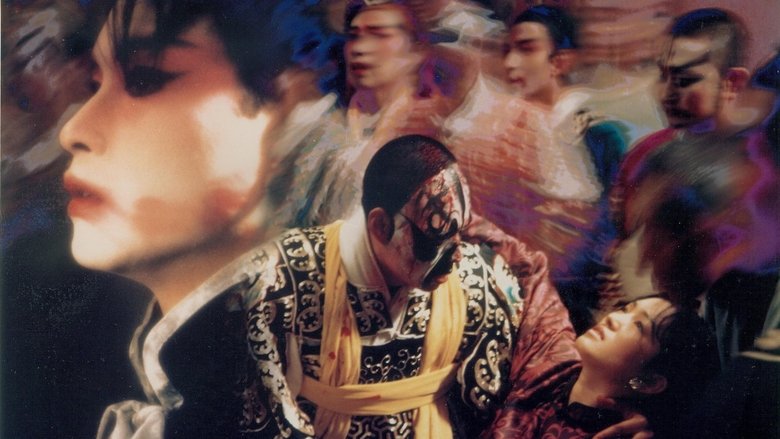
The entire narrative of "Farewell My Concubine" is a crescendo toward inevitable tragedy, foreshadowed from the beginning. The central hidden meaning that becomes clear is that Dieyi's entire life is a performance of the opera's central theme: unwavering loyalty unto death. His unrequited love for Xiaolou is not just a personal desire but a manifestation of his artistic identity as Concubine Yu. The key plot twist is the extent of Xiaolou's betrayal during the Cultural Revolution. Under pressure from the Red Guards, he not only denies his love for his wife Juxian, calling her a prostitute, but also publicly denounces Dieyi, exposing his homosexuality and accusing him of counter-revolutionary acts.

This public humiliation shatters the foundations of both relationships. Juxian, seeing that the man she dedicated her life to would cast her aside to save himself, hangs herself. This act fulfills an earlier, broken promise she made to Dieyi to leave Xiaolou. The film's ending, set in 1977 after the Revolution has ended, brings the two men together again to practice their famous opera. When Xiaolou recites the King's line, Dieyi responds with the Concubine's climactic performance. He takes Xiaolou's sword—the symbolic object of their bond—and commits suicide on stage, perfectly mirroring the opera's ending. His final, whispered name is not Dieyi but "Douzi," the childhood name Xiaolou called him, signifying a return to the origin of their bond at the moment of its ultimate, tragic conclusion. The final act is not just a suicide but the complete and final merging of his life with his art, the only way he can achieve the perfect, unending devotion he craved.

Alternative Interpretations

While the film's ending is tragic, its interpretation varies. One reading sees Dieyi's final act as the ultimate artistic statement: unable to live in a world that has destroyed his art and his love, he chooses to make his life perfectly and finally congruent with his art, achieving a form of tragic victory. It is the only way he can truly be the faithful concubine to the end.

Another interpretation views the ending as a complete tragedy of defeat. Dieyi's suicide is not a triumph but a final surrender to a lifetime of trauma, abuse, and heartbreak. In this view, he is not completing his art but is destroyed by his inability to ever separate from it, proving that such obsession is ultimately self-destructive in the real world.

A more political interpretation suggests the ending symbolizes the death of traditional Chinese culture itself. With the opera stage now in a sterile modern sports arena and its greatest performer dead, the film laments that the beauty and soul of this ancient art form cannot survive the brutalities of the 20th century and the new China that has emerged.