
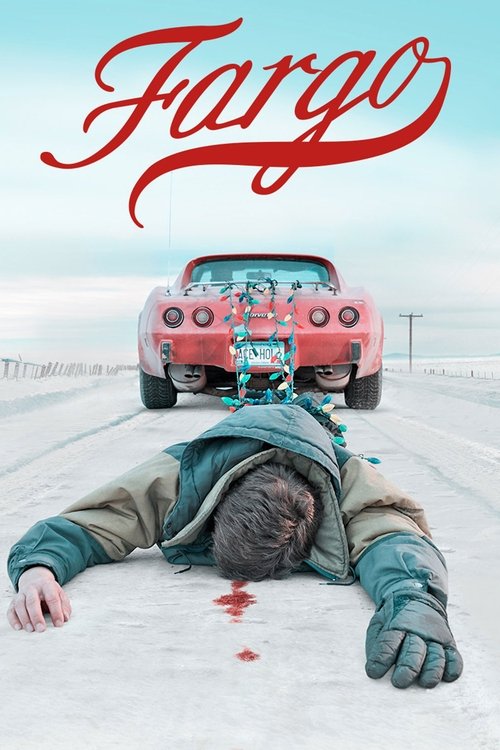
"Consequence comes knocking."
Cast: Jason Schwartzman, Allison Tolman, Colin Hanks, Chris Rock, Jessie Buckley
Fargo — Characters & Cast
Character Analysis
Lorne Malvo
Billy Bob Thornton
Motivation
Not money and not survival, but appetite and amusement — the pleasure of proving that civilization is a costume. His motivation curdles into ego once someone refuses his worldview, and that vanity is what finally makes him catchable.
Character Arc
Arrives in the first season fully formed and never grows — that is the point. He is less a man than a proposition, drifting through Minnesota offering people permission to do what they already want. Over the season he escalates from whispered suggestion to spectacular slaughter, and his only real change is exposure: the more he has to work to stay ahead of a small-town deputy and a nervous cop, the more mortal he becomes. Critics have read him openly as a figure of the Devil, and his function across the anthology is as the template every later antagonist reinterprets.
Molly Solverson
Allison Tolman
Motivation
Initially simply to do the job properly. As the bodies accumulate it becomes personal — protecting the people in her town and, later, the home she has made — but she never mistakes vengeance for justice.
Character Arc
Begins the first season as a deputy whose correct instincts are patronized by everyone above her, and refuses — episode after episode — to stop being right. Her arc is the anthology's moral baseline: she never becomes hardened, never trades her decency for effectiveness, and builds a family while the case grinds on. She established the template of the underestimated Midwestern woman whose stubborn competence the later seasons revisit, and whose family ties bind the first and second seasons together.
Lester Nygaard
Martin Freeman
Motivation
Starts as a desperate wish to stop being humiliated; mutates into hunger for status and self-image, then into pure self-preservation as the consequences close in.
Character Arc
The series' foundational case study. A bullied insurance salesman who is handed one violent permission and spends the rest of the first season discovering that he is good at lying and likes what it buys him. His transformation runs from cringing victim to a preening, confident man who has simply moved his cruelty outward — the show's clearest demonstration that people, given the opportunity, become the worst version of themselves. Every later season re-runs this experiment with a different protagonist.
Dorothy 'Dot' Lyon
Juno Temple
Motivation
Protect her daughter and keep her home. That protective instinct widens by the finale into something larger: breaking the chain of debt itself, including for the man sent to kill her.
Character Arc
The fifth season's centre and the culmination of the anthology's moral argument. Introduced as a chirpy suburban housewife whose brightness turns out to be armour built by a past she escaped, she spends the season being disbelieved, institutionalized and hunted, and responds with improvised, ferocious ingenuity. Her arc resolves not in a kill but in a refusal: in the finale Bisquik she finds Ole Munch waiting to collect a debt of blood, declines to fight him, and feeds him instead — ending five seasons of retribution with hospitality.
Cast
Explore More About This Movie
Dive deeper into specific aspects of the movie with our detailed analysis pages