Skip to content
Fargo
A snowbound crime fable where politeness masks savagery — ordinary Midwesterners stumble into blood-red decisions, and the fresh white drifts keep swallowing every secret whole.
Fargo

Fargo

"Consequence comes knocking."

15 April 2014 — 16 January 2024 United States of America 5 season 51 episode Ended 8.3 (3,407)

Cast: Jason Schwartzman, Allison Tolman, Colin Hanks, Chris Rock, Jessie Buckley

Drama Crime Ordinary people and the invitation to evil Decency as unglamorous labour Greed, capital and the American promise Fate, chance and the unexplained Debt, guilt and forgiveness

Overview

Fargo is a black comedy crime drama created by Noah Hawley for FX, based on the 1996 film written and directed by Joel and Ethan Coen. It premiered on April 15, 2014, and ran for five seasons and 51 episodes; the fifth season, ordered in February 2022, premiered on November 21, 2023. Rather than continuing the film's story, each season is a self-contained anthology chapter with new characters, a new era and a new corner of the American Midwest — what Hawley summarized to the Coens as: "all new characters, all new story. Fargo: a state of mind."

The chapters share a single engine. A decent, underestimated person — usually a woman, usually someone the world has trained to be agreeable — collides with a force of appetite: a drifter who trades in temptation, a crime syndicate expanding into a quiet town, a bully who believes debts must be paid in flesh. Someone tells a small lie or commits a small violence, and the snow does the rest, carrying the consequences outward until whole families, police departments and criminal empires are caught in the drift. The casts change wildly across the run — Billy Bob Thornton, Allison Tolman, Colin Hanks and Martin Freeman in the first season; Kirsten Dunst, Patrick Wilson, Jesse Plemons, Jean Smart and Ted Danson in the second; Ewan McGregor, Carrie Coon, Mary Elizabeth Winstead and David Thewlis in the third; Chris Rock, Jessie Buckley, Jason Schwartzman, Ben Whishaw and Jack Huston in the fourth; Juno Temple, Jennifer Jason Leigh, David Rysdahl, Joe Keery and Lamorne Morris in the fifth — but the moral weather never does.

What binds the seasons together is less plot than temperature: the flat vowels, the frozen highways, the diner booths where evil orders coffee and says "you betcha." Hawley folds in tributes not just to Fargo but to the wider Coen canon — Miller's Crossing, The Big Lebowski, The Man Who Wasn't There — and lets the surreal leak in at the edges, from omens and parables to a literal UFO. Watched end to end, it is one long argument about whether ordinary decency is strong enough to outlast ordinary greed.
Core Meaning

Across five seasons, Fargo asks the same question in different decades: what happens to a person when they are offered the chance to become the worst version of themselves? Hawley's anthology treats Fargo not as a place but as a moral condition — the moment when a small lie, a small theft, or a small cruelty is presented as free, and the person says yes.

Against that stands the series' quieter thesis, inherited directly from the Coens: ambition is the disease and contentment is the cure. The characters who survive with their souls intact are not the clever ones; they are the ones who already have enough — a spouse, a child, a job done properly — and who notice it. Molly Solverson does the paperwork. Dot Lyon sets an extra place at the table. The monsters, meanwhile, are always hungry and never full.

By the fifth season the show reframes its whole run as a parable about debt: what we believe we are owed, what we make others swallow, and whether any of it can be forgiven. The final answer is startlingly gentle for a show this bloody — that a debt can simply be released, over biscuits, in a warm kitchen. Evil in Fargo is never defeated by force; it is only ever refused hospitality, or offered it.

Thematic DNA

Ordinary people and the invitation to evil 28%
Decency as unglamorous labour 22%
Greed, capital and the American promise 20%
Fate, chance and the unexplained 16%
Debt, guilt and forgiveness 14%

Ordinary people and the invitation to evil

Every season opens with someone humiliated and ends with the bill coming due. The first season's Lester Nygaard is handed permission to strike back and discovers he likes it; later seasons repeat the experiment with a meek supermarket magnate, a failing parolee, a rival crime family, a housewife who ran. Critics have noted that the concept unifying all five chapters is transformation — how people, when given the opportunity, become the worst version of themselves. The series never argues that evil is exotic; it argues that it is available, at a diner, for free, to anyone weak enough to accept.

Decency as unglamorous labour

Goodness in Fargo is procedural. It looks like a deputy with a pinboard, a state trooper who keeps driving home, a woman who cooks dinner. The show's moral heroes are consistently underestimated — dismissed as too young, too female, too provincial — and consistently right. Across the run this evolves from the first season's classic competent-cop portrait into the fifth season's more radical version: survival not through arrest and gunfire but through refusing the logic of retribution altogether.

Greed, capital and the American promise

The Coens' line that ambition is evil is the anthology's spine. Season to season the antagonist scales up: a lone predator, then a crumbling family operation swallowed by a corporate syndicate, then a bookkeeping parasite who launders reality itself, then immigrant crime dynasties fighting over a piece of America, then a debt collector who believes flesh is currency. The series traces a century of the same appetite wearing different suits, and insists that the boardroom and the woodchipper are separated only by paperwork.

Fate, chance and the unexplained

Fargo repeatedly interrupts its own realism. Omens, parables, a religious frame of good and evil, and — most famously — a UFO hovering over the second season's climax. Whether these are miracles, coincidences, or themes made visible, they serve the same function: to remind the characters that the universe is indifferent to their plans. Later seasons deepen this into something almost mythic, with a figure who claims to have walked the earth for centuries.

Debt, guilt and forgiveness

Introduced quietly and detonated in the finale. Characters keep ledgers — of insults, of losses, of money owed — and those ledgers kill people. The fifth season makes the theme explicit by asking outright what we do with debt: do we owe, or do we forgive? The series answers with a meal, resolving five seasons of blood with the suggestion that the only exit from the cycle is to be fed something made with love and joy, and be forgiven.

Character Analysis

Lorne Malvo

Billy Bob Thornton

Archetype: Devil / trickster tempter Key Trait: Serene, predatory amusement

Motivation

Not money and not survival, but appetite and amusement — the pleasure of proving that civilization is a costume. His motivation curdles into ego once someone refuses his worldview, and that vanity is what finally makes him catchable.

Character Arc

Arrives in the first season fully formed and never grows — that is the point. He is less a man than a proposition, drifting through Minnesota offering people permission to do what they already want. Over the season he escalates from whispered suggestion to spectacular slaughter, and his only real change is exposure: the more he has to work to stay ahead of a small-town deputy and a nervous cop, the more mortal he becomes. Critics have read him openly as a figure of the Devil, and his function across the anthology is as the template every later antagonist reinterprets.

Molly Solverson

Allison Tolman

Archetype: Hero / dogged investigator Key Trait: Unshowy, immovable persistence

Motivation

Initially simply to do the job properly. As the bodies accumulate it becomes personal — protecting the people in her town and, later, the home she has made — but she never mistakes vengeance for justice.

Character Arc

Begins the first season as a deputy whose correct instincts are patronized by everyone above her, and refuses — episode after episode — to stop being right. Her arc is the anthology's moral baseline: she never becomes hardened, never trades her decency for effectiveness, and builds a family while the case grinds on. She established the template of the underestimated Midwestern woman whose stubborn competence the later seasons revisit, and whose family ties bind the first and second seasons together.

All 4 characters and cast

Symbols & Motifs

Snow and the frozen landscape

Meaning:

Snow is moral amnesia — a white page that keeps covering what people have done, and a cold that makes cruelty feel administrative rather than passionate. It also flattens everyone equally: killers and deputies alike are just small dark shapes on an enormous blank.

Context:

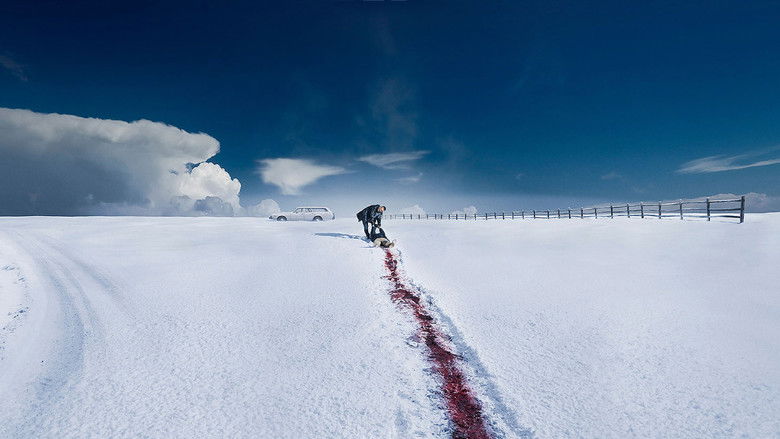
Inherited from the Coen film and used in every season as connective tissue: bodies in drifts, cars stalled on white highways, blizzards that arrive exactly when characters most need clear sight. The whiteout is the show's signature image and its recurring narrative device.

The 'true story' title card

Meaning:

A deadpan lie that functions as a thesis about storytelling: insisting on truth while inventing everything, it dares the viewer to decide what 'true' means. Truth here is moral rather than factual.

Context:

Adapted from the film's framing and reused to open each season, resetting the anthology's rules while claiming continuity with a reality that never existed.

Food and the shared table

Meaning:

Nourishment as grace. What you are fed, and by whom, determines who you become. Poisoned or grudging food breeds monsters; food given freely dissolves debt.

Context:

Diner booths and kitchen tables recur throughout the run as the show's true battlegrounds. The motif pays off in the series finale, Bisquik, where Ole Munch describes having been fed not food but "the sins of the rich, greed, envy, and disgust," and Dot answers that he must eat something made with love and joy and be forgiven.

The UFO

Meaning:

The universe's shrug — proof that the human melodrama of vengeance and territory is provincial and small, and that meaning is not owed to anyone.

Context:

Most famously in the second season's The Castle, where a UFO appears over the Sioux Falls motel ambush and derails the confrontation entirely, reordering the outcome of a war that men had spent a season preparing.

Predators and parables of animals

Meaning:

The series constantly restates its moral in fable form: the wolf and the sheep, the donkey starved between two choices. It argues that people behave less like citizens than like species.

Context:

Encoded even in episode titles — Buridan's Ass, The Tragedy of the Commons — which borrow philosophical and economic thought experiments to frame the week's carnage as something older than crime.

The unassuming Midwestern home

Meaning:

The last defensible ground. Its ordinariness — laminate, casseroles, a dog — is not naivety but the thing actually worth protecting.

Context:

Made literal in the fifth season, where the production design team matched Dot Lyon's living room as closely as possible to Jean Lundegaard's from the 1996 film for the kidnapping sequence, staging shot-for-shot homages that turn the domestic interior into sacred ground under siege.

Memorable Quotes

You gotta eat something made with love and joy, and be forgiven.
— Dorothy 'Dot' Lyon

Context

Season 5, episode 10, Bisquik. Dot comes home to find Ole Munch in her living room, there to collect the debt he believes he is owed. Instead of fighting, she invites him to supper.

Meaning

The thesis statement of the entire anthology, delivered in its last minutes. After five seasons of ledgers and vengeance, the show proposes that the only real cure for inherited cruelty is being nourished and released — not punished, not defeated, forgiven.

What they do to us — make us swallow. Like it's our fault.
— Dorothy 'Dot' Lyon

Context

Season 5, episode 10, Bisquik, during the kitchen confrontation-turned-dinner with Ole Munch.

Meaning

Dot names the mechanism of abuse that runs through the whole series: the powerful force the powerless to absorb harm and then to carry the shame for it. It reframes the show's crime plots as one long story about who is made to swallow what.

All 3 quotes

Episode Highlights

Buridan's Ass

S1E6

Widely regarded as the finest hour the series has produced and the defining highlight of the first season — a masterpiece of tension in which a whiteout blizzard collapses several converging plots into one another. The season pivots here from methodical to electrifying, raising the emotional stakes permanently and delivering standout performances.

Significance:

It set the anthology's house style: absurdist comedy and sudden, unsentimental violence occupying the same frame, with the weather itself as an accomplice. Everything later seasons attempt structurally is modelled on this episode.

Morton's Fork

S1E10

The first-season finale, named for the dilemma in which every available choice leads to ruin. The season's three strands — the predator, the man he made, and the deputy who was right all along — finally resolve, and the title announces that no one gets a clean option.

Significance:

Established that Fargo would end its chapters morally rather than triumphantly: the good survive by being ordinary and stubborn, and the transformed cannot be untransformed.

Before the Law

S2E2

Borrowing its title from Kafka's parable, the episode locks the second season's central conflict into place as a local family operation confronts the arrival of a larger, colder syndicate, with a young state trooper and his father-in-law caught between them.

Significance:

It announces the second season's grander thesis — that organized crime is just capitalism with a shorter feedback loop — and introduces the corporate-takeover framework the anthology returns to repeatedly.

The Castle

S2E9

The highest-rated episode of the series. Lou and Hank recapture the Blumquists and set up a wire-wearing ambush at the Sioux Falls motel, only for a UFO to appear in the sky and derail the entire confrontation — a genuine narrative bomb dropped into a meticulously built war.

Significance:

The single boldest swing of the run, and the moment the anthology committed to the unexplained as a permanent tool. It converts the season's gang war into a statement about cosmic indifference and remains the most-debated scene in the series.

The Tragedy of the Commons

S3E1

The third-season premiere, named for the economic parable in which shared resources are destroyed by individual self-interest. It opens with a bureaucratic interrogation in which a man is condemned by a clerical error, then introduces the sibling rivalry and stolen-stamp mistake that drive the season.

Significance:

Shifted the anthology from frontier-style crime toward the modern horrors of paperwork, identity and misinformation — evil as an accounting entry rather than a man with a gun.

Trials and Tribulations

S3E9

The penultimate hour of the third season, in which the parasitic antagonist's manipulation of records and reality reaches its most suffocating point and the season's dogged investigator is stripped of nearly every institutional support she has.

Significance:

Crystallizes the season's argument that a sufficiently confident liar can rewrite the truth faster than an honest person can prove it — the anthology's most contemporary and most pessimistic idea.

Bisquik

S5E10

The series finale. Dot returns home to find Ole Munch waiting to collect on a debt for the ear and the partner he lost to her. She refuses to engage his violence, invites him to supper, and the ancient collector ends up making biscuits in her kitchen, releasing enmity he has carried for centuries.

Significance:

The capstone of the entire run. After five seasons of ledgers, the show closes by asking whether debts are owed or forgiven, and answers with a meal — retroactively reframing the whole anthology as a story about grace rather than punishment.

Philosophical Questions

Is evil a force that arrives from outside, or a capacity waiting inside ordinary people?

The anthology runs this experiment five times. A tempter appears; a meek person is offered permission; the person says yes. The unifying concept critics identify is that people, given the opportunity, become the worst version of themselves — which suggests the outsider is only ever a catalyst. Yet the show keeps making its antagonists slightly too mythic to be merely human, leaving the question deliberately unresolved.

Do we owe our debts, or can they be forgiven?

Posed explicitly by the series finale. Characters across all seasons keep ledgers — of money, insults, blood — and those ledgers kill. The final scene answers with hospitality: a debt collector who has carried enmity for centuries is released not by payment but by being fed something made with love and joy. Whether that constitutes justice is left to the viewer.

Is ambition a virtue or a disease?

Carried over directly from the Coen film, where the heroic characters are happy because they appreciate what they have and care more about each other than about money or status. Every season stages the contrast: the content survive, the hungry escalate until they are consumed. The show frames the American promise of more as the mechanism by which decent people are ruined.

Does the universe care what we do?

The UFO in The Castle is the bluntest answer: an entire season's war is interrupted by something utterly indifferent to it. Omens, coincidence and cosmic accident repeatedly override human planning, implying that moral order is something people must manufacture themselves rather than something the world supplies.

Can goodness survive without becoming what it fights?

The series' investigators and survivors are defined by refusal — refusing to cut corners, refusing to escalate, refusing vengeance. The fifth season pushes this furthest by having its heroine decline the final confrontation entirely. The show argues that decency loses whenever it adopts its enemy's methods, and that its only real weapon is stubbornness.

Alternative Interpretations

Is the evil literal or metaphorical? The most persistent debate concerns the series' supernatural register. One reading takes the first season's central predator as an actual devil — a reading critics have described as poetic rather than literal — while the second season's UFO and the surreal flourishes of the third and fourth blur the line between genuine supernatural events and themes manifesting in odd forms. Viewers can watch the whole anthology as hard-edged realism in which the uncanny is symbolic, or as a world where something genuinely older than people is walking around. The fifth season's centuries-old debt collector is written to work perfectly well either way: ancient sin-eater, or a damaged man who believes he is one.

Full ending explanation

Cultural Impact

Fargo arrived in April 2014 at the crest of the prestige-television boom and did something few believed possible: it adapted an untouchable auteur film without imitating it. By reconceiving Fargo as "a state of mind" rather than a story to be continued, Hawley effectively wrote the playbook for the modern anthology series — a new cast, era and setting each season under a shared tonal umbrella — and demonstrated that a beloved film could be extended as a sensibility rather than a franchise. The Coens' hands-off blessing ("we don't know television. It's your show — just go make it") became one of the most-cited anecdotes in discussions of respectful adaptation.

Critically, the show was an immediate and durable success: the first season is Certified Fresh at 97% on the Tomatometer, the second holds a 100%, and the third is Certified Fresh at 93%. The second season in particular was praised for retaining everything that made the series an award-winning hit while delivering another stellar saga powered by fascinating characters, cheeky cynicism and a touch of the absurd. After a mixed middle stretch, the fifth season was received as a superb return to peak form, closing the run on a high.

Its cultural footprint runs through the flat Upper-Midwest vowels that became instantly quotable, the mainstreaming of philosophically titled, parable-driven crime television, and its willingness to import the openly metaphysical — omens, devils, a UFO — into naturalistic crime drama. It also functioned as a launchpad and showcase: Allison Tolman's breakout, career-redefining turns for actors across five very different ensembles, and a platform that established Hawley as one of television's signature auteurs before his later genre work. Its legacy is a body of prestige crime shows that treat regional specificity, black comedy and moral philosophy as compatible rather than competing modes.

Audience Reception

Overall verdict: one of the most consistently admired anthologies of the prestige era, with an unusually clear popular hierarchy among its seasons. The first season is arguably the most popular with general audiences, because its ordinary-people-meet-evil premise is the purest distillation of what viewers wanted from a Fargo series; it is Certified Fresh at 97%. The second season is the critical favourite, holding a 100% Tomatometer score and widely praised for retaining every quality that made the show an award winner while delivering another stellar saga of fascinating characters, cheeky cynicism and controlled absurdity.

The middle seasons divided viewers. The third season, Certified Fresh at 93%, drew admiration for its performances and its chillingly modern villain but also complaints about pacing and a bleakness that some found airless. The fourth, with its larger ensemble and sprawling gang-war canvas, is generally regarded as the run's weakest; in the broad consensus, seasons two and five are more widely praised than three and four.

The controversies cluster around tone. The second season's UFO remains the single most argued-about choice in the series — to admirers it is the boldest and most thematically apt moment the show ever attempted, to detractors a deus ex machina that deflates a season-long build. The later surreal flourishes provoked similar splits over whether the show's metaphysics are meaningful or merely decorative. The fifth season's gentle, forgiving finale also polarized: many found the biscuit-making dinner a moving and earned resolution to five seasons of cruelty, while others felt a series this ruthless had no business ending in warmth.

Evolution of opinion: initial skepticism that a Coen classic could survive television gave way to rapid acclaim, then to a mid-run cooling as the format's repetitions became visible, then to renewed enthusiasm when the fifth season was received as a superb return to peak form — allowing the show to end on affection rather than fatigue.

Interesting Facts

  • Noah Hawley created and primarily wrote the series for FX, basing it on the 1996 film written and directed by Joel and Ethan Coen rather than continuing the film's story.
  • When Hawley was told the series did not need Marge Gunderson, he replied: "So let me get this straight: all new characters, all new story. Fargo: a state of mind."
  • In his first conversation with the Coens, Hawley argued that the film's Minnesota accents had become such a caricature that the show should underplay them — sounding regional without being exaggerated. The Coens agreed.
  • The Coens gave minimal creative input: they read the first script, liked it, suggested a few lines and jokes, and told Hawley, "Look, we don't know television. It's your show — just go make it."
  • Hawley deliberately mixed elements of the Fargo film with tributes to other Coen works including Miller's Crossing, The Big Lebowski and The Man Who Wasn't There.
  • For the fifth season, Hawley asked the production design team to match Dot Lyon's living room as closely as possible to Jean Lundegaard's from the original film, staging shot-for-shot homages during the kidnapping sequence — which he described at the 2024 ATX TV Festival as playing a game of Telephone with the Coen Brothers.
  • The series premiered on FX on April 15, 2014; FX renewed it for a fifth season in February 2022, and that season premiered on November 21, 2023, bringing the run to 51 episodes across five seasons.
  • Hawley has said the series is 'really' about a single line from the original Coen Brothers movie.
  • The second season's most famous creative gamble — a UFO appearing over the Sioux Falls motel climax in 'The Castle' — was retained despite being the kind of swing that could have broken the season; the episode is now the highest-rated in the series.

Easter Eggs

Dot Lyon's living room recreated from Jean Lundegaard's in the 1996 film

For the fifth season's kidnapping sequence, Hawley had the production design team match the room as closely as possible and staged shot-for-shot homages to the Coen film — a direct visual rhyme that frames the final season as a corrective rewrite of the movie's most famous act of violence, with the abducted housewife fighting back this time.

Tributes to the wider Coen filmography

Hawley has said he mixed elements of Fargo with references to Miller's Crossing, The Big Lebowski and The Man Who Wasn't There. The show is therefore an anthology of Coen sensibility rather than of one film, which is why its tone can swing from hitman fable to bowling-alley absurdism without breaking.

The UFO over the Sioux Falls motel

In The Castle, the season-long gang war is interrupted by a UFO in the sky that distracts everyone and alters the course of the conflict. It is both a callback to the era's flying-saucer panic and the series' most audacious statement that human vendettas are cosmically trivial.

Philosophical episode titles

Titles such as Buridan's Ass, The Tragedy of the Commons, Before the Law and Morton's Fork borrow directly from philosophy, economics and Kafka, quietly telling the audience which thought experiment each hour is dramatizing before a single body drops.

Cross-season family connections

The seasons are not sealed off from each other — the first two chapters in particular share recurring themes and family ties across the decades, a structure fans have mapped in detail. It rewards rewatching the anthology as one continuous Midwestern history rather than five separate stories.

Frequently Asked Questions

Explore More About This Movie

Dive deeper into specific aspects of the movie with our detailed analysis pages

Comments (0)

Leave a comment

No comments yet. Be the first to share your thoughts!

Similar Movies