Skip to content
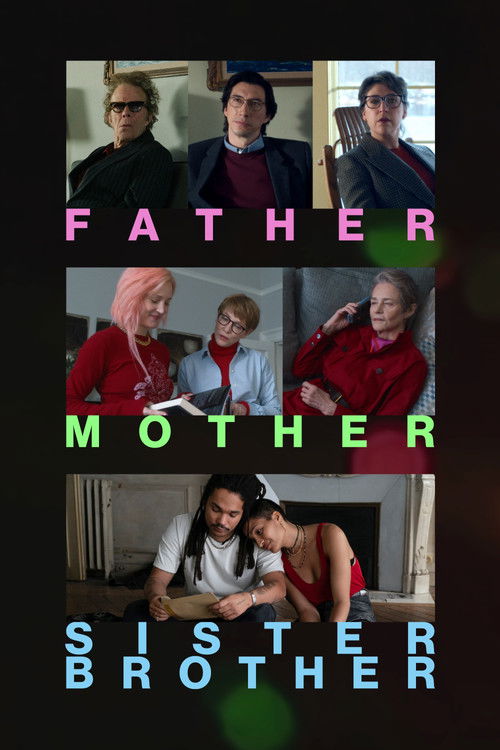
Father Mother Sister Brother
A melancholic, deadpan comedy observing the tender chasm between parents and grown children—where love is an antique car gliding through winter chill, laden with unspoken secrets and fragile reconciliations.
Father Mother Sister Brother
01 December 2025 United States of America 111 min 6.4 (331)

Director: Jim Jarmusch

Cast: Tom Waits, Adam Driver, Mayim Bialik, Charlotte Rampling, Cate Blanchett

Drama Comedy Familial Alienation and the "Mystery" of Kinship White Lies and Protective Fabrications Grief, Mortality, and What Remains Ritual, Habit, and Communicative Paralysis
Box Office: $7,693,345

Father Mother Sister Brother — Ending Explained

⚠️ Spoiler Analysis

The resolution of each chapter reveals how self-protection and domestic deception define the characters' bonds:

  • "Father": Jeff and Emily discover their father has fabricated his poverty and exaggerated home maintenance disasters—such as a collapsed wall Jeff funded—merely to compel his busy adult children to visit him, hiding his comfortable living conditions under slipcovers.
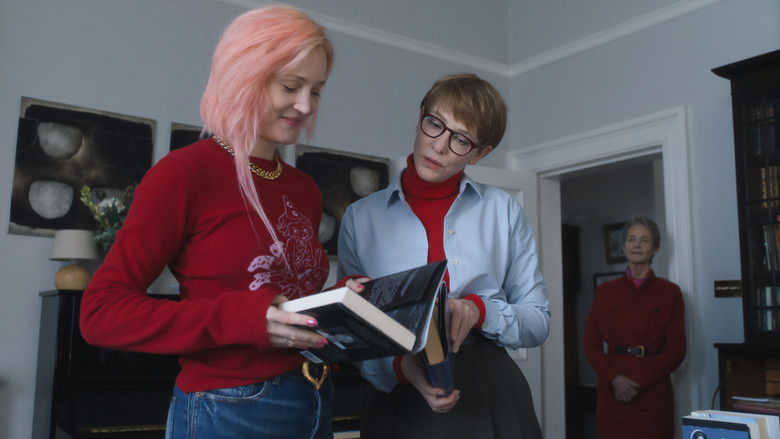
  • "Mother": The formal tea unravels as a mutual facade. Lilith is discovered to have invented an entire glamorous career in Brussels to deflect maternal judgment, Timothea conceals quiet resentment, and the Mother's own private reflections show she feels suffocated by her daughters' assumed reliance, highlighting how completely all three misjudge each other.
  • "Sister Brother": While clearing out their parents' Paris apartment, Billy and Skye discover a stash of forged passports, alternate identities, and a fake marriage certificate, assisted by a landlord who shielded their goods from investigators. The discovery reveals that their parents lived an enigmatic, covert existence entirely unknown to them, leaving their legacy unresolved while forging an unbreakable closeness between the twins.

Alternative Interpretations

The film can be interpreted through two main lenses:

  • The Universal Musical Fugue: Rather than demanding a literal narrative crossover between the families, the recurring objects and phrases serve as melodic variations, suggesting that the dynamics of emotional distance, small lies, and domestic alienation are universal across different cultures and classes.
  • The Progressive Generational Arc: The film moves from parental failure to sibling communion. While the first two chapters depict adult children unable to bridge divides with living parents, the third shows fraternal twins achieving genuine intimacy and truth in the wake of loss, suggesting that open emotional connection is realized by the younger generation.

Explore More About This Movie

Dive deeper into specific aspects of the movie with our detailed analysis pages

Similar Movies