Skip to content
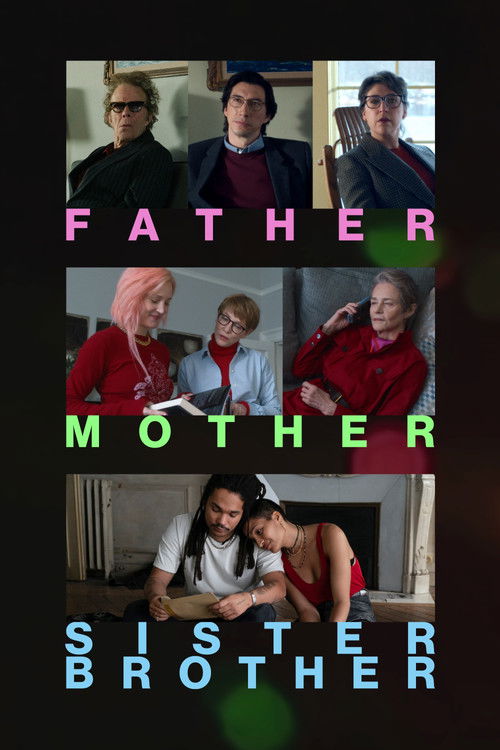
Father Mother Sister Brother
A melancholic, deadpan comedy observing the tender chasm between parents and grown children—where love is an antique car gliding through winter chill, laden with unspoken secrets and fragile reconciliations.
Father Mother Sister Brother

Father Mother Sister Brother

01 December 2025 United States of America 111 min 6.4 (331)

Director: Jim Jarmusch

Cast: Tom Waits, Adam Driver, Mayim Bialik, Charlotte Rampling, Cate Blanchett

Drama Comedy Familial Alienation and the "Mystery" of Kinship White Lies and Protective Fabrications Grief, Mortality, and What Remains Ritual, Habit, and Communicative Paralysis
Box Office: $7,693,345

Overview

Written and directed by Jim Jarmusch, Father Mother Sister Brother (2025) is an understated triptych drama-comedy that explores the fragile, awkward, and deeply ingrained dynamics between adult children and their parents. Set across three distinct international landscapes—rural New Jersey, an affluent suburb of Dublin, and the timeless streets of Paris—the anthology examines how physical distance and emotional estrangement shape the architecture of family ties.

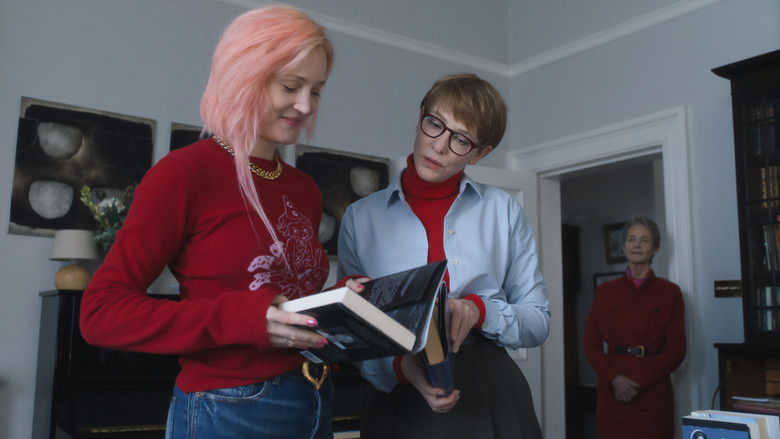
The film unfolds across three separate chapters: "Father" follows citified siblings Jeff and Emily navigating a visit to their eccentric, reclusive father in a chilly East Coast setting; "Mother" shifts to Ireland for a tense, polite annual tea between an imperious romance novelist and her two adult daughters; and "Sister Brother" follows fraternal twins Billy and Skye reuniting in Paris to pack up the childhood apartment left behind by their nomadic parents following a fatal plane crash.

Steeped in Jarmusch’s signature minimalist pacing, rhythmic dialogue, and deadpan warmth, the film eschews explosive family melodrama in favor of quiet, observed rituals, mundane conversations, and the resonant silences that exist between blood relatives.
Core Meaning

At its core, Father Mother Sister Brother suggests that family members are often bonded by blood yet remain fundamentally mysterious strangers to one another. Jarmusch illustrates that harmless lies, masks, and omissions are not necessarily born of malice; rather, they serve as coping mechanisms for survival, vulnerability, and mutual self-preservation. Shared biology does not guarantee mutual understanding, but emotional connection can nevertheless endure through shared rituals, unspoken grief, and the gentle acceptance of human imperfection.

Thematic DNA

Familial Alienation and the "Mystery" of Kinship 35%
White Lies and Protective Fabrications 25%
Grief, Mortality, and What Remains 20%
Ritual, Habit, and Communicative Paralysis 20%

Familial Alienation and the "Mystery" of Kinship

Across all three segments, characters confront the unsettling realization that their parents and siblings maintain separate inner lives. Jeff and Emily struggle to decipher their father’s clandestine domestic existence, Tim and Lilith present curated personas to their mother, and Billy and Skye uncover physical remnants revealing their late parents' hidden past.

White Lies and Protective Fabrications

Deception functions as a social adhesive rather than an act of hostility. The Father invents domestic repairs to maintain contact, Lilith fabricates professional achievements to fend off judgment, and the deceased parents forged identity papers, illustrating how trivial falsehoods frequently mask deep emotional insecurities.

Grief, Mortality, and What Remains

Loss permeates each vignette: the lingering absence of the deceased matriarch in "Father" creates an unspoken void, while the sudden death of parents in "Sister Brother" compels the twins to sift through inherited relics, transforming shared grief into an unexpected conduit for sibling intimacy.

Ritual, Habit, and Communicative Paralysis

The film emphasizes how adult families depend on rigid, repetitive domestic habits—car journeys, formal afternoon teas, and packing up apartments—as surrogates for authentic emotional intimacy, defaulting to conversational pleasantries because direct emotional expression feels insurmountable.

Character Analysis

Father

Tom Waits

Archetype: Reclusive Eccentric / The Secretive Trickster Key Trait: Taciturn, gruff, and prone to concealing his lifestyle behind domestic eccentricities.

Motivation

To preserve his personal autonomy while ensuring he remains connected to and supported by his adult children.

Character Arc

Maintains an isolated, off-the-grid existence in New Jersey while subtly orchestrating domestic deceptions to summon his adult children and solicit their financial and emotional presence.

Jeff

Adam Driver

Archetype: Dutiful Son / Well-Meaning Literal Thinker Key Trait: Earnest, hyper-literal, and socially awkward.

Motivation

To gain paternal validation and fulfill his perceived duty as a supportive, responsible son.

Character Arc

Navigating recent divorce and emotional aimlessness, he strives to be a dependable son by assisting his father financially, slowly confronting his own gullibility and yearning for paternal approval.

All 5 characters and cast

Symbols & Motifs

The Phrase "Bob’s Your Uncle" / "Ted's Our Uncle"

Meaning:

Signifies communicative shorthand and easy resolution, serving as a wry commentary on the linguistic barriers and generational confusion between parents and adult children.

Context:

Uttered across the different segments, most notably during a halting living-room conversation where the Father uses the phrase and Jeff responds with deadpan, literal confusion.

The Fake Rolex Watch

Meaning:

Represents superficial facades, counterfeit values, and the precarious illusions of stability or prestige maintained by parental figures.

Context:

Appears as a recurring motif in all three chapters, culminating in its discovery among the late parents' hidden belongings in Paris.

Filtered vs. Tap Water

Meaning:

Symbolizes the human tendency to obsess over trivial, mundane domestic details in order to evade addressing profound emotional gulfs.

Context:

Characters across the various vignettes repeatedly engage in dry, extended debates over whether the water they are drinking is tap or filtered.

Passing Skateboarders

Meaning:

Serves as visual poetry representing youth, effortless forward momentum, and the persistence of the outside world moving on heedless of insular familial drama.

Context:

Anonymous youths on skateboards glide past the camera frame during quiet moments in each of the three stories.

The Vintage Volvo P1800

Meaning:

Embodies an inherited, enduring vessel of family history that belongs to an era and lifestyle that no longer exists.

Context:

Driven through the streets of Paris by fraternal twins Billy and Skye in the "Sister Brother" chapter.

Kaleidoscopic Green Transitions

Meaning:

Acts as an optical connective tissue suggesting that the separate, geographically distant narratives share a unified subconscious frequency.

Context:

Used alongside ambient musical cues to visually bridge the transitions between the film's three distinct chapters.

Memorable Quotes

Bob’s your uncle.
— Father (Tom Waits)

Context

Dropped nonchalantly by the Father during a halting living-room conversation with his visiting children.

Meaning

Highlights the casual communicative shorthand used by the older generation, demonstrating how colloquial phrases can alienate or confuse adult children.

But Ted’s our uncle.
— Jeff (Adam Driver)

Context

Delivered by Jeff as a completely serious, bewildered response to his father's colloquial remark.

Meaning

Captures Jarmusch's deadpan comedic style while illustrating the generational disconnect and Jeff's hyper-literal processing of familial dialogue.

All 3 quotes

Philosophical Questions

Can we ever genuinely know our parents as individual human beings?

The film demonstrates that adult children view parents through the narrow filter of filial roles, while parents deliberately hide their frailties, past lives, and true circumstances behind facades of authority or helplessness.

Are polite falsehoods necessary to sustain familial love?

Jarmusch examines whether complete emotional transparency is sustainable, showing that small deceptions, performance, and mutual omissions often serve as crucial protective buffers that prevent delicate bonds from rupturing.

Alternative Interpretations

The film can be interpreted through two main lenses:

Full ending explanation

Cultural Impact

Winning the Golden Lion at the 2025 Venice International Film Festival under a jury led by Alexander Payne, Father Mother Sister Brother sparked meaningful discussion in an era largely dominated by high-concept or overtly geopolitical festival entries. Critics and commentators viewed its victory either as an unexpected triumph for a quiet, small-scale work or as a timely celebration of late-career minimalist restraint, classical humanism, and independent filmmaking traditions.

Audience Reception

The film received strong praise from arthouse critics and audiences for its tender atmosphere, dry deadpan humor, and standout performances—specifically highlighting the natural rapport between Indya Moore and Luka Sabbat, Tom Waits's idiosyncratic comedic presence, and Charlotte Rampling's incisive restraint, alongside the dual cinematography of Frederick Elmes and Yorick Le Saux.

Conversely, detractors critiqued the opening segments for feeling overly slight, formalistic, and repetitive, with some arguing that Jarmusch's minimalist trademarks verged on self-parody and lacked the dramatic stakes typically associated with a festival grand prize winner.

Interesting Facts

  • The film won the prestigious Golden Lion at the 82nd Venice International Film Festival in 2025.
  • The production was mounted in partnership with Saint Laurent Productions under Anthony Vaccarello, with costumes curated by Catherine George.
  • Cinematography was split between longtime Jarmusch collaborator Frederick Elmes and French director of photography Yorick Le Saux.
  • The project marks a reunion between Jim Jarmusch and actor-musician Tom Waits, who first collaborated on 1986's Down by Law.
  • It represents Jim Jarmusch's first multi-story anthology feature in over twenty years since Coffee and Cigarettes (2003).
  • The film's ambient musical score was composed directly by Jim Jarmusch in collaboration with musician Anika.

Easter Eggs

Recurring Motif Rhymes

Links three independent stories through identical micro-elements—including passing skateboarders, debates over tap versus filtered water, a counterfeit Rolex, and variations of the phrase "Bob's your uncle".

French New Wave Homages

The Paris chapter's vehicle sequences inside a vintage Volvo P1800 directly reference the conversational car cinematography of Jean-Luc Godard and Éric Rohmer.

Casting of Françoise Lebrun

The Paris landlord Madame Gautier is portrayed by Françoise Lebrun, the star of Jean Eustache's classic French New Wave postscript The Mother and the Whore (1973).

Frequently Asked Questions

Explore More About This Movie

Dive deeper into specific aspects of the movie with our detailed analysis pages

Comments (0)

Leave a comment

No comments yet. Be the first to share your thoughts!

Similar Movies