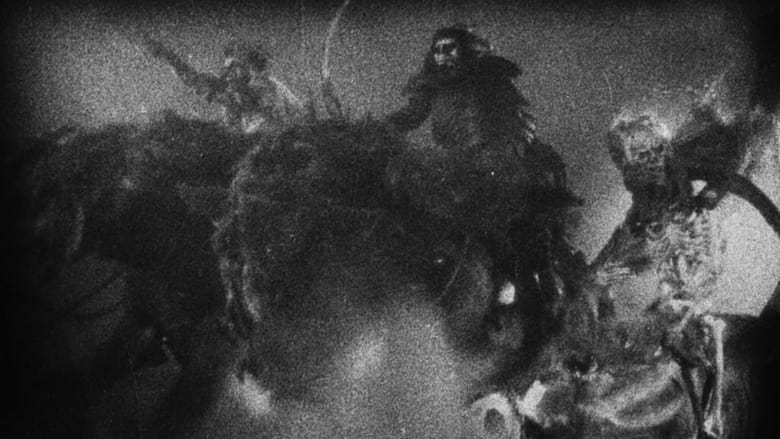
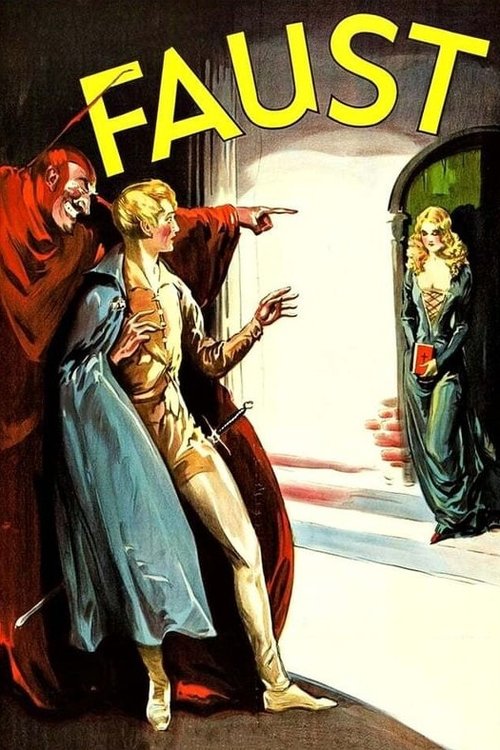
The entire narrative of "Faust" is set in motion by a celestial wager. An Archangel bets Mephisto that he cannot corrupt the soul of the righteous alchemist, Faust. Mephisto accepts, unleashing a plague that drives Faust to despair. Faust makes a 24-hour trial pact for the power to heal, but is stoned by the villagers when he cannot face a cross. This rejection leads him to seal the pact permanently, exchanging his soul for eternal youth.
Faust's journey of hedonism culminates in his meeting with the innocent Gretchen. Mephisto's schemes ensure their love leads to tragedy. He causes Gretchen's mother to die of shock upon discovering the lovers, and then incites Gretchen's brother, Valentin, to duel with Faust. Mephisto intervenes, murdering Valentin with Faust's sword and framing the scholar. This cascade of events leads to Gretchen's public condemnation. Alone and ostracized, she gives birth to Faust's child in a winter storm. In a delirious state, she lays the baby in the snow, where it dies of exposure. Discovered with her dead child, she is accused of murder and sentenced to be burned at the stake.
Upon seeing Gretchen's fate in a vision, a remorseful Faust demands Mephisto take him to her. He renounces his youth, and Mephisto, in a rage, smashes the mirror that holds his reflection, instantly turning Faust old again. Faust pushes through the crowd to the pyre and throws himself into the flames to die with his beloved. This ultimate act of sacrificial love is the hidden loophole in the demonic contract. In the film's climax, their spirits rise from the fire and ascend to Heaven. The Archangel appears before Mephisto and declares that he has lost the wager, because the one word he forgot—"Love"—has triumphed over all evil, redeeming Faust's soul.