
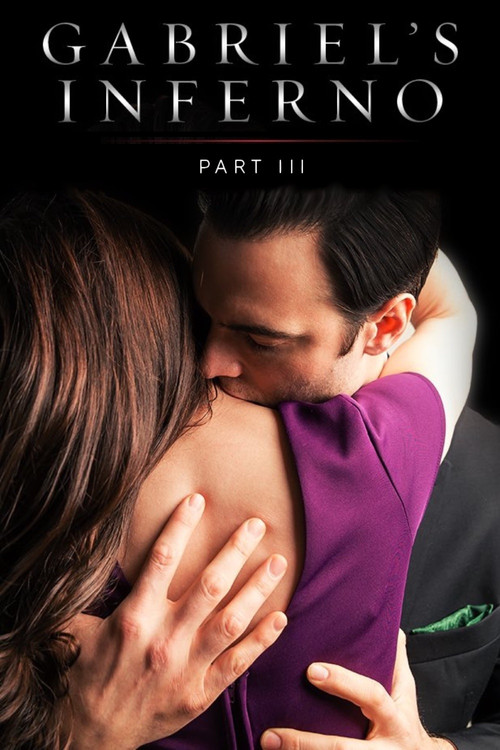
Gabriel's Inferno: Part III resolves the two major conflicts established in the previous parts: the external threat of Julia's past and the internal threat of Gabriel's secrets. The film opens with Julia being threatened by her abusive and obsessive ex-boyfriend, Simon Talbot. This escalates to a physical confrontation where Simon bites Julia on the neck, leaving a mark. Gabriel intervenes, violently threatening Simon and ensuring he will not bother Julia again. This event traumatizes Julia but also forces her to open up to Gabriel about the verbal and emotional abuse she suffered in that relationship.
This act of vulnerability from Julia serves as the catalyst for Gabriel's own confession. Wracked with guilt and seeing Julia's pain, he finally tells her the secret behind the name 'Maya' tattooed on his chest. Maya was his unborn daughter. During a dark period of his life involving heavy drug use, his girlfriend at the time, Paulina, became pregnant. One night, while he was passed out, she suffered a miscarriage and lost the baby. He blames his addiction and negligence for her death, confessing to Julia, 'I'm a murderer.'
Instead of being horrified, Julia responds with immense compassion, telling him, 'We both have scars. But I am your atonement.' This moment solidifies their bond, as all secrets are now revealed. With their pasts finally confronted, Gabriel takes Julia to Florence, Italy. There, in the city of Dante and Beatrice, they consummate their relationship. The film ends with them fully committed to one another, having navigated their personal hells to find their paradise together, setting the stage for the next book in the series, Gabriel's Rapture.