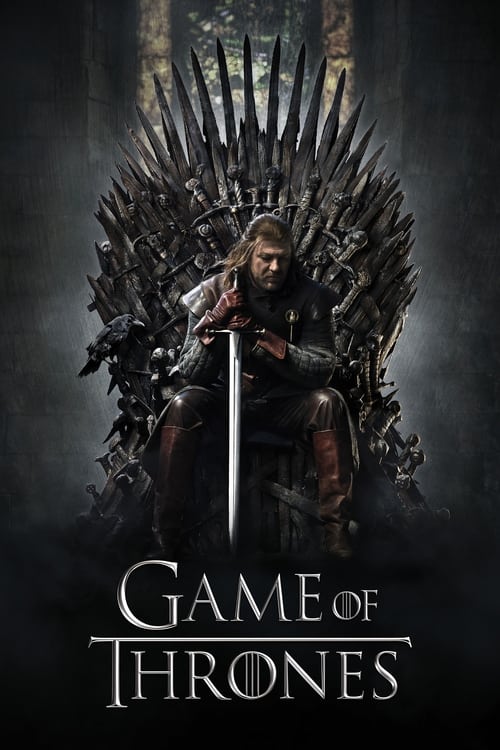
Game of Thrones
A brutal fantasy epic where the lust for power collides with ancient magic, painting a chilling portrait of ambition against a backdrop of impending doom.
Game of Thrones
Game of Thrones

"Winter is coming."

17 April 2011 — 19 May 2019 United Kingdom 8 season 73 episode Ended ⭐ 8.5 (25,608)
Cast: Peter Dinklage, Kit Harington, Nikolaj Coster-Waldau, Emilia Clarke, Maisie Williams
Drama Sci-Fi & Fantasy Action & Adventure
The Corrupting Nature of Power Family, Honor, and Duty The Brutality and Futility of War Order vs. Chaos

Game of Thrones - Ending Explained

⚠️ Spoiler Analysis

Game of Thrones is built on a foundation of shocking twists that continuously upend the narrative. The first major twist is the execution of Ned Stark in Season 1, which establishes that no one is safe. The Red Wedding in Season 3 is perhaps the most infamous, where Robb and Catelyn Stark are betrayed and murdered, seemingly ending the Stark cause. Joffrey Baratheon's poisoning at his own wedding in Season 4 removes a key villain, creating a new power vacuum and leading to Tyrion's persecution.

A central, long-running mystery is the truth of Jon Snow's parentage. The fan theory "R+L=J" is confirmed in Season 6: Jon is not Ned Stark's bastard but the son of Rhaegar Targaryen and Lyanna Stark, making him the legitimate heir to the Iron Throne. This revelation redefines his identity and puts him in direct conflict with his lover and ally, Daenerys Targaryen.

The series finale sees Daenerys, having successfully conquered Westeros, descend into tyranny by incinerating King's Landing and its civilian population. Fearing she will be another tyrant, Jon Snow assassinates her in the throne room. In the aftermath, the dragon Drogon melts the Iron Throne, symbolically ending the destructive game for power. The lords and ladies of Westeros elect Bran Stark, now the all-knowing Three-Eyed Raven, as the new King of the Six Kingdoms (the North having seceded peacefully under Sansa Stark). Jon is exiled to the Night's Watch once more as punishment, Arya sails west to explore unknown lands, and Tyrion is named Hand of the King, tasked with rebuilding the realm. The ending suggests a breaking of the old system of hereditary monarchy in favor of a new, elective one, but leaves the futures of its main characters and the realm ambiguous.

Alternative Interpretations

One of the most debated aspects of the series is its ending and Daenerys Targaryen's arc. One interpretation holds that her turn to tyranny was a well-foreshadowed tragedy, a cautionary tale about how absolute power and a messianic belief in one's own righteousness can corrupt even the most idealistic leader. This view points to her family's history of madness and her own increasingly ruthless actions throughout the series as evidence of an inevitable descent.

An alternative interpretation, popular among disappointed fans, is that her transformation into the "Mad Queen" was a betrayal of her character, rushed and poorly justified by the writers in the final season. This perspective argues that her actions in King's Landing were inconsistent with the liberator she had been for seven seasons and served as a shocking but unearned plot device. Similarly, the series' ultimate message about power can be read in different ways. Some see the election of Bran Stark as a cynical conclusion, suggesting that the most detached and emotionless ruler is ideal. Others interpret it as a hopeful move towards a more enlightened form of governance, where stories and knowledge (personified by Bran) hold more value than strength and birthright.