Game of Thrones
A brutal fantasy epic where the lust for power collides with ancient magic, painting a chilling portrait of ambition against a backdrop of impending doom.
Game of Thrones

Game of Thrones

"Winter is coming."

17 April 2011 — 19 May 2019 United Kingdom 8 season 73 episode Ended ⭐ 8.5 (25,608)
Cast: Peter Dinklage, Kit Harington, Nikolaj Coster-Waldau, Emilia Clarke, Maisie Williams
Drama Sci-Fi & Fantasy Action & Adventure
The Corrupting Nature of Power Family, Honor, and Duty The Brutality and Futility of War Order vs. Chaos

Overview

Based on George R.R. Martin's novel series "A Song of Ice and Fire," Game of Thrones chronicles the violent dynastic struggles among the noble families of the fictional continent of Westeros for control of the Iron Throne. As the powerful houses of Stark, Lannister, Baratheon, and Targaryen vie for supremacy, their personal and political conflicts unfold across the Seven Kingdoms. The story is not confined to the schemes of kings and queens; it also follows the journey of exiled princess Daenerys Targaryen in the eastern continent of Essos as she rises to power.

Beyond the civil wars and political intrigue, a much greater threat looms in the far North. An ancient and mythical enemy, the White Walkers, long thought to be a legend, awakens and marches on the realms of men. The narrative masterfully weaves together these disparate storylines, exploring the intricate web of alliances, betrayals, and bloodshed as characters from all corners of the world find their destinies intertwined in the face of a common, apocalyptic threat.
Core Meaning

At its core, Game of Thrones is a cynical and complex examination of power and its corrupting influence. The series posits that the relentless pursuit of authority—the titular "game of thrones"—is a destructive cycle that consumes individuals, families, and entire societies. It deconstructs traditional fantasy tropes by presenting a world where honor and morality are often liabilities, and survival frequently depends on ruthlessness and political cunning. The show argues that while humanity is consumed by its internal conflicts, it remains blind to the larger, existential threats that could lead to its extinction, suggesting that the ultimate enemy is not a rival house, but humanity's own division and shortsightedness.

Thematic DNA

The Corrupting Nature of Power 35%
Family, Honor, and Duty 30%
The Brutality and Futility of War 20%
Order vs. Chaos 15%

The Corrupting Nature of Power

The central theme of the series is the intoxicating and destructive pursuit of power. Characters who begin with noble intentions, like Daenerys Targaryen, are shown to be corrupted by their quest for the Iron Throne, leading them to commit atrocities. Others, like Cersei Lannister, are driven by a desire to maintain power at any cost, resulting in paranoia and tyranny. The show consistently illustrates that the "game" for the throne leaves no one unscathed and often demands the sacrifice of one's own humanity.

Family, Honor, and Duty

The concepts of family loyalty, honor, and duty are constantly in conflict. The Stark family is initially defined by Ned Stark's unwavering honor, which ultimately leads to his downfall. His children grapple with his legacy throughout the series: Jon Snow is driven by a sense of duty to protect the realm, while Arya and Sansa's paths are shaped by their quest for vengeance and security for their family. Conversely, the Lannisters demonstrate that familial loyalty can be a toxic force, driving them to commit heinous acts to preserve their name and influence.

The Brutality and Futility of War

Game of Thrones portrays war not as a glorious endeavor but as a brutal, devastating force that victimizes the common people most of all. Major battles like Blackwater Bay, the Battle of the Bastards, and the Long Night are depicted with visceral, unflinching realism, emphasizing the horrific human cost. The series suggests that the wars fought over succession and pride are ultimately futile in the face of the true, existential threat of the White Walkers, highlighting the shortsightedness of the warring factions.

Order vs. Chaos

The series explores the tension between the structured, political order of human society and the encroaching, elemental chaos represented by the White Walkers. While the lords and ladies of Westeros are absorbed in their intricate political maneuvering, the Night King and his army represent a force of nature that threatens to erase all of civilization. This theme questions what is truly important: the established rules of society or the fight for survival against a force that renders all politics meaningless.

Character Analysis

Daenerys Targaryen

Emilia Clarke

Archetype: Antihero / Tragic Hero
Key Trait: Unwavering Ambition

Motivation

Her primary motivation is to reclaim the Iron Throne, which she believes is her birthright. Initially driven by a desire for justice and to create a better world, her motivation shifts towards achieving her goal by any means necessary, fueled by a messianic complex and a belief in her absolute right to rule.

Character Arc

Daenerys begins her journey as a timid, exiled princess, sold into marriage by her abusive brother. She grows into a powerful queen and a liberator of slaves in Essos, the "Breaker of Chains." Her belief in her own destiny to rule the Seven Kingdoms becomes an obsession. As she faces betrayal and loss in Westeros, her methods become increasingly ruthless, culminating in her fiery destruction of King's Landing. Her arc is a tragic descent from a beloved liberator to a feared tyrant, ultimately killed by Jon Snow to prevent further destruction.

Jon Snow

Kit Harington

Archetype: Reluctant Hero
Key Trait: Honor-Bound

Motivation

Jon is consistently motivated by a strong sense of duty and a desire to protect the innocent. He is not driven by personal ambition but by the necessity of leadership in the face of overwhelming threats. His primary goal evolves from finding his place in the world to uniting humanity against the Night King.

Character Arc

Jon starts as the brooding, illegitimate son of Ned Stark, an outsider who joins the Night's Watch to find purpose. He rises through the ranks, becoming Lord Commander and forging an alliance with the Wildlings to face the White Walkers. After being murdered by his own men and resurrected, he leaves the Watch, is declared King in the North, and becomes a central leader in the war against the dead. His discovery of his true parentage—that he is Aegon Targaryen and the rightful heir to the Iron Throne—creates a conflict with Daenerys and ultimately forces him to choose between love and duty, leading him to kill her and accept exile beyond the Wall.

Tyrion Lannister

Peter Dinklage

Archetype: The Outcast / Advisor
Key Trait: Intellectual Cunning

Motivation

Tyrion's core motivation is survival and the desire for the respect and acceptance he was denied by his family. He has a genuine, albeit cynical, belief in good governance and often tries to steer powerful rulers towards more just and peaceful solutions, seeking to build a better world despite his personal disillusionment.

Character Arc

Tyrion begins as a witty, hedonistic outcast of the powerful Lannister family, despised by his father and sister. Using his intelligence as his weapon, he navigates the political landscape of King's Landing, serving briefly as Hand of the King. Falsely accused of murdering his nephew, King Joffrey, he escapes after killing his father and flees to Essos. There, he becomes an advisor to Daenerys Targaryen, hoping to temper her worst impulses with his wisdom. However, his influence wanes, and he makes several strategic errors. He ends the series as Hand of the King to Bran Stark, using his intellect to rebuild the broken kingdom.

Cersei Lannister

Lena Headey

Archetype: Villain / Tragic Figure
Key Trait: Ruthless Determination

Motivation

Cersei's motivations are twofold: the preservation of her family (specifically, her children) and the acquisition and maintenance of personal power. She is driven by a deep-seated resentment of the patriarchal society that overlooks her abilities and a prophecy that foretells her doom, which she spends her life trying, and failing, to prevent.

Character Arc

Cersei is introduced as the shrewd and ruthless queen of Robert Baratheon, fiercely protective of her children and her lover-brother, Jaime. Her arc is defined by a relentless quest for power and a refusal to be controlled by the men around her. Over the seasons, she suffers immense loss—the deaths of all three of her children—which fuels her paranoia and cruelty. She outmaneuvers all her political rivals, destroying the Sept of Baelor and seizing the Iron Throne for herself. Her reign is one of fear and tyranny, and she ultimately dies in the arms of Jaime as the Red Keep collapses around them, a victim of the very power she fought so desperately to hold.

Arya Stark

Maisie Williams

Archetype: Avenger / Survivor
Key Trait: Resilient Independence

Motivation

Initially motivated by a desire to reunite with her family, Arya's primary drive becomes vengeance after her father's death. She maintains a "kill list" of her enemies, which guides her actions for much of the series. Her motivation evolves from pure revenge to a broader purpose of protecting her family and, ultimately, forging her own destiny independent of any title or lord.

Character Arc

Arya begins as a feisty tomboy who rejects the traditional role of a lady. After witnessing her father's execution, she escapes and begins a brutal journey of survival, traveling across Westeros and eventually to Braavos. There, she trains with the Faceless Men, a guild of assassins, shedding her identity to become "no one." However, she ultimately reclaims her name, returns to Westeros, and uses her deadly skills to exact revenge on those who wronged her family, most notably by assassinating Walder Frey. She plays a pivotal role in the Great War by killing the Night King. In the end, having avenged her family and saved the world, she chooses a path of exploration, sailing west of Westeros to discover what lies beyond the known world.

Symbols & Motifs

The Iron Throne

Meaning:

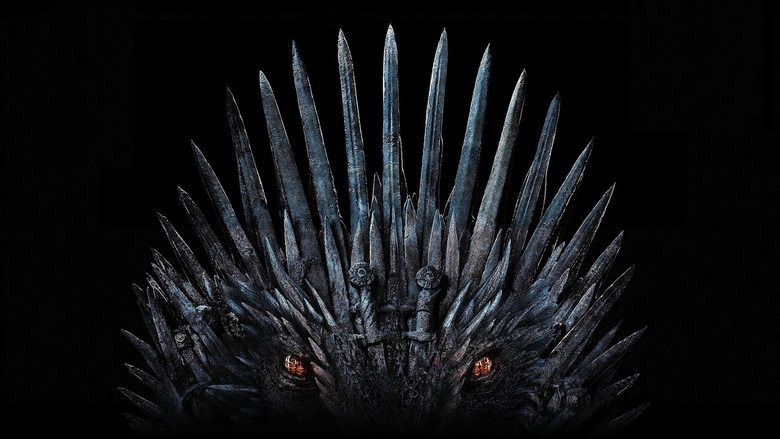
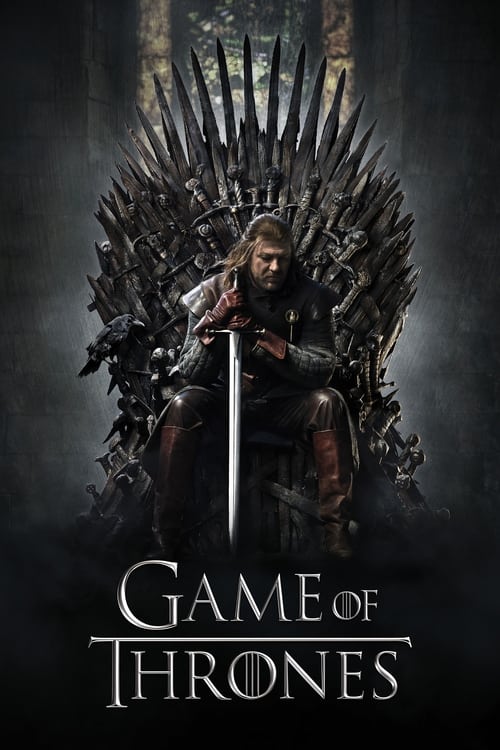
The Iron Throne symbolizes the ultimate, brutal nature of power and conquest in Westeros. Forged from the swords of Aegon the Conqueror's vanquished enemies, it is a constant, physical reminder that the Seven Kingdoms were built on violence. It represents the dangerous allure of absolute authority and the corrupting obsession it inspires in those who seek it.

Context:

The throne is the central object of desire for most of the series, driving the primary conflict known as the "game of thrones." Characters scheme, murder, and go to war to sit on it. Ultimately, its destruction by Drogon in the final season symbolizes the breaking of the destructive cycle of power struggles that had plagued Westeros for centuries.

Direwolves

Meaning:

The direwolves are intrinsically linked to the identity and fate of the Stark children. As the sigil of House Stark, they represent the family's connection to the North, their wild nature, and their resilience. Each direwolf's journey mirrors that of its owner, reflecting their personality and destiny.

Context:

The six direwolf pups are discovered in the first episode and given to the Stark children. Lady's death foreshadows Sansa's loss of innocence, Grey Wind dies with Robb at the Red Wedding, and Summer sacrifices himself for Bran. Ghost's constant presence at Jon's side reflects his Stark heritage, while Nymeria's independence mirrors Arya's own path as a lone wolf.

Dragons

Meaning:

Dragons are symbols of immense, untamable power and the Targaryen dynasty's legacy. They represent a magical, almost nuclear force in a world dominated by swords and political maneuvering. Their existence shifts the balance of power in the world, embodying both creation (liberating slaves) and mass destruction (burning King's Landing).

Context:

Hatched by Daenerys Targaryen at the end of Season 1, Drogon, Rhaegal, and Viserion become her primary weapons in her conquest of Essos and her campaign in Westeros. Viserion's death and reanimation by the Night King symbolizes the subversion of Targaryen power and becomes a major threat to the living.

White Walkers

Meaning:

The White Walkers are the ultimate symbol of death and the existential threat that looms over the petty squabbles of humanity. They represent a force of nature and a reckoning for the living, indifferent to politics, titles, or wealth. Their advance from the North serves as a constant reminder of the true enemy.

Context:

Introduced in the very first scene of the series, the White Walkers and their army of the dead (wights) are a persistent, growing threat. Their march south forces disparate and warring factions, like Jon Snow and Daenerys, to form uneasy alliances. Their defeat at the Battle of Winterfell represents the culmination of the story's supernatural plotline.

Memorable Quotes

Winter is Coming.

— Various members of House Stark

Context:

First spoken by Ned Stark in Season 1, Episode 1, "Winter Is Coming." The phrase is repeated throughout the series as a constant, ominous reminder of the threats facing the characters, both human and supernatural.

Meaning:

The words of House Stark serve as the series' central motto. It's a warning not just of the literal, long winters that plague Westeros, but also a metaphorical warning of dark times, war, and death. It signifies the need for preparation and vigilance in a harsh world.

When you play the game of thrones, you win or you die. There is no middle ground.

— Cersei Lannister

Context:

Spoken in Season 1, Episode 7, "You Win or You Die," after Ned confronts Cersei about the true parentage of her children. It is a pivotal moment that seals Ned's fate and defines the unforgiving rules of the central conflict.

Meaning:

This quote encapsulates the ruthless, high-stakes nature of the political power struggles in Westeros. Cersei's words to Ned Stark are a direct statement of the show's core philosophy: mercy and compromise are weaknesses that lead to death. It sets the tone for the brutal realpolitik of the series.

What do we say to the God of Death?

— Syrio Forel and later, Melisandre

Context:

First taught to Arya in Season 1. The phrase is powerfully reprised by Melisandre in Season 8, Episode 3, "The Long Night," to remind a despairing Arya of her purpose, spurring her to go and defeat the Night King.

Meaning:

This question, with its answer "Not today," is a mantra of defiance in the face of death. It represents Arya Stark's core philosophy of survival, taught to her by her sword master Syrio Forel. It is about courageously facing mortality and choosing to live, even when confronted with impossible odds.

A Lannister always pays his debts.

— Various members of House Lannister

Context:

The phrase is used frequently throughout the series, particularly by Tyrion. It serves as both a promise and a warning, underscoring the Lannisters' reputation for wealth, power, and retribution.

Meaning:

This unofficial motto of House Lannister has a dual meaning. On one hand, it refers to paying back financial and political favors, a source of their influence. On the other, it is a threat, signifying that any slight or harm done to the Lannisters will be repaid with vengeance.

Episode Highlights

Baelor

S1E9

This episode shattered television conventions with the shocking execution of the show's central protagonist, Ned Stark. It established that no character was safe in this world. The episode also features key moments like Robb Stark being declared King in the North and Daenerys's desperate attempt to save Khal Drogo through blood magic, which has tragic consequences.

Significance:

Ned Stark's death was a defining moment for the series, proving its willingness to subvert audience expectations and traditional narrative structures. It propelled the Stark children into their individual, often brutal, character arcs and directly triggered the War of the Five Kings.

Blackwater

S2E9

The first large-scale battle episode of the series, focusing entirely on Stannis Baratheon's naval assault on King's Landing. Tyrion Lannister heroically (and cleverly) defends the city using wildfire, in a stunning and destructive display. The episode highlights the horrors of war from multiple perspectives, including Cersei's nihilistic despair in the Red Keep.

Significance:

"Blackwater" set a new standard for battle sequences on television, combining spectacle with intense character drama. It cemented Tyrion's role as a brilliant strategist and showcased the devastating impact of warfare on both soldiers and civilians.

The Rains of Castamere

S3E9

This episode contains one of the most shocking and infamous sequences in television history: the "Red Wedding." The Stark forces are betrayed by their allies, the Freys and the Boltons, leading to the brutal murders of Robb Stark, his pregnant wife Talisa, and his mother Catelyn.

Significance:

The Red Wedding was a cultural phenomenon, a brutal and unexpected massacre of heroic main characters that fundamentally altered the course of the series. It effectively ended the Northern rebellion and demonstrated the show's capacity for gut-wrenching tragedy, solidifying its reputation for unpredictability.

Hardhome

S5E8

Jon Snow and Tormund Giantsbane attempt to evacuate a Wildling village and are suddenly attacked by the army of the dead. The episode features a terrifying, 20-minute battle sequence that culminates in Jon Snow witnessing the Night King raise the freshly slain Wildlings as wights, demonstrating the true scale of the supernatural threat.

Significance:

"Hardhome" was the first time the audience, and Jon Snow, truly understood the horrifying power of the Night King. It masterfully shifted the focus of the series from the political "game of thrones" to the imminent war for the dawn, establishing the White Walkers as the ultimate enemy.

Battle of the Bastards

S6E9

The episode showcases the epic and brutal clash between the forces of Jon Snow and Ramsay Bolton for control of Winterfell. Praised for its cinematic scale and visceral choreography, the battle features stunning visuals, including a harrowing sequence where Jon is nearly crushed to death by the press of bodies. The Stark forces are saved at the last moment by the Knights of the Vale.

Significance:

Considered one of the greatest battle sequences ever filmed for television, this episode was a triumphant, if bloody, moment for the Stark family as they finally reclaimed their ancestral home. It concluded with the satisfying death of the sadistic Ramsay Bolton at the hands of Sansa Stark.

The Winds of Winter

S6E10

The season finale opens with a masterful, suspenseful sequence where Cersei Lannister enacts her revenge by destroying the Great Sept of Baelor with wildfire, eliminating all of her political rivals in one fell swoop. This act leads to her son Tommen's suicide and her ascension to the Iron Throne. The episode also confirms the long-held fan theory of Jon Snow's parentage and shows Daenerys finally setting sail for Westeros.

Significance:

This episode dramatically reshaped the political landscape of Westeros, positioning the three main players—Cersei, Jon, and Daenerys—for the final conflict. Cersei's coronation as queen marked her transformation into the show's primary antagonist.

Philosophical Questions

Does the end justify the means?

The series constantly explores this question through its characters. Daenerys Targaryen believes her goal of a just world justifies burning her enemies alive and, ultimately, massacring the population of King's Landing. Tywin Lannister orchestrates the Red Wedding, a horrific betrayal, to win a war and establish peace. The show rarely provides a clear answer, instead showing the devastating human cost of such philosophies and forcing the audience to grapple with the morality of its characters' choices.

Is destiny fixed, or do our choices define us?

Game of Thrones is filled with prophecies and characters who believe in destiny (like Melisandre and Daenerys). Cersei's life is haunted by a prophecy that she inadvertently helps fulfill by trying to avoid it. Conversely, characters like Arya Stark actively reject the path laid out for them, forging their own identities. Jon Snow's journey is a constant battle between his supposed destiny as a Targaryen heir and his personal choices, which are guided by duty and honor. The series seems to suggest that while destiny and external forces may be powerful, individual choice still holds profound significance.

What makes a good ruler?

The series presents a variety of leadership styles, none of which prove to be definitively successful. Ned Stark's honor makes him a poor politician. Robert Baratheon's strength makes him a great warrior but a terrible king. Joffrey's cruelty leads to his downfall. Daenerys's conviction turns into tyranny. The show deconstructs the idea of a perfect ruler, suggesting that qualities like strength, intelligence, and compassion are often in conflict. The eventual choice of Bran the Broken as king implies that perhaps the best ruler is one who is detached, knowledgeable, and has no personal desire for power.

Alternative Interpretations

One of the most debated aspects of the series is its ending and Daenerys Targaryen's arc. One interpretation holds that her turn to tyranny was a well-foreshadowed tragedy, a cautionary tale about how absolute power and a messianic belief in one's own righteousness can corrupt even the most idealistic leader. This view points to her family's history of madness and her own increasingly ruthless actions throughout the series as evidence of an inevitable descent.

An alternative interpretation, popular among disappointed fans, is that her transformation into the "Mad Queen" was a betrayal of her character, rushed and poorly justified by the writers in the final season. This perspective argues that her actions in King's Landing were inconsistent with the liberator she had been for seven seasons and served as a shocking but unearned plot device. Similarly, the series' ultimate message about power can be read in different ways. Some see the election of Bran Stark as a cynical conclusion, suggesting that the most detached and emotionless ruler is ideal. Others interpret it as a hopeful move towards a more enlightened form of governance, where stories and knowledge (personified by Bran) hold more value than strength and birthright.

Cultural Impact

Game of Thrones profoundly altered the television landscape, elevating the fantasy genre from a niche interest to a mainstream cultural phenomenon. Premiering in 2011, it arrived at a time when serialized, "prestige TV" was on the rise, but its cinematic scale, massive budget (reportedly up to $15 million per episode in later seasons), and complex, sprawling narrative set a new standard for what television could achieve. It proved that audiences had an appetite for dark, adult-oriented fantasy and complex, morally ambiguous characters. The show's success led to a surge in high-budget fantasy productions from competing networks and streaming services, a trend sometimes referred to as the "Game of Thrones effect."

The series became a global watercooler show, dominating social media and pop culture discourse in a way few series have in the streaming era. Its shocking plot twists, particularly Ned Stark's execution and the Red Wedding, became iconic cultural moments. The reception was overwhelmingly positive for most of its run, with critics praising its intricate storytelling, character development, and production values. However, the final two seasons, which moved beyond George R.R. Martin's published source material, received significant criticism from both critics and audiences for perceived rushed pacing and controversial character decisions, culminating in a highly divisive series finale. Despite the backlash, the show's legacy is undeniable. It changed television production, influenced a generation of storytellers, and remains a benchmark for epic, event-based television.

Audience Reception

Game of Thrones experienced a dramatic evolution in audience reception throughout its eight-season run. The early seasons were met with widespread critical acclaim and a rapidly growing, devoted fanbase. Viewers praised the complex narrative, rich character development, high production values, and willingness to kill off major characters, which created a constant sense of tension. Seasons 1 through 4 are often cited as the show's peak, with events like the Red Wedding cementing its place in television history.

Around Season 5, as the show began to more significantly diverge from and then surpass its source material, some criticism began to emerge regarding pacing and plot choices. However, viewership continued to grow exponentially. The final two seasons, particularly the eighth and final season, became highly controversial and divisive. A significant portion of the audience criticized the season for its rushed plotlines, condensed storytelling, and character arcs that felt unearned or inconsistent—most notably Daenerys's sudden turn to villainy and Jaime Lannister's return to Cersei. The backlash was intense, culminating in an online petition for the final season to be remade that garnered over a million signatures. Despite the controversial ending, the series as a whole is still regarded by many as a landmark achievement in television.

Interesting Facts

  • The creators of the series, David Benioff and D.B. Weiss, won over George R.R. Martin by correctly answering his question about who Jon Snow's mother was.
  • Sophie Turner, who played Sansa Stark, adopted the dog that played her direwolf, Lady, after the first season.
  • The Dothraki language was created specifically for the show by linguist David J. Peterson, and it contains over 3,000 words.
  • Emilia Clarke was not the original actress cast as Daenerys Targaryen; Tamzin Merchant played the role in the unaired pilot.
  • The actor who played Maester Aemon Targaryen, Peter Vaughan, was partially blind in real life, just like his character.
  • Kit Harington (Jon Snow) and Rose Leslie (Ygritte) fell in love on set and eventually married.
  • The Battle of the Bastards episode required 500 extras, 600 crew members, 25 days of shooting, 25 stuntmen, and 4 camera crews.
  • Queen Elizabeth II visited the set in Belfast but declined to sit on the Iron Throne, as the monarch of the United Kingdom is not permitted to sit on a foreign throne, even a fictional one.

Easter Eggs

A replica of Gandalf's sword, Glamdring, from the <i>Lord of the Rings</i> film trilogy is one of the many swords forged into the Iron Throne.

This is a nod to the fantasy genre's roots and J.R.R. Tolkien's immense influence on George R.R. Martin's work and the fantasy genre as a whole.

In the unaired pilot and early DVD releases of Season 1, one of the severed heads on a spike at King's Landing was a prop of former U.S. President George W. Bush.

The creators stated it was not a political statement but a matter of using available props. However, it caused controversy, and HBO apologized and digitally removed it from subsequent broadcasts and productions.

During a scene in Season 4, a Meereenese champion shouts insults at Daenerys in Low Valyrian. The insults are direct quotes from the French taunter in <i>Monty Python and the Holy Grail</i>, including "Your mother was a hamster and your father smelt of elderberries."

This is a humorous inside joke, as the show's creators are fans of the British comedy troupe. Several other Monty Python references can be found throughout the series.

In Season 4, Littlefinger tells Robin Arryn, "People die at their dinner tables, they die in their beds, they die squatting over their chamber pots."

This line directly foreshadowed the three major deaths of that season: Joffrey (at his wedding feast), Shae (in a bed), and Tywin (on a chamber pot).

Ed Sheeran has a cameo as a Lannister soldier in Season 7, singing a song. The character is later mentioned in Season 8 as having had his face burned off during a dragon attack.

The cameo was arranged as a surprise for Maisie Williams, who is a big fan of the singer. The character's grim fate was a meta-joke acknowledging the mixed-to-negative fan reaction to his appearance.

⚠️ Spoiler Analysis

Click to reveal detailed analysis with spoilers

Frequently Asked Questions

Explore More About This Movie

Dive deeper into specific aspects of the movie with our detailed analysis pages

Comments (0)

Leave a comment

No comments yet. Be the first to share your thoughts!