Germany, Year Zero
A haunting neorealist drama exploring the psychological devastation of post-war Berlin. Through the desperate eyes of a corrupted child, it delivers a devastating tragedy where a shattered cityscape mirrors the total collapse of human morality.
Germany, Year Zero
Germany, Year Zero

Germania anno zero

"A soldier can lose everything but his courage."

11 July 1948 France 72 min ⭐ 7.6 (415)
Director: Roberto Rossellini
Cast: Edmund Moeschke, Ernst Pittschau, Ingetraud Hinze, Franz-Otto Krüger, Erich Gühne
Drama
The Corruption of Innocence Survival vs. Morality The Shadow of Nazism Physical and Spiritual Ruination

Germany, Year Zero - Ending Explained

⚠️ Spoiler Analysis

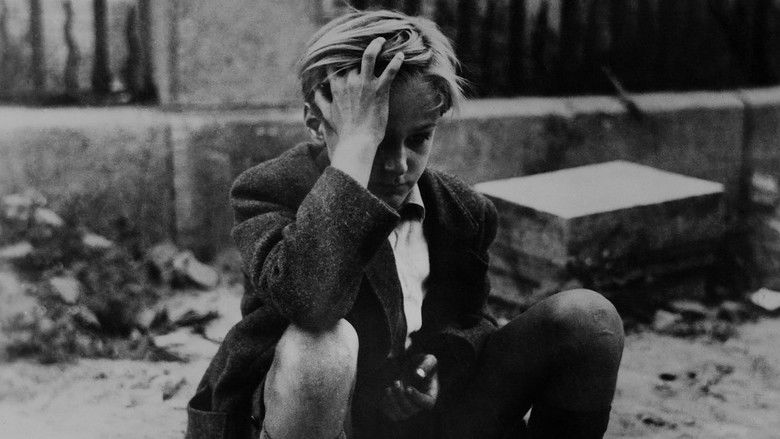
The film's most devastating plot turn occurs when Edmund, heavily manipulated by his Nazi-sympathizing teacher Herr Henning, decides to poison his own father. The hidden tragedy of this twist is that Edmund acts not out of malice, but out of a perverted sense of duty; Henning has convinced him that the weak must die to let the strong survive, and Edmund's father had repeatedly lamented being a burden to the family.

The ultimate psychological break happens after the murder. Edmund seeks validation from Henning, but the teacher recoils in cowardly horror, refusing to take responsibility for his own rhetoric. Realizing the monstrous nature of his actions and finding himself completely abandoned in a godless world, Edmund aimlessly wanders the ruins. He briefly plays a surreal, disconnected child's game with a piece of debris, before silently throwing himself off the ledge of a destroyed building. The ending reveals the true meaning of the film: the ideology of the Third Reich did not just destroy Europe's architecture, it systemically murdered its future.

Alternative Interpretations

The film's devastating conclusion—Edmund's suicide—has been hotly debated by critics for decades. The primary, pessimistic interpretation views his death as the ultimate defeat: the innocent child is entirely crushed by the monstrous legacy of Nazism and the physical ruination of his world, demonstrating that the 'Year Zero' offers no real hope for rebirth. He dies because the ideology of the adults around him left no room for his humanity.

Conversely, an affirmative interpretation suggests that Edmund's suicide is his only remaining act of agency. Upon realizing the horror of poisoning his father, Edmund refuses to continue living in a morally bankrupt world. His death is seen as a tragic but principled rejection of the social Darwinist nightmare Herr Henning tried to force upon him. Furthermore, critics debate Rossellini's claim of 'objectivity'; while he stated the film was merely a presentation of facts, many argue its bleakness and haunting score push it into the realm of highly subjective German Expressionism, functioning as an externalization of Rossellini's own grief over the loss of his son.