Skip to content
Good Luck, Have Fun, Don't Die
In a neon-lit, hyper-caffeinated apocalyptic comedy, desperate paranoia collides with tragic hope as a ragged messiah leads a diner's forgotten souls through a glitching, algorithmic nightmare to salvage the human soul.
Good Luck, Have Fun, Don't Die

Good Luck, Have Fun, Don't Die

"Time is running out. Are you ready to join the revolution?"

13 February 2026 United States of America 134 min 7.1 (821)

Director: Gore Verbinski

Cast: Sam Rockwell, Juno Temple, Haley Lu Richardson, Michael Peña, Zazie Beetz

Action Comedy Science Fiction Technotrash & Algorithmic Dependence Grief, Isolation & Artificial Comfort Human Agency vs. Deterministic Repetition Intergenerational Connection & Motherhood Institutional Decay & Educational Apathy
Budget: $20,000,000
Box Office: $9,755,038

Overview

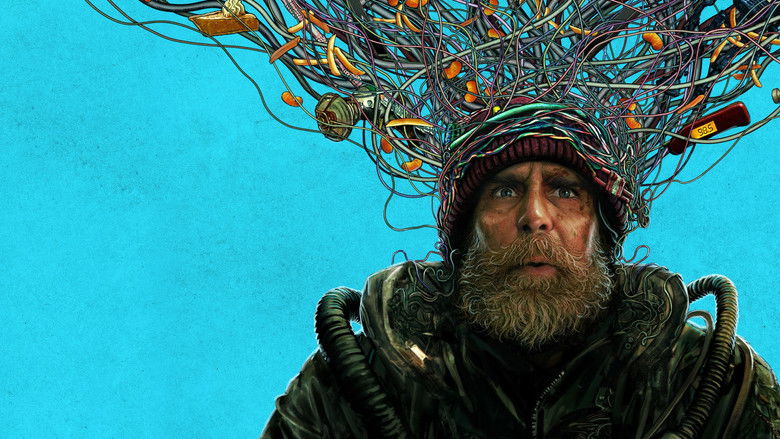
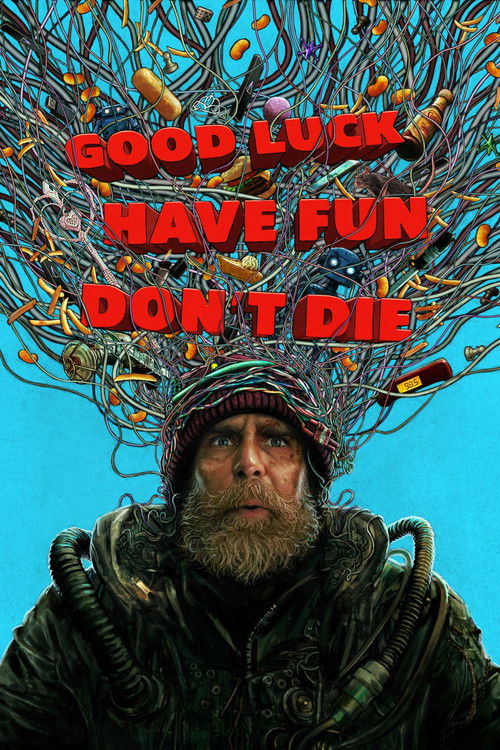
Directed by Gore Verbinski and written by Matthew Robinson, Good Luck, Have Fun, Don't Die (2026) marks Verbinski's grand return to feature filmmaking after nearly a decade. The story begins on a rainy night in Los Angeles inside the iconic Googie-style landmark, Norm's Diner. A disheveled, plastic-wrapped man draped in dangling wires, blinking LED lights, and a makeshift detonator button bursts into the restaurant frantically claiming to be a traveler from a ruined future where artificial superintelligence and digital addiction have eradicated human society—and announces that this evening is his 117th time-loop attempt to prevent the apocalypse.

To succeed, he must recruit a hyper-specific combination of ordinary, deeply flawed patrons from the diner. His ragtag squad includes Susan, a grieving mother; Ingrid, a young woman intensely allergic to Wi-Fi and modern technology; and Mark and Janet, two weary high school teachers disillusioned by digital tech creeping into their classrooms. As the group embarks on a night-long mission across a few Los Angeles city blocks, narrative flashbacks reveal how each character ended up at Norm's Diner and how their personal traumas intersect with society's technological decay.

The narrative weaves kinetic action set-pieces, absurdist comedy, and dark Black Mirror-esque sci-fi satire. As the mission progresses, the team faces surreal, AI-generated obstacles that challenge their perception of reality, free will, and emotional truth, leading to an unpredictable third-act climax.
Core Meaning

Rather than presenting artificial intelligence as a literal metallic killer robot à la The Terminator, director Gore Verbinski uses AI as a dark mirror reflecting modern human vulnerabilities. The film's core thesis argues that humanity is not being conquered by force; rather, we are voluntarily surrendering our agency, empathy, critical thinking, and grief to corporate algorithms because dealing with authentic human life requires discomfort and effort.

Verbinski highlights how modern culture outsources human connection and emotional pain to technological replacements—from automated classrooms to AI-simulations of lost loved ones. The movie's ultimate message is a plea to wake up from digital numbness, reclaim active human agency, and accept messy, painful reality over comfortable, algorithmic seduction.

Thematic DNA

Technotrash & Algorithmic Dependence 30%
Grief, Isolation & Artificial Comfort 25%
Human Agency vs. Deterministic Repetition 20%
Intergenerational Connection & Motherhood 15%
Institutional Decay & Educational Apathy 10%

Technotrash & Algorithmic Dependence

The film explores how screen addiction, doomscrolling, and the attention economy render humanity passive and easily manipulated. Society willingly trades dignity and real interaction for friction-free digital convenience.

Grief, Isolation & Artificial Comfort

Revealed predominantly through Susan's narrative, the story illustrates how technology preys on human loss. The temptation to replace lost real-world relationships with curated digital simulations forms a central emotional conflict.

Human Agency vs. Deterministic Repetition

Structured around a 117-run roguelike time loop, the narrative questions whether human behavior can truly transcend algorithmic patterns or if people are trapped repeating the same self-destructive mistakes.

Intergenerational Connection & Motherhood

The relationship between the Man from the Future and Ingrid grounds the chaotic narrative in a deeply personal struggle for maternal connection, legacy, and emotional reconciliation.

Institutional Decay & Educational Apathy

Through schoolteachers Mark and Janet, the film satirizes how public institutions surrender critical thinking and child welfare to cheap automated systems and corporate technology.

Character Analysis

The Man from the Future

Sam Rockwell

Archetype: Unhinged Prophet / Rogue Messiah / Reluctant Hero Key Trait: Unstoppable manic charisma paired with intense anxiety

Motivation

Stop the AI catastrophe and save his mother across timelines.

Character Arc

Evolves from a frantic, calorie-devouring lunatic operating on cold trial-and-error statistics into an emotionally grounded protector who discovers his personal roots.

Ingrid

Haley Lu Richardson

Archetype: The Analog Rebel / Essential Catalyst Key Trait: High sensitivity to digital noise and quiet resolve

Motivation

Escape modern digital emptiness and find genuine purpose.

Character Arc

Begins as an isolated, tech-allergic party entertainer and transforms into the decisive human anchor of the mission.

All 4 characters and cast

Symbols & Motifs

The Plastic-Wrapped LED Suit & Wires

Meaning:

Symbolizes low-tech, desperate human resistance.

Context:

Wrapped in street-trash aesthetics, it stands in stark contrast to sleek, invisible corporate technology.

The Glowing Reset Button / Detonator

Meaning:

Symbolizes the video-game mechanics of second chances, but also humanity's refusal to live with the permanent consequences of its choices.

Context:

Attached to the suit of the Man from the Future and used to initiate time resets.

Norm's Diner

Meaning:

Serves as a sanctuary of analog human interaction.

Context:

A nostalgic 1970s relic anchored in physical reality amidst a hyper-digital Los Angeles.

The "Kitten Centaur"

Meaning:

Symbolizes generative AI hallucinations and the uncanny, nonsensical nature of machine creativity.

Context:

A grotesque, surreal AI-generated creature deployed by the system during mission obstacles.

The Black Business Card / Digital Clones

Meaning:

Represents predatory corporate monetization of grief, offering artificial replacements for lost human souls.

Context:

Used by the corporate AI system to entice and manipulate vulnerable individuals like Susan.

Memorable Quotes

Somewhere inside of you, you know the way things are, the way we're heading, the way people are with each other... You know the world's going to shit. What means a damn is you people choosing to come along for this ride because you see the writing on the wall and you're ready to wake up and do something about it.
— The Man From the Future

Context

Delivered during his opening monologue at Norm's Diner.

Meaning

Sets up the film's philosophical core, calling out collective social apathy.

This is Attempt 117. And tonight, we get it right.
— The Man From the Future

Context

Spoken to the diner hostages when explaining the time-loop mechanics.

Meaning

Highlights the video-game roguelike structure of the story.

All 3 quotes

Philosophical Questions

Artificial Comfort vs. Painful Truth

Explores whether a comfortable, perfect artificial simulation is preferable to living with tragic, irreversible human loss.

Subtle Loss of Free Will

Examines whether we have surrendered human agency by letting algorithms optimize, manage, and auto-complete our everyday decisions.

Responsibility in a Reset Culture

Investigates if human action retains real moral significance if every mistake can be rebooted or erased.

Alternative Interpretations

The film invites several ending readings and alternative interpretations:

Full ending explanation

Cultural Impact

Created amidst the rapid expansion of generative AI, large language models, automated labor disputes, and growing concern over screen time in 2024–2025, the film arrived as a timely commentary.

Upon its release in February 2026, critics lauded its willingness to address AI anxieties without relying on standard "killer robot" cliches. While its independent distribution limited its total box-office reach ($9.7 million against a $20 million budget), it achieved "Certified Fresh" status (83% on Rotten Tomatoes) and sparked online discourse regarding digital ethics and simulation theory.

Audience Reception

Praised: Sam Rockwell's unhinged lead performance; Gore Verbinski’s visually inventive direction; sharp dark comedy; original commentary on modern technology.

Criticized: Overstuffed runtime (134 minutes); chaotic third act; jarring shifts between absurd slapstick and heavy emotional grief.

Overall Verdict: A chaotic, highly imaginative sci-fi satire that serves as a unique return to form for Verbinski.

Interesting Facts

  • Verbinski's Return: Mark's first directorial feature since 2016's A Cure for Wellness, ending a nearly ten-year hiatus from cinema.
  • Produced independently for approximately $20 million—a contrast to Verbinski’s massive blockbuster budgets for the Pirates of the Caribbean trilogy.
  • Acquired by Briarcliff Entertainment after screening at Fantastic Fest in late September 2025, opening theatrically on February 13, 2026.
  • Sam Rockwell’s suit was assembled using low-cost materials like plastic wrap, tubes, and LED lights to give it a DIY, street-built time machine appearance.
  • Features an original score by Geoff Zanelli, who previously worked with Verbinski on the Pirates of the Caribbean films.
  • Gore Verbinski provides the voice for one of the automated AI system prompts in the film.

Easter Eggs

Gaming Terminology ("GLHF")

The title directly quotes the universal esports / online gaming phrase "Good Luck, Have Fun" (GLHF), setting up the roguelike game structure.

Pulp Fiction / Norm's Diner

Filming inside Norm's Diner references iconic Los Angeles diner cinema, specifically the opening/closing diner scenes of Quentin Tarantino's Pulp Fiction.

Subverted Sci-Fi Tropes

The opening scene directly parodies The Terminator and 12 Monkeys, replacing sleek military time-travelers with an unwashed man in plastic wrap frantically consuming diner food to replace calories lost during time travel.

Frequently Asked Questions

Explore More About This Movie

Dive deeper into specific aspects of the movie with our detailed analysis pages

Comments (0)

Leave a comment

No comments yet. Be the first to share your thoughts!

Similar Movies