
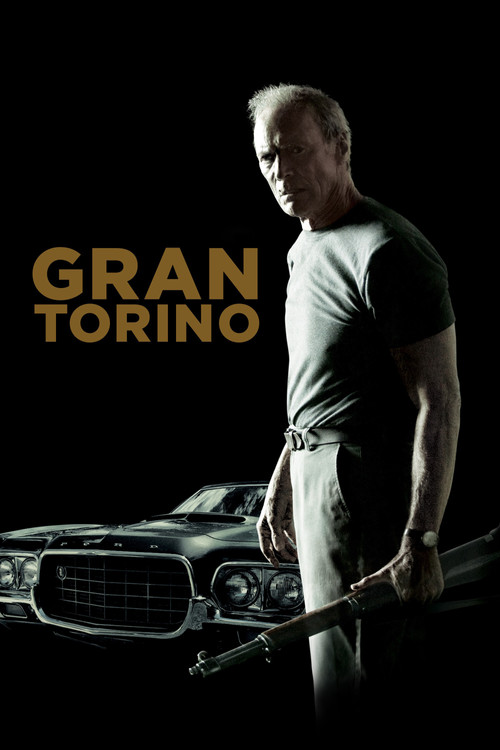
"Ever come across somebody you shouldn't have f#cked with?"
Director: Clint Eastwood
Cast: Clint Eastwood, Christopher Carley, Bee Vang, Ahney Her, Brian Haley
Gran Torino — Movie Quotes
Memorable Quotes
Get off my lawn.
Context
Walt says this to the Hmong gang members when he first confronts them on his front lawn as they are trying to intimidate Thao and Sue.
Meaning
This line, growled by Walt while pointing his rifle, becomes his iconic catchphrase. It encapsulates his territorial, cantankerous nature and his initial desire to keep the world at bay. It's a defiant statement of ownership and a warning to anyone who dares to cross his boundaries, both literally and figuratively.
Ever notice how you come across somebody once in a while you shouldn't have messed with? That's me.
Context
Walt delivers this line to a group of men who are harassing Sue in the street before he intervenes to rescue her.
Meaning
This quote solidifies Walt's tough-guy persona, harkening back to Clint Eastwood's iconic roles like Dirty Harry. It's a direct and chilling threat that establishes his capability for violence and his refusal to be a victim, setting the stage for his role as a protector.
We used to stack f**ks like you five feet high in Korea... use ya for sandbags.
Context
Walt says this to Smokie, one of the gang members, during his first major confrontation with them on his lawn, emphasizing that he is not afraid of them.
Meaning
A brutal and vivid line that reveals the depth of Walt's wartime trauma and his capacity for intimidation. It's a stark reminder of the violence he has experienced and is willing to employ, framing his character as a man shaped by the horrors of war.
The thing that haunts a man the most is what he isn't ordered to do.
Context
Walt says this to Thao after Thao asks him what it's like to kill a man. This confession happens late in the film, revealing the deep-seated guilt that drives his final actions.
Meaning
In a moment of vulnerability, Walt reveals the true source of his guilt from the war. It wasn't the killing he was ordered to do, but an act he chose, likely the killing of a young enemy soldier who was surrendering. This line provides the key to understanding his motivation for redemption.
Explore More About This Movie
Dive deeper into specific aspects of the movie with our detailed analysis pages