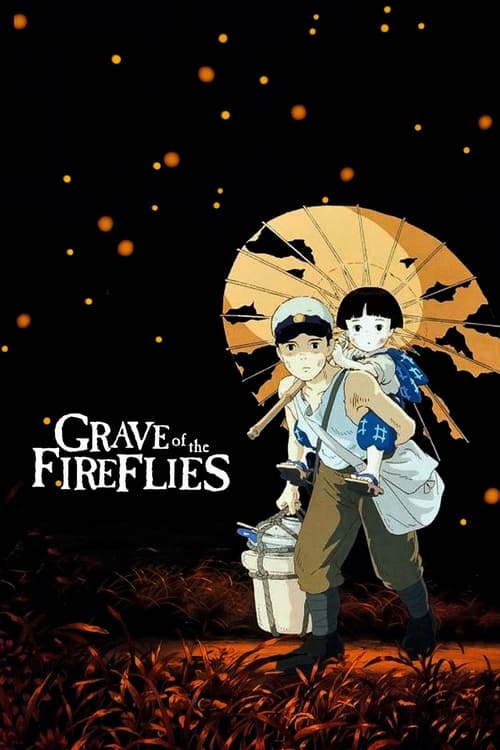
火垂るの墓
"Why do fireflies have to die so soon?"
Director: Isao Takahata
Cast: Tsutomu Tatsumi, Ayano Shiraishi, Yoshiko Shinohara, Akemi Yamaguchi, Masayo Sakai
Grave of the Fireflies — Movie Quotes
Memorable Quotes
なぜホタルはすぐ死んでしまうん? (Naze hotaru wa sugu shinde shimaun?)
Context
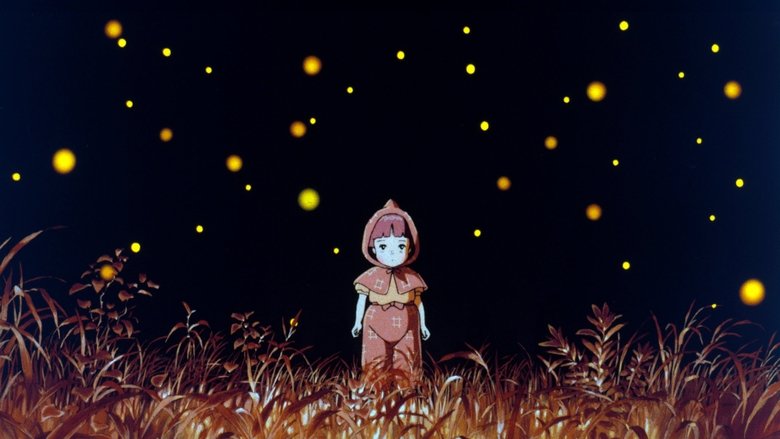
After their first night in the abandoned bomb shelter, Seita awakens to find Setsuko digging a grave for the fireflies they caught, which have all died. She tells Seita she knows their mother is also in a grave before asking this devastating question.
Meaning
Translated as "Why do fireflies have to die so soon?", this is the film's most iconic and heartbreaking line. At this moment, Setsuko has just buried a tin full of dead fireflies and has also revealed that she knows her mother is dead. The question is a poignant, innocent query about mortality that extends far beyond the insects. It symbolizes the fragility of life and the tragedy of children dying young in the war, directly reflecting her own fate and Seita's grief.
平成20年9月21日、僕は死んだ。(Heisei 20-nen 9-gatsu 21-nichi, boku wa shinda.)
Context
The film opens on a scene of a malnourished and dying Seita in a crowded Sannomiya train station. This line is delivered as his spirit observes his own death, setting a somber and inevitable tone for the flashback that constitutes the rest of the film.
Meaning
The film's opening line, which translates to "September 21, 1945... that was the night I died." This immediately establishes the film's tragic nature, informing the audience from the outset that the protagonists will not survive. This narrative choice removes any suspense about their survival and forces the viewer to focus instead on the journey and the emotional weight of their struggle, making the story a haunting reflection rather than a simple tale of survival.
おおきに。(Ookini.)
Context
Seita returns to the shelter with food after learning of Japan's surrender. He finds Setsuko weak and hallucinating, offering her a piece of watermelon. She thanks him before falling into a final sleep from which she never wakes.
Meaning
This is Setsuko's last word, a simple "Thank you" to Seita in the Kansai dialect. In her final moments, while hallucinating from malnutrition, Seita gives her a piece of watermelon. Her gratitude in this state is profoundly moving. It demonstrates her enduring love and appreciation for her brother, despite all the hardship he has been unable to save her from. It is a moment of pure, heartbreaking affection before she succumbs.
Explore More About This Movie
Dive deeper into specific aspects of the movie with our detailed analysis pages