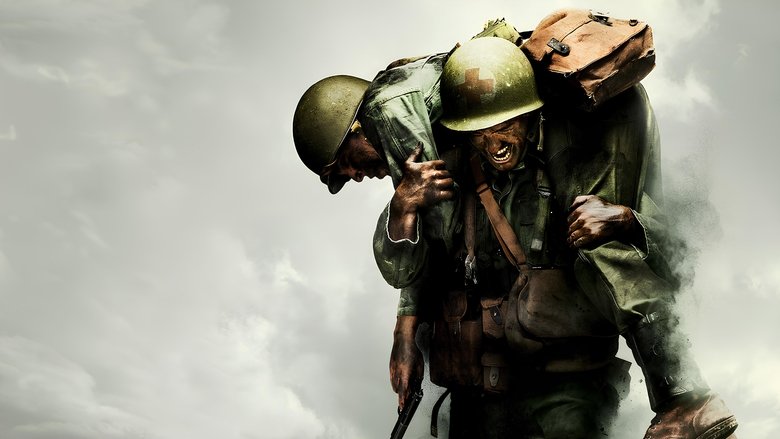
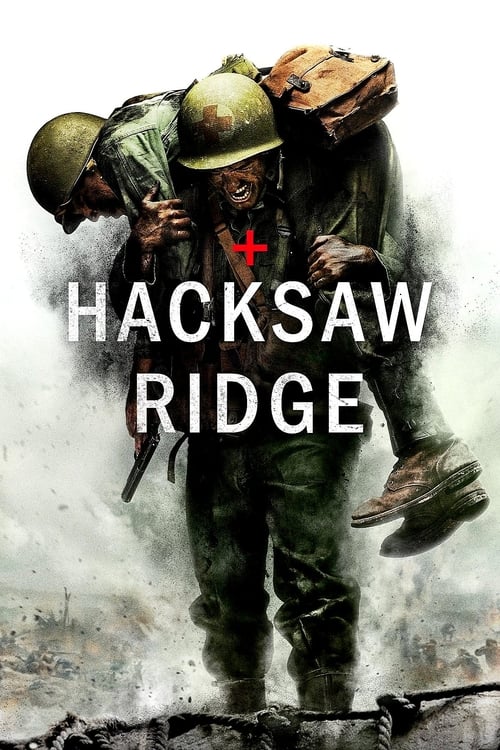
"One of the greatest heroes in American history never fired a bullet."
Hacksaw Ridge - Symbolism & Philosophy
Symbols & Motifs
The Bible
The Bible represents the source of Desmond's faith, conviction, and moral compass. It is his spiritual shield and the guide for his non-violent principles.
Desmond carries a small Bible, a gift from Dorothy, with him at all times, especially into battle. After being wounded and lowered from the ridge, his primary concern is the location of his lost Bible, which his comrades retrieve for him, signifying their newfound respect for his faith. The final shot shows him clutching it as he is carried away.
Hacksaw Ridge
The ridge itself symbolizes a hell on Earth, a place of ultimate trial and human brutality. For Desmond, it becomes a crucible where his faith is tested and proven. Ascending the ridge is like entering a different, horrifying world, and his work there is a form of redemption and salvation for the fallen.
The Maeda Escarpment, a sheer 400-foot cliff, is the primary battleground in the film's second half. The brutal, gory combat and the seemingly impossible task of taking the ridge solidify its symbolic status as a place of immense suffering and, through Desmond's actions, a place of miracles.
The Rope
The rope symbolizes a lifeline and salvation. It is the physical means by which Desmond saves the lives of the wounded soldiers, connecting the hellish top of the ridge with the safety below.
Desmond uses a unique rope technique he devised to lower the wounded soldiers one by one from the top of the cliff to the medics below. This act is repeated over and over, reinforcing the rope's symbolic weight as an instrument of his life-saving mission.
Water/Washing
After the first brutal assault on the ridge, Desmond is seen washing the blood and grime from himself, a moment of brief respite and spiritual recentering. In the end, as he is being lowered from the cliff, water from canteens is poured over him, resembling a baptism or a cleansing ritual that washes away the horrors he has endured, reinforcing his Christ-like symbolism.
Philosophical Questions
Can one be both a patriot and a pacifist during wartime?
The film explores this question through its protagonist, Desmond Doss. Doss feels a strong patriotic duty to serve his country after the attack on Pearl Harbor, yet his religious convictions forbid him from taking a life. The Army initially sees these two positions as mutually exclusive, labeling him a coward and trying to discharge him. However, Doss insists he is a "conscientious cooperator," not a conscientious objector, wishing to serve and save lives on the front line. His incredible bravery in saving 75 men without a weapon ultimately proves that one can fulfill their duty to their country and comrades in a profound way without resorting to violence, challenging the conventional definition of a soldier.
What is the true nature of courage?
"Hacksaw Ridge" presents a powerful argument that courage is not synonymous with aggression or violence. The soldiers in Desmond's platoon initially define courage by the willingness to kill the enemy. Desmond's refusal to carry a gun is seen as the ultimate act of cowardice. The film systematically deconstructs this notion. In the heat of battle, it is the unarmed medic who repeatedly runs into the most intense fire to rescue the wounded, demonstrating a level of bravery that awes his fellow soldiers. The film posits that true courage lies in standing by one's convictions, facing down fear for the sake of others, and choosing to create and preserve life in the midst of death and destruction.
Is it ever justifiable to compromise one's core beliefs for a greater cause?
This question is at the heart of Desmond's personal conflict. Everyone around him—his fiancée, his commanding officers, his fellow soldiers—pressures him to make a small compromise: just hold a rifle during training. They argue that the greater cause of winning the war justifies this minor concession. Desmond, however, believes that any compromise on a fundamental moral principle is a betrayal of his very identity. The film argues through his story that staying true to one's beliefs, even when it appears to conflict with a larger goal, can ultimately lead to a more profound and impactful form of contribution. His unwavering stance is what ultimately allows him to perform his extraordinary acts of heroism.
Core Meaning
The central message of "Hacksaw Ridge" is the profound power of faith and the courage of conviction in the face of overwhelming opposition. Director Mel Gibson explores the idea that true heroism is not defined by acts of violence, but by the unwavering commitment to one's principles, even when those principles seem antithetical to the surrounding environment. The film posits that one can serve their country and fellow man without compromising their core beliefs. Desmond Doss's story is a testament to the idea that there are different forms of bravery and that saving lives is as, if not more, heroic than taking them. It is a powerful argument for staying true to oneself, suggesting that such integrity can inspire and transform even the most hardened skeptics.