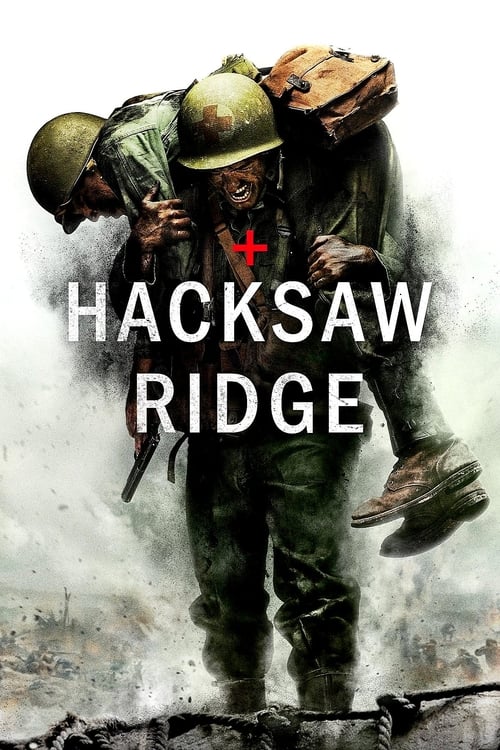
Hacksaw Ridge
"One of the greatest heroes in American history never fired a bullet."
Overview
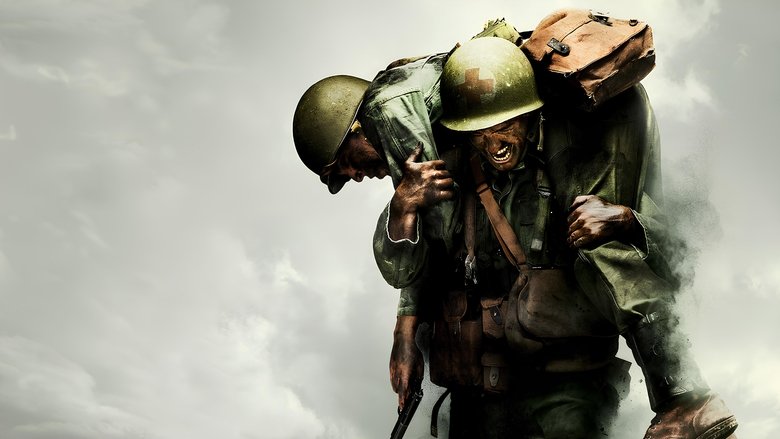
"Hacksaw Ridge" chronicles the extraordinary true story of Desmond Doss, a Seventh-day Adventist who, due to his religious beliefs, enlists in the U.S. Army during World War II as a combat medic with the refusal to bear arms. The film is divided into two distinct halves. The first part explores Desmond's upbringing in rural Virginia, the source of his non-violent convictions stemming from a childhood incident and his deep faith, and his burgeoning romance with a nurse named Dorothy Schutte. This section also details the immense adversity he faces during basic training, where his steadfast refusal to touch a rifle leads to ostracization, physical abuse from his fellow soldiers, and a court-martial for insubordination.
The second half of the film thrusts viewers into the brutal reality of the Pacific Theater, specifically the bloody Battle of Okinawa. Assigned to the 77th Infantry Division, Desmond's unit is tasked with capturing the formidable Maeda Escarpment, nicknamed "Hacksaw Ridge." It is here, amidst some of the most horrific battle scenes ever depicted on film, that Desmond's courage is truly tested. Unarmed, he ventures repeatedly into the line of fire to save his wounded comrades, demonstrating a form of heroism that transcends conventional definitions of bravery.

Core Meaning
The central message of "Hacksaw Ridge" is the profound power of faith and the courage of conviction in the face of overwhelming opposition. Director Mel Gibson explores the idea that true heroism is not defined by acts of violence, but by the unwavering commitment to one's principles, even when those principles seem antithetical to the surrounding environment. The film posits that one can serve their country and fellow man without compromising their core beliefs. Desmond Doss's story is a testament to the idea that there are different forms of bravery and that saving lives is as, if not more, heroic than taking them. It is a powerful argument for staying true to oneself, suggesting that such integrity can inspire and transform even the most hardened skeptics.
Thematic DNA
Faith and Conviction
This is the central theme of the film. Desmond Doss's Seventh-day Adventist faith is the bedrock of his refusal to kill or even carry a weapon. This conviction is not portrayed as a weakness but as the source of his immense strength and resilience. He endures ridicule, abuse, and a court-martial, holding fast to his belief that "Thou shalt not kill." His faith is what drives him to repeatedly pray, "Please Lord, help me get one more," as he rescues soldiers on the ridge, demonstrating that his spiritual convictions fuel his physical courage.
The Horrors of War vs. Pacifism
Mel Gibson masterfully juxtaposes the serene beauty of Desmond's home in the Blue Ridge Mountains with the visceral, brutal, and graphic horror of the Battle of Okinawa. The battle scenes are unflinchingly violent, showcasing the gruesome reality of war in a way that rivals films like "Saving Private Ryan." This stark depiction serves to amplify the power of Doss's pacifism. In a world of chaos and death, his mission to save lives stands in stark, heroic contrast, questioning the conventional narrative that violence is the only response to conflict.
Courage and Heroism
"Hacksaw Ridge" challenges and redefines the traditional concept of wartime heroism. Initially, Doss is perceived as a coward by his peers and superiors for his refusal to fight. However, his actions on the battlefield—unarmed and under constant fire—prove to be a form of bravery far exceeding that of many of his armed comrades. He demonstrates that courage is not the absence of fear, but acting in spite of it, and that heroism can be found in selfless acts of preservation rather than destruction. He ultimately earns the respect of the men who once mocked him and is awarded the Medal of Honor.
Man vs. Institution
A significant portion of the film's conflict is Desmond's struggle against the rigid institution of the U.S. Army. The military system demands conformity and obedience, and his unique beliefs are seen as insubordination. His fight to serve as a medic without a weapon is a battle against bureaucracy and ingrained prejudice. His eventual victory in the court-martial represents a triumph of individual conscience over institutional pressure.
Character Analysis
Desmond Doss
Andrew Garfield
Motivation
Desmond's primary motivation is his deeply held religious belief in the commandment "Thou shalt not kill," which stems from a traumatic childhood event where he nearly killed his brother. This is coupled with a profound sense of duty to serve his country and save lives during the war, leading him to enlist as a combat medic. His mantra on the ridge becomes, "Please Lord, help me get one more."
Character Arc
Desmond Doss remains a steadfast character, meaning he does not change his core beliefs but instead changes the world around him. His journey is not about learning to compromise but about proving the strength of his convictions. He starts as an outcast, ridiculed and abused for his beliefs. Through his unwavering bravery and self-sacrifice on Hacksaw Ridge, he transforms from a pariah into a revered hero, earning the deep respect and admiration of the very men who once tormented him.
Sergeant Howell
Vince Vaughn
Motivation
Howell's motivation is to train his soldiers to survive the horrors of war. He believes that a soldier who won't carry a weapon is useless and a danger to the platoon. His actions, while harsh, stem from a desire to protect his men by ensuring they are all capable fighters.
Character Arc
Sergeant Howell initially embodies the institutional opposition to Desmond. He is tough, cynical, and sees Desmond's pacifism as a liability that endangers the other men. He relentlessly tries to break Desmond and get him to quit. However, after witnessing Desmond's incredible heroism on the battlefield, Howell's skepticism turns into profound respect and awe. His arc represents the broader change in attitude of the entire unit towards Desmond.
Tom Doss
Hugo Weaving
Motivation
His motivation is rooted in the trauma of his own wartime experiences. He is haunted by the loss of his friends and the psychological scars of combat, driving him to try and prevent his sons from suffering the same fate. His love for his family is evident, though tragically warped by his pain.
Character Arc
Tom Doss is a World War I veteran suffering from severe PTSD, which manifests as alcoholism and domestic abuse. He is initially deeply opposed to Desmond's enlistment, not out of cowardice, but because he knows the true horror of war and wants to protect his sons from it. His arc culminates in a redemptive moment when he uses his own painful military past to save Desmond during his court-martial, showing up in his old uniform with a letter from a former commander that secures Desmond's right to serve as a medic.
Dorothy Schutte
Teresa Palmer
Motivation
Dorothy is motivated by her deep love for Desmond and her admiration for his character and unwavering principles. She provides him with the Bible that becomes his spiritual guide and represents the home and future he hopes to return to.
Character Arc
Dorothy serves as Desmond's connection to the life and peace he is fighting to preserve. She is his steadfast supporter and moral anchor. Her arc is less about personal transformation and more about her unwavering faith in Desmond, even when she fears for his life. She falls in love with him because of his unique principles and stands by him during his trials in the military.
Symbols & Motifs
The Bible
The Bible represents the source of Desmond's faith, conviction, and moral compass. It is his spiritual shield and the guide for his non-violent principles.
Desmond carries a small Bible, a gift from Dorothy, with him at all times, especially into battle. After being wounded and lowered from the ridge, his primary concern is the location of his lost Bible, which his comrades retrieve for him, signifying their newfound respect for his faith. The final shot shows him clutching it as he is carried away.
Hacksaw Ridge
The ridge itself symbolizes a hell on Earth, a place of ultimate trial and human brutality. For Desmond, it becomes a crucible where his faith is tested and proven. Ascending the ridge is like entering a different, horrifying world, and his work there is a form of redemption and salvation for the fallen.
The Maeda Escarpment, a sheer 400-foot cliff, is the primary battleground in the film's second half. The brutal, gory combat and the seemingly impossible task of taking the ridge solidify its symbolic status as a place of immense suffering and, through Desmond's actions, a place of miracles.
The Rope
The rope symbolizes a lifeline and salvation. It is the physical means by which Desmond saves the lives of the wounded soldiers, connecting the hellish top of the ridge with the safety below.
Desmond uses a unique rope technique he devised to lower the wounded soldiers one by one from the top of the cliff to the medics below. This act is repeated over and over, reinforcing the rope's symbolic weight as an instrument of his life-saving mission.
Water/Washing
After the first brutal assault on the ridge, Desmond is seen washing the blood and grime from himself, a moment of brief respite and spiritual recentering. In the end, as he is being lowered from the cliff, water from canteens is poured over him, resembling a baptism or a cleansing ritual that washes away the horrors he has endured, reinforcing his Christ-like symbolism.
Memorable Quotes
Please Lord, help me get one more.
— Desmond Doss
Context:
Desmond repeats this phrase over and over again during the night on Hacksaw Ridge, after his unit has retreated. Each time he lowers a soldier to safety, he prays for the strength to go back into the danger and save another life.
Meaning:
This becomes Desmond's prayer and mantra as he single-handedly rescues wounded soldiers from the battlefield. It encapsulates his selfless determination, his reliance on faith for strength, and the core of his heroic mission.
With the world so set on tearing itself apart, it don't seem like such a bad thing to me to want to put a little bit of it back together.
— Desmond Doss
Context:
Desmond says this during his court-martial proceedings, explaining to the military tribunal why he is so adamant about serving as a medic without carrying a weapon.
Meaning:
This quote is Desmond's simple, powerful justification for his actions and beliefs. It articulates his worldview that in a time of widespread destruction, the act of healing and saving is the most profound and necessary form of service.
I don't know how I'm going to live with myself if I don't stay true to what I believe.
— Desmond Doss
Context:
Desmond says this to Dorothy when he is facing a court-martial and the possibility of prison for refusing to carry a firearm. He explains that the personal cost of abandoning his convictions is too high.
Meaning:
This line reveals that Desmond's adherence to his principles is not about stubbornness, but about his fundamental identity and integrity. Compromising his beliefs would be a form of spiritual death for him.
Most of these men don't believe the same way you do. But they believe so much in how much you believe.
— Captain Glover
Context:
After Desmond's heroic night on the ridge, Captain Glover says this to him as the men of the unit wait for Desmond to finish his prayers before launching the final, successful assault on Hacksaw Ridge.
Meaning:
Captain Glover's statement signifies the turning point in how Desmond is perceived by his unit. It shows that the soldiers' respect is not necessarily for Desmond's specific religious doctrine, but for the incredible strength and integrity of his faith, which they have witnessed firsthand.
While everybody else is taking life, I'm going to be saving it.
— Desmond Doss
Context:
Desmond explains his decision to enlist as a combat medic to his family, articulating his mission to save lives amidst the carnage of war.
Meaning:
This quote clearly defines Desmond's chosen role in the war. It establishes his unique form of service and patriotism, framing his pacifism not as an objection to the war itself, but as a different, constructive way to participate in it.
Philosophical Questions
Can one be both a patriot and a pacifist during wartime?
The film explores this question through its protagonist, Desmond Doss. Doss feels a strong patriotic duty to serve his country after the attack on Pearl Harbor, yet his religious convictions forbid him from taking a life. The Army initially sees these two positions as mutually exclusive, labeling him a coward and trying to discharge him. However, Doss insists he is a "conscientious cooperator," not a conscientious objector, wishing to serve and save lives on the front line. His incredible bravery in saving 75 men without a weapon ultimately proves that one can fulfill their duty to their country and comrades in a profound way without resorting to violence, challenging the conventional definition of a soldier.
What is the true nature of courage?
"Hacksaw Ridge" presents a powerful argument that courage is not synonymous with aggression or violence. The soldiers in Desmond's platoon initially define courage by the willingness to kill the enemy. Desmond's refusal to carry a gun is seen as the ultimate act of cowardice. The film systematically deconstructs this notion. In the heat of battle, it is the unarmed medic who repeatedly runs into the most intense fire to rescue the wounded, demonstrating a level of bravery that awes his fellow soldiers. The film posits that true courage lies in standing by one's convictions, facing down fear for the sake of others, and choosing to create and preserve life in the midst of death and destruction.
Is it ever justifiable to compromise one's core beliefs for a greater cause?
This question is at the heart of Desmond's personal conflict. Everyone around him—his fiancée, his commanding officers, his fellow soldiers—pressures him to make a small compromise: just hold a rifle during training. They argue that the greater cause of winning the war justifies this minor concession. Desmond, however, believes that any compromise on a fundamental moral principle is a betrayal of his very identity. The film argues through his story that staying true to one's beliefs, even when it appears to conflict with a larger goal, can ultimately lead to a more profound and impactful form of contribution. His unwavering stance is what ultimately allows him to perform his extraordinary acts of heroism.
Alternative Interpretations
While the primary interpretation of "Hacksaw Ridge" is a celebration of faith and conviction, some critics have offered alternative readings. One perspective suggests that the film, despite its pacifist hero, still indulges in and glorifies violence. This view argues that Mel Gibson's fascination with visceral, graphic bloodshed, a hallmark of his directorial style, almost revels in the carnage, potentially undermining the film's anti-war message. The brutality of the battle scenes is so intense and stylized that it can be seen as thrilling, an "action-film awesomeness" that the movie can't quit, which sits uneasily with its story of non-violence. Another interpretation views the film through the lens of Mel Gibson's own personal journey, seeing it as a form of public penance or a parallel to his own story. This reading suggests that Gibson identifies with Doss as a misunderstood figure of faith who endures ridicule and persecution before ultimately earning respect, making the film a deeply personal statement of redemption.
Cultural Impact
"Hacksaw Ridge" made a significant cultural impact upon its release, marking a triumphant return to directing for Mel Gibson after a decade-long hiatus and a period of personal controversy. The film was met with critical acclaim, particularly for Gibson's direction and Andrew Garfield's performance, earning six Academy Award nominations, including Best Picture, Best Director, and Best Actor, and winning for Best Film Editing and Best Sound Mixing. It successfully brought the incredible, and previously little-known, true story of Desmond Doss to a global audience, highlighting a unique form of heroism rooted in faith and non-violence. The film resonated with both secular and religious audiences by focusing on the universal themes of courage, conviction, and sacrifice without being overly preachy. It sparked conversations about the nature of pacifism, the definition of patriotism, and the role of faith in adversity. By graphically depicting the horrors of war, it also served as a powerful anti-war statement, showing that even within the hellscape of battle, the impulse to save life can be the most profound act of courage.
Audience Reception
Audiences overwhelmingly praised "Hacksaw Ridge," often citing it as one of the best war films ever made. Viewers were deeply moved by the incredible true story of Desmond Doss, which many were unfamiliar with. Andrew Garfield's performance was frequently highlighted as phenomenal and emotionally powerful. The film was lauded for its powerful themes of faith, humanity, and courage in the face of adversity. Many reviews from viewers describe the film as inspiring, emotional, and unforgettable. A recurring point of praise was the film's realistic and brutal depiction of the battle scenes, with many feeling it was necessary to convey the true horrors of war and the magnitude of Doss's bravery. Criticism was minimal but some viewers found the first hour of the film to be slow or a bit corny compared to the intensity of the second half. Despite the graphic violence, the overall verdict from audiences was that it is a must-see film that tells a powerful and important story of a true hero.
Interesting Facts
- The real Desmond Doss saved an estimated 75 men on Hacksaw Ridge. Doss himself modestly estimated the number at 50, while his commanding officer claimed it was 100, so they compromised on 75.
- This was Mel Gibson's first directorial effort in 10 years, following 2006's "Apocalypto."
- The film was shot in just 59 days, primarily in New South Wales, Australia.
- The real Desmond Doss had repeatedly turned down requests for film versions of his story, fearing his actions and beliefs would be portrayed inaccurately. His son, Desmond Doss Jr., praised the film for its remarkable level of accuracy in adhering to the principle of the story.
- To maintain historical accuracy, the filmmakers omitted some of Doss's real-life heroics because they feared the audience wouldn't find them believable, including being wounded by a grenade and then giving up his stretcher to another man, only to be shot by a sniper and crawl 300 yards to safety.
- The film also omits Doss's prior combat service and acts of bravery in the Battles of Guam and Leyte, for which he was awarded the Bronze Star.
- Andrew Garfield extensively studied the real Desmond Doss to prepare for the role, and Doss's son told Garfield that he truly captured his father in the film.
- Teresa Palmer, who plays Dorothy, was so keen on the role that she sent an audition she recorded on her iPhone to Mel Gibson.
- Producer Bill Mechanic had been trying to get the film made for 14 years.
⚠️ Spoiler Analysis
Click to reveal detailed analysis with spoilers
Frequently Asked Questions
Explore More About This Movie
Dive deeper into specific aspects of the movie with our detailed analysis pages
Comments (0)
No comments yet. Be the first to share your thoughts!