Skip to content
Hamnet
A haunting historical drama bathed in amber twilight, where unbearable maternal grief transforms like a golden leaf caught in wind into the transcendent canvas of artistic creation.
Hamnet

Hamnet

"Keep your heart open."

26 November 2025 United Kingdom 125 min 7.7 (1,517)

Director: Chloé Zhao

Cast: Jessie Buckley, Paul Mescal, Emily Watson, Joe Alwyn, Jacobi Jupe

Drama Romance Grief and Healing Through Art / Art as Atonement Maternal Bond and Nature vs. Social Expectations Absence, Distance, and Marital Strain The Cycle of Life, Death, and Memory Reclaiming the Unsung Historical Woman
Budget: $30,000,000
Box Office: $107,756,183

Overview

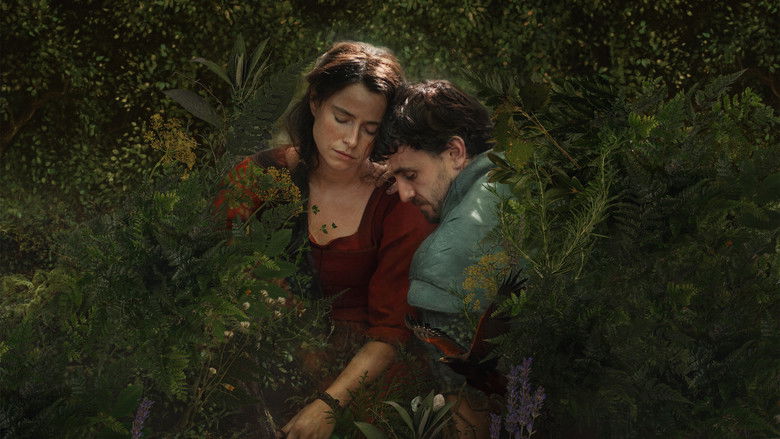
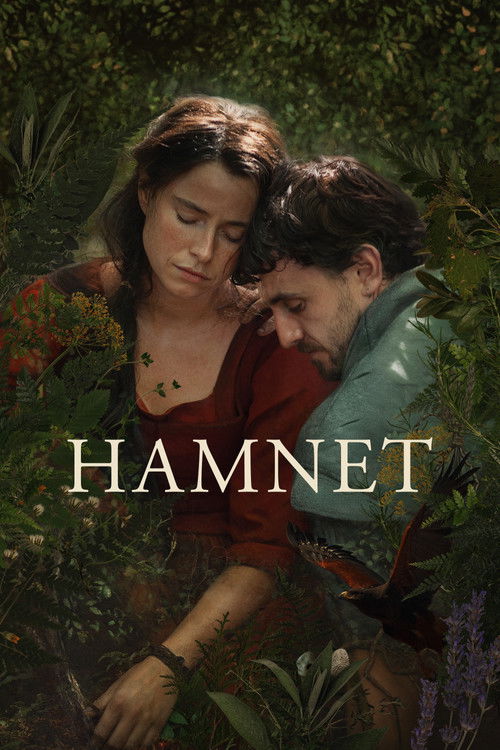
Set in the late 16th century in Stratford-upon-Avon, England, Hamnet follows the courtship, marriage, and domestic life of a penniless Latin tutor and aspiring playwright, William Shakespeare (Paul Mescal), and Agnes Hathaway (Jessie Buckley), an enigmatic, free-spirited woman living on the fringes of society with an extraordinary knowledge of herbal lore and falconry. Despite family disapproval and stark differences in temperament, the pair form a deep, passionate bond, eventually marrying and starting a family that grows to include three children: Susanna and twins Hamnet and Judith.

As William leaves for London to build a burgeoning theatrical career, Agnes remains in the countryside, holding the household together while raising their children amidst the rhythms of the natural world. However, when sudden illness strikes their quiet home, the couple’s bond is tested by the crushing weight of physical distance, unspoken resentment, and personal loss. Directed by Academy Award winner Chloé Zhao and based on Maggie O’Farrell’s bestselling novel, the film presents an intimate portrait of domestic survival, maternal strength, and the fragile spark of creative genius.

Core Meaning

The central thesis of Hamnet is that art is an act of communal healing and spiritual atonement. Director Chloé Zhao reframes William Shakespeare’s iconic tragedy Hamlet not as a singular triumph of isolated male intellect, but as a monument of shared, agonizing grief born out of family tragedy.

By elevating Agnes Hathaway to the forefront of the story, the film reclaims the unsung female experience behind history’s greatest literary achievements. It asserts that creation does not erase pain; rather, it provides a sanctuary where the living and the dead can meet, communicate, and achieve catharsis.

Thematic DNA

Grief and Healing Through Art / Art as Atonement 30%
Maternal Bond and Nature vs. Social Expectations 25%
Absence, Distance, and Marital Strain 20%
The Cycle of Life, Death, and Memory 15%
Reclaiming the Unsung Historical Woman 10%

Grief and Healing Through Art / Art as Atonement

The film contrasts the immediate, raw physical grief of motherhood with the transformative power of theater. William channels his guilt and sorrow into writing Hamlet, using the stage to speak to the ghost of his deceased son and seek forgiveness from his wife.

Maternal Bond and Nature vs. Social Expectations

Agnes’s connection to nature, herbs, and falconry reflects a wild, unfiltered instinct. Her maternal love operates outside rigid Elizabethan social conventions, establishing her as the grounded, spiritual anchor of her family.

Absence, Distance, and Marital Strain

The physical divide between rural Stratford and urban London highlights the tension between artistic ambition and domestic duty. William’s absence during family crises creates emotional distance and resentment that can only be bridged through profound creative reconciliation.

The Cycle of Life, Death, and Memory

Framed by visual motifs of nature, death is depicted not as an absolute end, but as a transformation woven into nature’s continuous cycle of rebirth and memory.

Reclaiming the Unsung Historical Woman

Historically dismissed or marginalized as an older, illiterate wife, Agnes is reimagined as a visionary force whose spiritual depth and lived experience fuel the Bard’s greatest works.

Character Analysis

Agnes Shakespeare

Jessie Buckley

Archetype: Hero / Earth Mother / Intuitive Visionary Key Trait: Visceral intuition and fierce emotional resilience.

Motivation

Protecting her children and remaining true to her instinctual bond with nature.

Character Arc

Evolves from an independent, free-spirited forest healer into a grief-stricken mother filled with rage, ultimately achieving peace and emotional reconciliation through her husband's theatrical tribute.

William 'Will' Shakespeare

Paul Mescal

Archetype: The Conflict-Ridden Artist / Wanderer Key Trait: Deep sensitivity and tragic artistic drive.

Motivation

Expressing his internal artistic vision while seeking atonement for his physical absence during family crises.

Character Arc

Begins as an impoverished Latin tutor fleeing domestic frustration, becomes an ambitious London playwright, and eventually channels his overwhelming guilt and sorrow into writing a masterpiece.

All 5 characters and cast

Symbols & Motifs

The Kestrel / Falcon

Meaning:

Freedom, uncanny intuition, and Agnes’s wild independence.

Context:

Introduced when William first sees Agnes in the woods calling her hawk. It underscores her perception and untamed spirit throughout the narrative.

The Red Egg in the Forest

Meaning:

Unborn life, vulnerability, and the eternal cycle of nature.

Context:

Appears in the opening shot nestled among fallen leaves and circular roots, and recurs in the closing sequence to signify renewal after loss.

Color-Coded Costume Shifts (Red to Brown to Red)

Meaning:

Life/vitality (Red), profound mourning (Brown), and spiritual rebirth (Red).

Context:

Agnes wears vibrant red/orange during her youth and courtship, transitions to muted earthy brown following tragedy, and dons red once again at the Globe Theatre climax.

The Dining Table and Overhanging Pitchforks

Meaning:

Domestic unity vs. spatial/emotional rift.

Context:

Scenes surrounding the family hearth feature two mounted pitchforks pointing in opposite directions, visually accentuating the divide between William’s journeys to London and Agnes’s rural roots.

The Manuscript Script / Name Interchangeability

Meaning:

The thin line between reality and theater, memory and immortality.

Context:

Emphasizes the Elizabethan reality that 'Hamnet' and 'Hamlet' were virtually identical names, serving as a physical bridge between father and son.

Memorable Quotes

Will you be brave?
— Will (William Shakespeare)

Context

Spoken by Will to Agnes as a central question throughout their marriage.

Meaning

Serves as a recurring emotional touchstone throughout their marriage, asking one another to withstand physical distance, artistic uncertainty, and unimaginable sorrow.

Our children's hearts beat, they smile...
— Agnes

Context

Spoken by Agnes reflecting on maternal love and life.

Meaning

Highlights the tactile, living beauty of motherhood juxtaposed against the constant threat of infant mortality in Elizabethan England.

All 4 quotes

Philosophical Questions

Can art truly heal personal tragedy, or is it an act of self-serving catharsis?

Explored through William’s creation of Hamlet, questioning whether writing the play is an act of genuine love or a way to purge personal guilt.

How is legacy measured—through public immortality or private love?

Juxtaposes Shakespeare’s enduring historical genius against Agnes’s immediate, lived devotion to her family.

Is grief inherently isolating, or can it be shared communally?

Examined through the contrast between Agnes’s silent retreat into nature and the shared emotional experience of the theater audience.

Alternative Interpretations

Interpretation 1: Art as a Bridge Across Death
The performance at the Globe allows William to give his deceased son the adult life he was denied, transforming the play into a loving monument that reconnects husband and wife.

Full ending explanation

Cultural Impact

Hamnet challenges centuries-old biographical tropes that vilified or dismissed Shakespeare's real-life wife. By placing Agnes Hathaway at the center of the narrative, the film aligns with contemporary cultural movements that re-evaluate history through marginalized female perspectives.

Premiering at the Telluride and Toronto International Film Festivals in late 2025 before a wide theatrical release, the film earned widespread critical acclaim and crossed $100 million at the global box office. Jessie Buckley’s performance was widely cited by critics and peers as a masterclass in screen acting.

Audience Reception

Praised Aspects: Jessie Buckley’s raw performance; Łukasz Żal’s naturalistic cinematography; the powerful emotional climax at the Globe Theatre.

Main Points of Criticism: A slow middle-act pace; an overcast, unglamorized period visual design that felt overly somber to some viewers; the reuse of Max Richter’s familiar piece 'On the Nature of Daylight' during the climax.

Overall Verdict: Widely praised as an emotionally devastating adaptation that turns historical drama into an intimate study of love, loss, and creation.

Interesting Facts

  • Director Chloé Zhao revealed during a BAFTA interview that she and Jessie Buckley refashioned the staging and emotional resolution of the Globe Theatre ending just four days before production wrapped.
  • Author Maggie O’Farrell, author of the 2020 novel, co-wrote the screenplay directly with Chloé Zhao.
  • Real-life brothers Jacobi Jupe (Hamnet) and Noah Jupe (the actor playing Prince Hamlet on stage) were cast together, adding an uncanny visual and emotional parallel.
  • Exterior London scenes were shot at The Charterhouse in Clerkenwell, a 600-year-old historic venue, with filming logistically scheduled around real-life weddings and black-tie galas.
  • Hamnet received eight Academy Award nominations, including Best Picture, Best Director (Chloé Zhao), and Best Actress (Jessie Buckley), while winning Best Motion Picture – Drama at the Golden Globes.

Easter Eggs

Chloé Zhao’s Cameo

Director Chloé Zhao made a subtle, uncredited cameo as one of the groundlings standing in the audience at the Globe Theatre during the Hamlet performance.

Literal Pitchfork Framing

Two pitchforks mounted over the Shakespeare hearth are placed pointing in opposite directions, visually mirroring William and Agnes stepping away from each other whenever he leaves for London.

Woven Play Lines

William casually speaks phrases that would later become famous lines in Romeo and Juliet and Hamlet, showing how lived moments translated into his writing.

Jupe Brothers Visual Echo

When Agnes looks up at Prince Hamlet on stage, the striking facial resemblance between Noah Jupe (the stage actor) and Jacobi Jupe (Hamnet) creates a ghost-like illusion of her son grown into adulthood.

Frequently Asked Questions

Explore More About This Movie

Dive deeper into specific aspects of the movie with our detailed analysis pages

Comments (0)

Leave a comment

No comments yet. Be the first to share your thoughts!

Similar Movies