Skip to content
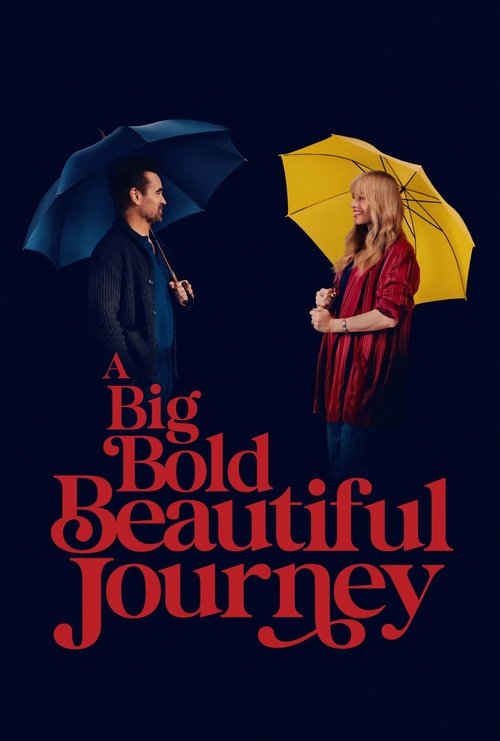
A Big Bold Beautiful Journey
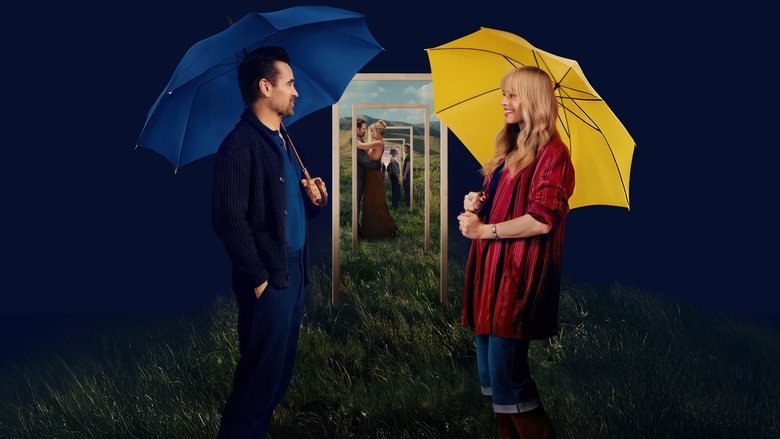
A dreamlike romantic fantasy in which two guarded strangers drive through magic doorways into their own wounded pasts — a road movie where every mile travelled is a memory reopened.
A Big Bold Beautiful Journey

A Big Bold Beautiful Journey

"Relive your past. Change your future."

17 September 2025 United States of America 109 min 6.2 (438)

Director: Kogonada

Cast: Colin Farrell, Margot Robbie, Kevin Kline, Phoebe Waller-Bridge, Lily Rabe

Drama Fantasy Romance The past as a place you can visit but not repair Fear of intimacy in adulthood Surrender versus control The ordinary made magical Strangers as the only possible witnesses
Budget: $45,000,000
Box Office: $22,393,413

Overview

Kogonada's A Big Bold Beautiful Journey begins with a small absurdity: David picks up a rental car — a battered 1994 Saturn SL — from a peculiar agency staffed by unnervingly serene employees, and drives off with a GPS that seems to know rather more than it should. At a mutual friend's wedding he meets Sarah, a woman openly uninterested in marriage or romance, while David confesses that his boyhood ambition was simply to be a husband and a father. They part as strangers do.

The GPS has other plans. It routes David to a highway rest stop where he runs into Sarah again, her own car dead in the lot, and instructs him to pick her up. From there the device keeps steering the two reluctant travellers to the same coordinates until they surrender and take the trip together — hundreds of miles toward a series of doors that open, impossibly, onto moments from their own pasts.

What follows is less a fantasy adventure than a road movie about emotional archaeology, shot with the patient, framed-and-held stillness that marked Kogonada's Columbus and After Yang. Colin Farrell and Margot Robbie play two adults carrying the ordinary, unglamorous baggage of grown-up life, and the film asks whether walking back through it might be the only route forward.


Core Meaning

The film argues that the past is not a place you can fix — only a place you can finally look at. Its magic doors are not a time-travel machine but a therapeutic device: David and Sarah are not offered the power to rewrite what wounded them, only the far stranger gift of standing in the room again as adults and seeing it whole.

Kogonada's proposition is that intimacy is impossible while two people remain unvisited by their own histories. David's arrested longing — a man whose childhood dream was domestic love and who has never gotten there — and Sarah's practised refusal of attachment are treated not as opposite temperaments but as two shapes of the same avoidance. The GPS, an outside voice insisting they go somewhere they would never choose, is the film's blunt admission that most people do not undertake this work voluntarily.

The message: love is not a destination you arrive at by luck or by chemistry, but the thing that becomes possible once you stop driving around your own life. The journey of the title is deliberately, almost embarrassingly, sincere — the "big bold beautiful" is not the road trip. It is the decision to be known.

Thematic DNA

The past as a place you can visit but not repair 30%
Fear of intimacy in adulthood 25%
Surrender versus control 20%
The ordinary made magical 15%
Strangers as the only possible witnesses 10%

The past as a place you can visit but not repair

The doors deliver David and Sarah into traumatic moments from their own histories — not to intervene, but to witness. The film consistently withholds the wish-fulfilment of the time-travel genre: nothing they do rewrites what happened. What changes is their relationship to it, which is why critics read the conceit as therapy dressed as fantasy rather than as science fiction.

Fear of intimacy in adulthood

The two leads are introduced as thesis and antithesis at a wedding — Sarah declaring herself uninterested in marriage or relationships, David admitting he wanted to be a husband and father since childhood. Neither position has produced love. The film treats both the refusal and the yearning as defensive postures, and the road strips them away by force.

Surrender versus control

The GPS repeatedly overrides the characters' intentions, delivering them to the same places until they give in and take the journey together. The comedy of the first act — two adults arguing with a dashboard — becomes the film's spiritual argument: some things cannot be chosen into existence, only consented to.

The ordinary made magical

Kogonada situates the miraculous in the most mundane American furniture available: a discontinued 1994 Saturn, a fast-food rest stop, a rental counter, a highway. The supernatural never arrives with spectacle; it arrives as an errand. This is of a piece with a filmmaker whose earlier work found transcendence in modernist architecture and household objects.

Strangers as the only possible witnesses

David and Sarah can enter each other's memories in a way no one in those memories ever could. The film suggests that being seen by someone with no stake in your history — no defensiveness, no counter-grievance — is a specific and rare form of grace, and that this, rather than romance in the conventional sense, is what binds them.

Character Analysis

David

Colin Farrell

Archetype: The Yearning Everyman / reluctant hero Key Trait: Disarming, unguarded sincerity

Motivation

To finally become the husband and father his boyhood self imagined — and, underneath that, to understand why the wanting alone was never enough.

Character Arc

Introduced as a man who has wanted the ordinary things — marriage, fatherhood — since childhood and somehow never reached them. The journey forces him back through the moments that quietly taught him to want without asking, and he moves from passive longing to the harder act of actually offering himself to another person.

Sarah

Margot Robbie

Archetype: The Guarded Skeptic / antiheroine of romance Key Trait: Wit deployed as a perimeter fence

Motivation

To remain unaccountable to anyone, which she experiences as freedom and the film gradually reframes as protection.

Character Arc

She announces at the wedding that she has no interest in marriage or relationships, and spends the first stretch of the trip resisting both the GPS and David. Her arc runs from articulate refusal to the recognition that her self-sufficiency was built out of specific injuries — visible, finally, because she is standing inside them again.

All 4 characters and cast

Symbols & Motifs

The magic doors

Meaning:

Memory rendered as architecture. A door is a threshold you can stand in without committing — which is precisely the film's model of therapeutic revisiting: you go in, you look, you come back out.

Context:

The GPS routes the pair hundreds of miles to a series of doors that open onto traumatic moments from their pasts. Each one is entered as an ordinary act — a hand on a handle — rather than as a special effect.

The GPS

Meaning:

An external authority that knows the route to your own interior better than you do. Read variously as fate, as a therapist, as grace, or as the simple insistence of a life that will not let you keep avoiding it.

Context:

It comes with the rental car, sends David to the rest stop where Sarah is stranded, tells him to pick her up, and thereafter keeps delivering them to the same coordinates until they stop resisting.

The 1994 Saturn SL

Meaning:

A vehicle from a marque that no longer exists — a machine that is itself a piece of the past still running. The characters travel into their histories inside an object that is history.

Context:

David is issued the car by the strange rental agency at the film's outset; it becomes the vessel for the entire journey.

The wedding

Meaning:

The culturally sanctioned version of the film's real subject. It stages love as arrival and ceremony, against which the messy, unphotographed work the two leads actually have to do is measured.

Context:

The mutual friend's wedding is where David and Sarah meet and where each states their opposing position on love, establishing the terms the rest of the film dismantles.

The rental agency and its employees

Meaning:

Custodians of the mechanism — figures who dispense the journey without explaining it. Their calm bureaucratic manner makes the metaphysical feel like paperwork, insisting that this kind of reckoning is available to anyone who walks in.

Context:

Kevin Kline and Phoebe Waller-Bridge appear as employees of the peculiar car rental company that sets the whole apparatus in motion.

The rest stop

Meaning:

The non-place where the journey truly begins: a location defined entirely by people passing through it, which is what David and Sarah are to each other before they agree to stop.

Context:

The GPS directs David to a Burger King rest stop where he encounters Sarah again and finds her car will not start.

Philosophical Questions

If you could return to the moment that hurt you, but change nothing, would it be worth going?

This is the film's central wager. The doors offer witness rather than repair, and David and Sarah's willingness to keep walking through them is the argument that seeing clearly is itself a form of change — that the wound was never the event but the story told about it afterwards.

Can two people love each other before they have understood themselves?

The film's structure answers no: David and Sarah cannot meaningfully connect until the journey has excavated them both. Their initial positions at the wedding — his yearning, her refusal — are presented as symptoms, and the romance is withheld until the symptoms are traced to their sources.

Is fate a violation of freedom or a rescue from it?

The GPS overrides the characters' choices repeatedly, and the film frames this as benevolent. It raises, without fully resolving, the question of whether the life you would have chosen for yourself was ever the one you needed — and whether surrender to something outside your control is weakness or wisdom.

What is the difference between wanting love and being capable of it?

David has wanted marriage and fatherhood since childhood and has neither. The film uses him to separate desire from capacity, suggesting that longing can function as its own kind of avoidance — a way of keeping love permanently in the future tense.

Alternative Interpretations

The therapy reading. The most widely held view, and the one supported by how the film behaves: the doors are not time travel at all but a dramatised model of therapeutic work. Nothing in the past is altered; the pair simply go back, look, and return changed. On this reading the GPS is a therapist, the road is a course of treatment, and love is what becomes possible afterwards rather than the goal itself.

Full ending explanation

Cultural Impact

The film arrived as a test case for a specific 2025 industry question: whether an original, mid-budget, star-driven adult romance could still open in cinemas. The answer was brutal. Against a reported $50 million budget it managed roughly $20 million worldwide, with a third-weekend theater-count collapse of about 93% that trade press treated as a landmark data point rather than an ordinary flop. Deadline and Screen Daily both covered it as a case study in what went wrong for a film with two of the most bankable stars alive attached.

For Margot Robbie it was a conspicuous post-Barbie follow-up, and the gap between that film's cultural saturation and this one's indifference became its own media narrative. For Kogonada it marked the move from the arthouse — Columbus, After Yang — into studio-scale romance, and the critical consensus (a 37% Rotten Tomatoes score) largely framed the film as a sensibility that did not survive the scaling-up: contemplative style applied to a high-concept premise that many reviewers found either too literal or too sentimental.

Its afterlife has been kinder. Released to digital and VOD in October 2025, the film went on to find a substantially larger audience on streaming than it ever did theatrically — a now-familiar trajectory for earnest adult dramas that cinema audiences will not leave the house for but will happily watch at home. It sits in a lineage of magical-realist romances about revisiting the past that runs from Eternal Sunshine of the Spotless Mind through About Time, and the divide it exposed — between viewers who found it moving and those who found it twee — has become the standard shape of the conversation around it.

Audience Reception

The split. Critical reception was largely negative — a 37% Rotten Tomatoes score — while general audiences were warmer but far from enthusiastic: a B- CinemaScore, and PostTrak exit polling at 2.5 stars with 64% positive and a notably low 44% 'definite recommend'. That recommendation figure is the telling number: even viewers who enjoyed it were reluctant to send friends.

What was praised. The performances drew consistent goodwill, with Farrell and Robbie credited for nuanced, committed work in a register that gave them little cover. Reviewers who admired the film singled out the cinematography as often breathtaking, the melancholic score, and the dreamlike atmosphere characteristic of Kogonada's contemplative style. Its willingness to be openly sincere in an ironic marketplace won it defenders.

The criticisms. The dominant complaint was tonal and structural: a whimsical high-concept premise wedded to a director's patient, meditative sensibility, with the result that the film struck many as both too literal in its metaphors and too slack in its middle. Some found the magic underexplained to the point of arbitrariness; others found the emotional beats unearned, arguing that a story handing its characters direct access to their traumas skips the work it wants credit for.

Overall verdict. A beautiful, deeply sincere film that a majority of viewers found more admirable than affecting — commercially disastrous in cinemas, and then meaningfully more successful on streaming, where its intimate scale and unhurried pace suit the format better than a multiplex ever did.

Interesting Facts

  • The film reunites Colin Farrell with Kogonada, who directed him in the 2021 science-fiction drama After Yang.
  • It was directed by Kogonada from a screenplay by Seth Reiss, and was announced with Farrell and Margot Robbie attached in 2024.
  • The majority of the film was shot in California, with some sequences captured in Hawaii.
  • David's rental car is a 1994 Saturn SL — a model from a car brand that no longer exists — issued to him by the film's strange rental agency along with its magical GPS.
  • Kevin Kline and Phoebe Waller-Bridge appear as employees of the car rental company that sets the story in motion.
  • The film's score and soundtrack were substantial enough to receive their own dedicated release and encyclopedia entry.
  • It was a major commercial failure: made for a reported budget of around $50 million, it opened to roughly $3.5 million domestically and $4.5 million from 42 international markets for an $8 million global debut, ninth on that weekend's worldwide chart.
  • In its third weekend the film lost about 93% of its theater count — falling from more than 3,300 domestic locations to 609 — and took just $74,000, among the steepest collapses ever recorded for a wide release. It finished with roughly $20 million worldwide.
  • Exit polling told a mixed story: audiences gave it a B- CinemaScore, while Screen Engine/Comscore PostTrak scores were weaker at 2.5 stars, 64% positive and only a 44% 'definite recommend'.
  • After its brief theatrical run the film went to digital and VOD in October 2025, and later found a considerably larger audience on streaming than it ever did in cinemas.

Easter Eggs

Colin Farrell headlining a Kogonada film about memory and loss

A direct rhyme with the director's After Yang, in which Farrell also played a man sifting through recorded memories to understand a life. The pairing invites the film to be read as a companion piece — the same preoccupation moved from science fiction into fable.

The 1994 Saturn SL

An unusually specific piece of production design. Saturn was a defunct American marque, and issuing the characters a decade-defining economy car from the mid-90s quietly dates the era whose wounds they are about to revisit.

The Burger King rest stop

The film's supernatural machinery makes its decisive move in the most anonymous commercial space in America. It's a signature Kogonada gesture — treating banal architecture as sacred ground — and the joke that fate's chosen meeting place is a fast-food parking lot is central to the film's tone.

Frequently Asked Questions

Explore More About This Movie

Dive deeper into specific aspects of the movie with our detailed analysis pages

Comments (0)

Leave a comment

No comments yet. Be the first to share your thoughts!

Similar Movies