Skip to content
Hello, My Twenties!
A pastel-hued slice-of-life dramedy brimming with tender vulnerability, unfolding like a protective patchwork quilt warm on the outside yet fraying along jagged edges of hidden trauma.
Hello, My Twenties!

Hello, My Twenties!

청춘시대

"College students close cohabitation."

22 July 2016 — 07 October 2017 South Korea 2 season 26 episode Ended 7.2 (135)

Cast: Han Ye-ri, Han Seung-yeon, Park Eun-bin, Shin Hyun-soo, Son Seung-won

Drama Comedy Hidden Trauma, Guilt & Catharsis Female Solidarity & Found Family Economic Precarity & Class Inequality Identity Formation, Self-Perception & Societal Masks Romance, Toxic Relationships & Healing from Abuse

Overview

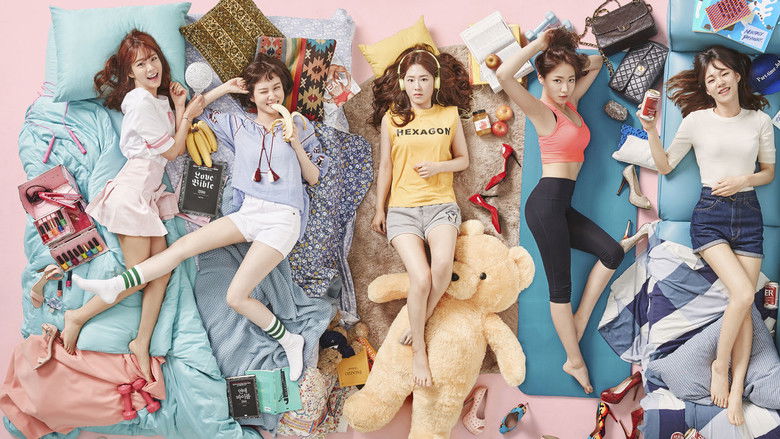
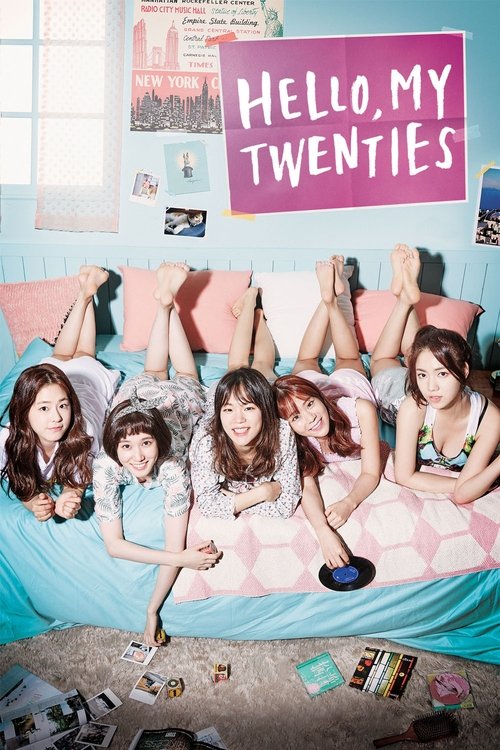
Hello, My Twenties! (Korean: 청춘시대; Age of Youth), written by Park Yeon-seon and directed by Lee Tae-gon and Kim Sang-ho, follows five female university students in their twenties living together in a shared boarding house in Seoul named Belle Epoque. Across two seasons and 26 episodes, the series chronicles the mundane, messy, and deeply emotional reality of navigating early adulthood.

The narrative weaves together the lives of women from radically different socio-economic backgrounds and personality spectrums: a chronically overworked eldest housemate, an insecure woman trapped in a toxic relationship, an uninhibited journalism student with a wild imagination, an unapologetic sugar-baby lifestyle companion, and a painfully shy country freshman. As their clashing habits and private neuroses collide in shared domestic quarters, the house transitions from a place of quiet alienation to a sanctuary of profound solidarity.

Beyond the charm of daily college life and youthful romance, the overarching story arc across both seasons functions as an emotional excavation. As personal crises, past traumas, family obligations, and buried secrets bubble to the surface, the series explores how young women learn to confront their respective ghosts through communal empathy and shared resilience.
Core Meaning

The fundamental message of Hello, My Twenties! is that growing up is an act of unmasking and confronting one’s hidden wounds in community. The show deconstructs romanticized nostalgia associated with youth, illustrating that one's twenties are frequently fraught with financial instability, social anxiety, emotional abuse, and unresolved grief.

Through its multi-season arc, the series asserts that:

  • Every individual carries private burdens that others cannot see, demanding empathy rather than snap judgment.
  • Healing from personal and systemic trauma cannot happen in isolation—it requires authentic communication, vulnerability, and mutual support.

Thematic DNA

Hidden Trauma, Guilt & Catharsis 30%
Female Solidarity & Found Family 25%
Economic Precarity & Class Inequality 20%
Identity Formation, Self-Perception & Societal Masks 15%
Romance, Toxic Relationships & Healing from Abuse 10%

Hidden Trauma, Guilt & Catharsis

In Season 1, trauma is internalized through Eun-jae's guilt over her father's death, Yi-na's survivor's guilt from near-drowning, and Jin-myung's burden of her comatose brother. In Season 2, the focus shifts to externalized justice through Ye-eun's PTSD and agoraphobia after abduction, and Ji-won's investigation into the childhood sexual abuse of Moon Hyo-jin. Catharsis is achieved only when repressed truth is voiced and acknowledged.

Female Solidarity & Found Family

Subverting conventional female-rivalry tropes, minor conflicts over shared space, food, or cleanliness give way to unconditional loyalty when real crises hit—such as Ye-eun’s dating violence rescue in Season 1 or the hostage invasion in Season 2. Belle Epoque transforms from a rental property into a true found-family home.

Economic Precarity & Class Inequality

Through Yoon Jin-myung’s multiple part-time jobs and exhausting corporate recruitment journeys, the show critiques modern South Korea's grueling labor landscape, the 'spec' culture, and corporate power dynamics. The contrast between Jin-myung’s poverty and Yi-na’s transactional luxury highlights diverse survival strategies under capitalism.

Identity Formation, Self-Perception & Societal Masks

Each housemate presents a carefully curated persona to the outside world—bubbly, polished, aloof, or cynical. Adulthood is portrayed as the difficult process of shedding false pretenses, recognizing one’s shadow self, and learning self-acceptance.

Romance, Toxic Relationships & Healing from Abuse

Stripped of melodrama and presented with psychological nuance, romance ranges from the sweetness of first love to the harrowing warning signs of dating violence and coercive control, emphasizing that genuine love requires safety and autonomy.

Character Analysis

Yoon Jin-myung

Han Ye-ri

Archetype: The Resilient Key Trait: Hyper-stoic, overburdened, deeply empathetic

Motivation

Transitions from bare survival ('I want to become an ordinary office worker') to discovering self-worth and emotional availability.

Character Arc

Begins as an emotionally exhausted student working endless jobs to support her hospitalized brother and mother. Following her brother's death and mother's imprisonment, she travels to China, releases her emotional armor, and secures a corporate job at an entertainment agency in Season 2.

Jung Ye-eun

Han Seung-yeon

Archetype: The Wounded Believer Key Trait: Insecurely attached, expressive, resilient survivor

Motivation

Evolves from seeking external validation through men to rebuilding self-respect and psychological independence.

Character Arc

Starts as a fashion-conscious girl trying to keep her indifferent boyfriend satisfied. After surviving kidnapping and dating violence in Season 1, she navigates PTSD, panic attacks, and agoraphobia in Season 2, reclaiming her voice and agency with the support of Kwon Ho-chang.

All 5 characters and cast

Symbols & Motifs

The Shoe Cabinet 'Ghost' (신발장 귀신)

Meaning:

Functions as an evolving metaphor for repressed trauma and internal conscience, where each housemate projects her own darkest secret and guilt onto an unseen presence.

Context:

Used in Season 1 when Ji-won jokingly claims to see a ghost living in the entryway shoe cabinet of the Belle Epoque sharehouse.

High Heels vs. Worn Sneakers

Meaning:

Visually reflects economic class and emotional state. Worn sneakers symbolize relentless, unglamorous survival, while luxury designer heels represent superficial validation and survival through compromise.

Context:

Juxtaposed between Jin-myung's blistered feet in worn sneakers and Yi-na's luxury designer heels, which Yi-na eventually discards when choosing honest work.

Belle Epoque (The House)

Meaning:

Represents a microcosm of safe harbor and communal refuge, acting as a secular altar where judgments are suspended and confessions are received.

Context:

The shared physical house and kitchen table where the women gather for late-night beers and shared meals throughout both seasons.

The Heung-dan / 'Scented Dan' Letter (Pink Letter)

Meaning:

Symbolizes how unaddressed past cruelty leaves lingering ripples of malice across time.

Context:

An anonymous, hate-filled letter discovered in Jo Eun’s room that acts as the inciting mystery of Season 2.

The Cut Apple / Preserves

Meaning:

Represents domestic boundary-crossing, trust, and growing intimacy between roommates who initially guarded their private boundaries.

Context:

Shared food items such as jam, side dishes, and cut fruit passed around the shared kitchen in Belle Epoque.

Memorable Quotes

나만 참는 줄 알았다. 나만 불편한 줄 알았다. 말하지 않아도 알아줄 줄 알았다. 하지만 말하지 않으면 아무도 모른다.
— Yoo Eun-jae

Context

Eun-jae's opening internal monologue in Season 1, Episode 1 after erupting at her roommates over passive-aggressive grievances.

Meaning

Introduces the series' core premise: silence breeds resentment, while communication fosters connection.

나는 특별한 것을 꿈꿨다. 하지만 세상은 평범해지는 것조차 너무나 힘든 곳이었다.
— Yoon Jin-myung

Context

Jin-myung reflects in Season 1, Episode 3 on the exhaustion of juggling multiple part-time jobs.

Meaning

Captures the reality of the contemporary Korean youth crisis, redefining success simply as achieving ordinary stability.

All 5 quotes

Episode Highlights

Take Off Your Shoes

S1E1

Establishes the claustrophobic anxiety of moving into a sharehouse, culminating in Eun-jae’s emotional outburst and the housemates' subsequent reconciliation.

Significance:

Lays the foundational groundwork for the series' domestic intimacy and the necessity of honest communication.

My Name Is Yoon Jin-myung

S1E4

Provides a deep dive into Jin-myung’s precarious financial life and her painful romance with chef Park Jae-wan.

Significance:

Crystallizes the drama’s sharp socioeconomic critique of contemporary youth struggle under capitalism.

The Hope That Kills

S1E8

Explores Jin-myung’s moral and emotional exhaustion regarding her comatose brother, culminating in her breakdown over holding onto false hope.

Significance:

Serves as a critically lauded emotional turning point in Jin-myung's character arc and family burden.

Listen, If You Watch Closely & After the End

S1E11

Depicts the kidnapping of Ye-eun by her abusive ex-boyfriend Ko Doo-young and the physical intervention by her roommates to save her.

Significance:

Cements the housemates' unbreakable bond of solidarity and resolves the major family crises of Season 1.

Hello, New Belle Epoque

S2E1

Follows a comedic airport road trip to welcome Jin-myung home, bidding farewell to Yi-na and introducing new housemate Jo Eun.

Significance:

Transitions the series into its second season dynamic while shifting the domestic ensemble.

I Was the One in the Mirror

S2E7

Focuses on Ye-eun’s confrontation with panic disorder and street harassment alongside Kwon Ho-chang’s gentle support.

Significance:

Deepens the exploration of PTSD recovery and neurodivergent connection.

See You Tomorrow & The Beautiful Age

S2E13

Features a tense home-invasion hostage crisis inside Belle Epoque, followed by Ji-won winning public acknowledgment for Moon Hyo-jin's abuse case in court.

Significance:

Brings emotional and narrative resolution to both seasons, confronting systemic justice and closure.

Philosophical Questions

Is complete transparency necessary for intimacy, or is mutual forbearance the true foundation of community?

The series illustrates that relationships flourish not when people demand full disclosure immediately, but when they create an environment safe enough for vulnerability to emerge naturally.

What defines survival when the cost is one’s dignity?

Explored through Jin-myung’s corporate humiliation and Yi-na’s transactional luxury, questioning whether societal definitions of 'respectable survival' are fair to those with zero safety nets.

Can memory ever be truly objective, or do we continuously edit the past to protect our psyche?

Explored via Ji-won and Eun-jae, highlighting how the brain represses or distorts traumatic childhood events to ensure psychological survival.

Alternative Interpretations

  • The Reality of the Ghost: A supernatural reading interprets the entity as an actual spirit drawing death-adjacent guilt together, while the canonical psychological reading treats the ghost purely as a psychological mirror onto which each roommate projects repressed trauma.
  • The Nature of Eun-jae’s Crime: Eun-jae’s belief that she poisoned her father demonstrates how trauma and childhood memory distortions lead survivors to blame themselves for tragedies beyond their control, verified when the autopsy reveals no poison.
  • Foreshadowing of Ji-won’s Fate: Ji-won’s confirmed death in 2025 is interpreted as the culmination of her investigative morality, showing she could no longer live an unexamined life after confronting systemic injustice.

Full ending explanation

Cultural Impact

Premiering on JTBC during 2016–2017, Hello, My Twenties! pioneered female-led ensemble dramas in South Korea, breaking away from male-dominated thrillers and conventional chaebol romance formulas. It set a benchmark that influenced later female-centric series such as Be Melodramatic (2019) and Work Later, Drink Now (2021).

The drama broke significant social taboos by addressing dating violence, the psychological aftermath of abusive relationships, sex-positive conversations among college women, trauma-induced agoraphobia, and childhood sexual misconduct.

Audience Reception

Season 1 received universal critical acclaim for its sharp screenwriting, naturalistic dialogue, and lead chemistry, developing an intense cult following domestically and on Netflix.

Season 2 earned solid ratings and praise for tackling dark topics like PTSD and child abuse, but received mixed reactions regarding the recasting of Yoo Eun-jae, the reduced role of Kang Yi-na, and the darker tonal shift into home-invasion thrillers. Overall, it is regarded as one of the most honest and influential Korean coming-of-age dramas of the 2010s.

Interesting Facts

  • Writer Park Yeon-seon spent years crafting the drama specifically to depict multifaceted, flawed young women without patronizing moral judgments.
  • Park Hye-su could not reprise her role as Yoo Eun-jae in Season 2 due to scheduling conflicts with the film Swing Kids, leading to actress Ji Woo being cast as her replacement.
  • Due to scheduling overlaps with other drama commitments, Ryu Hwa-young's character Kang Yi-na was written out of the main house at the start of Season 2, appearing only in a guest capacity.
  • SHINee’s Onew was originally cast as Kwon Ho-chang in Season 2, but stepped down right before broadcast in August 2017, leading to Lee You-jin being cast at the eleventh hour to reshoot all scenes.
  • Park Eun-bin transformed her poise-focused former child actress image through her energetic, lewd-talking comedic performance as Song Ji-won, paving the way for future career milestones.
  • Every episode featured post-credit mockumentary interviews, quizzes, and psychological profiling vignettes that provided meta-humor and exposition.

Easter Eggs

The Belle Epoque Epilogue Tombs (Season 2, Episode 14)

The final epilogue displayed character gravestones, showing Song Ji-won’s lifespan as 1995–2025. Writer Park Yeon-seon confirmed Ji-won would die at age 30 in the pursuit of journalistic truth.

Song Ji-won’s 'Scent' & Sung-min’s Framing

While Ji-won mocks Sung-min for lacking sexual attraction toward her, background camera framing and lingering angles repeatedly confirm Sung-min’s quiet, suppressed feelings for her.

Literary Reference of Belle Époque

The name references pre-WWI European optimism, contrasting high aesthetic beauty with the looming, inescapable turbulence of early adulthood.

Frequently Asked Questions

Explore More About This Movie

Dive deeper into specific aspects of the movie with our detailed analysis pages

Comments (0)

Leave a comment

No comments yet. Be the first to share your thoughts!

Similar Movies