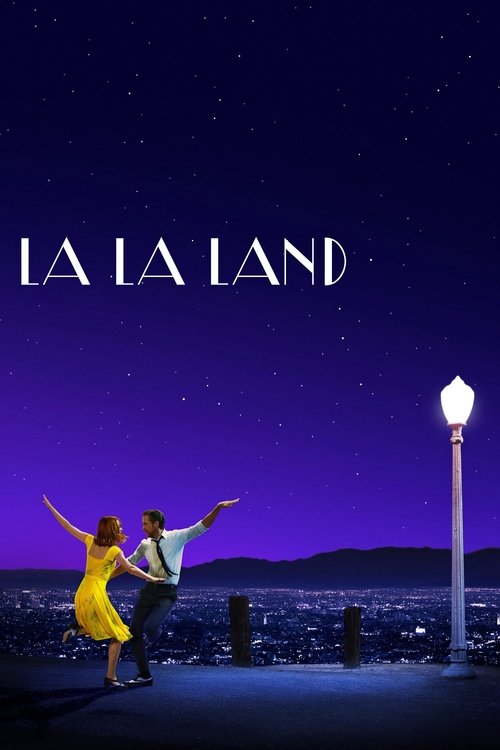
La La Land
"Here's to the fools who dream."
Overview
Set in modern-day Los Angeles, "La La Land" tells the story of Mia (Emma Stone), an aspiring actress, and Sebastian (Ryan Gosling), a dedicated jazz musician, who are struggling to make ends meet in a city known for crushing hopes and breaking hearts. Mia works as a barista on a movie studio lot, rushing between countless frustrating auditions, while Sebastian clings to his dream of opening his own jazz club, refusing to compromise his artistic integrity.
Their paths cross in a moment of road rage on a congested freeway, and despite their initial friction, a series of chance encounters leads them to fall deeply in love. They encourage each other's passions and navigate the exhilarating highs and crushing lows of pursuing their artistic ambitions. As success begins to mount, they are faced with decisions that begin to fray the fabric of their love affair, forcing them to confront the difficult balance between their relationship and their individual dreams.
Core Meaning
"La La Land" is a poignant exploration of the conflict between dreams and reality, and the sacrifices often required to achieve personal and professional fulfillment. Director Damien Chazelle wanted to create a personal film that captures both the romantic allure and the harsh, lonely environment of Los Angeles for aspiring artists. The film serves as a tribute to the "fools who dream," celebrating the audacity of chasing unrealistic ambitions even when faced with failure. Ultimately, it poses a bittersweet question about the cost of success: can love and personal dreams coexist, or must one be sacrificed for the other? The film suggests that while some relationships may not last, their impact can be profound and essential in helping individuals become who they are meant to be.
Thematic DNA
The Pursuit of Dreams vs. Reality
This is the central theme of the film. Both Mia and Sebastian are defined by their ambitions—Mia to be an actress and Sebastian to own a jazz club. The narrative juxtaposes the vibrant, dreamlike musical numbers with the harsh realities of rejection, compromise, and failure. The film's title itself refers to a state of being out of touch with reality, a necessary mindset for those chasing seemingly impossible goals in Los Angeles. Their journey highlights the immense struggle and sacrifice inherent in pursuing artistic passions.
Love and Sacrifice
Mia and Sebastian's love story is inextricably linked to their dreams. They are each other's biggest supporters, pushing one another to keep striving. However, as their careers begin to diverge, their relationship is tested. Sebastian joins a commercially successful but artistically compromising band to provide stability, while Mia pours everything into her one-woman show. The film's bittersweet ending reveals that achieving their individual dreams ultimately required the sacrifice of their relationship, posing the heartbreaking question of "what if?".
Nostalgia and Modernity
"La La Land" is a love letter to the Golden Age of Hollywood musicals, emulating the style of classics like "Singin' in the Rain" and "The Umbrellas of Cherbourg." Sebastian's character embodies this theme through his devotion to traditional jazz, which he feels is a dying art form. His friend Keith challenges this perspective, arguing that jazz must evolve to survive. The film itself balances this tension, using classic filmmaking techniques like CinemaScope and shooting on film, while telling a contemporary story with a realistic, modern sensibility.
Artistic Integrity vs. Commercial Success
Sebastian faces a major internal conflict when he joins Keith's popular jazz-fusion band. He achieves financial success and popularity, but at the cost of his artistic soul, playing music he doesn't respect. Mia confronts him about this, believing he is abandoning his true passion. This theme questions whether an artist can remain a purist and still succeed in a commercial world. Sebastian's ultimate success with his own club, on his own terms, suggests that integrity can prevail, but often after a period of difficult compromise.
Character Analysis
Mia Dolan
Emma Stone
Motivation
Mia is driven by a deep love for classic Hollywood and a desire to create meaningful art. She wants to be a storyteller and is inspired by her aunt who introduced her to the magic of movies. Her primary motivation is to achieve her dream of becoming a successful actress and to prove to herself that she is good enough, despite constant rejection.
Character Arc
Mia begins as an idealistic but frequently rejected aspiring actress, working a mundane job while dreaming of stardom. Her relationship with Sebastian inspires her to take control of her career by writing her own one-woman play. Though the play initially seems like a failure, it demonstrates her growth from a passive auditioner to an active creator. This act of courage ultimately lands her the life-changing role that makes her a star. Five years later, she has achieved her dream but at the cost of her relationship with Sebastian. Her final, knowing smile to him signifies a mature acceptance of their shared past and separate futures.
Sebastian 'Seb' Wilder
Ryan Gosling
Motivation
Sebastian is motivated by a passionate, almost religious devotion to traditional jazz. He fears the art form is dying and feels a personal responsibility to save it. His dream is not just to be a musician, but to create a sanctuary for "pure jazz" by opening his own club, educating a new generation of listeners about its beauty and importance.
Character Arc
Sebastian starts as a stubborn and uncompromising jazz purist, struggling financially because he refuses to play music he doesn't respect. His love for Mia initially reinforces his dreams, but practical pressures lead him to join a commercially successful band, a significant compromise of his artistic integrity. This decision creates a rift between him and Mia. After their breakup, he is re-inspired by Mia's encouragement and finally opens his own jazz club, "Seb's." He succeeds on his own terms, preserving the art form he loves. His arc is about learning to balance his traditionalist ideals with the necessity of moving forward, ultimately achieving his dream while honoring the memory of the love that helped him get there.
Keith
John Legend
Motivation
Keith is motivated by a desire to make jazz relevant and popular for a modern audience. He believes in adapting and evolving the genre, rather than preserving it as a museum piece. He argues, "How are you going to be a revolutionary if you're such a traditionalist? You're holding on to the past, but jazz is about the future."
Character Arc
Keith is a successful musician and an old acquaintance of Sebastian's. He offers Sebastian a stable, well-paying job in his jazz-fusion band. He represents a different philosophy of art—one that embraces evolution and commercial appeal. He serves as a narrative foil to Sebastian, challenging his rigid traditionalism and forcing him to confront the reality of making a living as a musician. His character does not undergo a significant arc but acts as a catalyst for Sebastian's central conflict.
Symbols & Motifs
Color Palette
The vibrant, saturated colors, particularly primary colors like blue, yellow, and red, are used to reflect the characters' emotions and the film's heightened, dreamlike reality. Director Damien Chazelle and cinematographer Linus Sandgren used specific color palettes for different scenes to convey meaning; for example, blue often signifies creativity and romance, while warmer tones represent nostalgia and the peak of the characters' love.
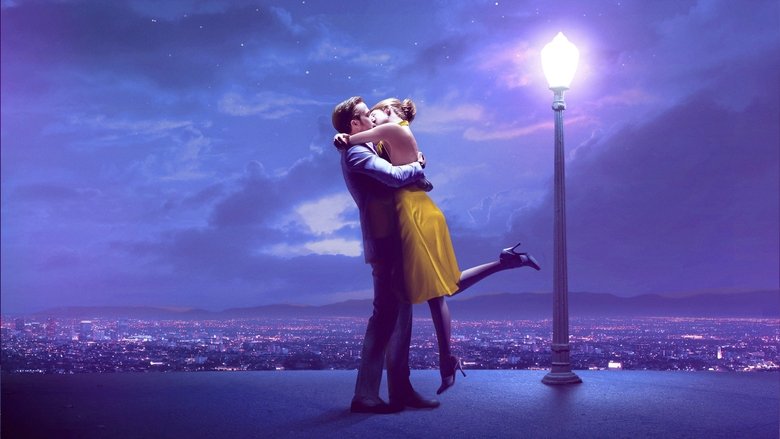
Color is a dominant feature throughout the film. Mia's brightly colored dresses in the early musical numbers stand out against the backdrop of L.A. The magical twilight sky during the "A Lovely Night" dance sequence uses purples and blues to create a romantic, ethereal mood. The lighting in key scenes, like the green spotlight during their "City of Stars" duet, is intentionally theatrical and symbolic.
The Seasons
The film's narrative is structured around the four seasons, starting with Winter and ending five years later in another Winter. Each season represents a distinct phase of Mia and Sebastian's relationship and their professional journeys: Winter for their initial, somewhat cold encounters; Spring for their blossoming romance; Summer for the peak of their love and success; and Fall for the decline and eventual end of their relationship.
On-screen titles announce the beginning of each new season, mirroring a technique from the classic musical "The Umbrellas of Cherbourg." The progression through the seasons provides a clear structural arc for the story, mapping the characters' emotional and professional highs and lows over the course of a year, before the final time jump.
Seb's Jazz Club
The jazz club, which Sebastian dreams of opening, symbolizes the ultimate realization of artistic dreams and integrity. It represents a space where art can exist in its purest form, uncompromised by commercial demands. For Mia, the name she suggests, "Seb's," symbolizes her belief in him and her lasting impact on his life, even after they part ways.
The club is a recurring topic of conversation between Mia and Sebastian. Initially, it is just an idea, a dream. In the end, five years later, Mia stumbles into the club, now a reality named "Seb's," featuring the logo she designed. This discovery triggers the film's final, poignant "what if" montage.
Spotlights
The use of theatrical spotlights in non-theatrical settings symbolizes moments where fantasy and reality blur. It isolates Mia and Sebastian, emphasizing that in these key emotional moments, they are the sole focus, as if they are on a stage. It highlights the performative nature of their dreams and their romance within the larger stage of Los Angeles.
During their dance at the Griffith Observatory, a spotlight finds them as they waltz among the stars, literally elevating their romance to a fantastical plane. When Sebastian plays their theme in the restaurant, a single spotlight illuminates him, capturing Mia's attention and signaling a pivotal moment. This motif is used to visually represent the magic and heightened emotion they experience together.
Memorable Quotes
Here's to the ones who dream, foolish as they may seem.
— Mia Dolan
Context:
Mia sings this during her final, pivotal audition. Instead of reading lines, she is asked to simply tell a story. She sings about her aunt, an actress who inspired her, and this raw, personal performance is what finally lands her a major role, launching her career.
Meaning:
This lyric from the song "Audition (The Fools Who Dream)" encapsulates the film's central message. It's a tribute to all the artists and dreamers who pursue their passions against all odds. It celebrates the courage and vulnerability required to chase a dream, even when society might dismiss it as foolish.
City of stars, are you shining just for me?
— Sebastian Wilder & Mia Dolan
Context:
The song appears multiple times. Sebastian first sings it alone on the Hermosa Beach pier at dusk. Later, he and Mia sing it as a duet in their apartment, symbolizing the merging of their dreams and their love story. It becomes their love theme, reappearing in the film's final moments at Seb's jazz club.
Meaning:
This iconic lyric from the main theme, "City of Stars," captures the sense of hope and loneliness felt by aspiring artists in Los Angeles. It questions whether the city's promise of fame and success is a personal destiny or just an impersonal, distant glimmer. The song explores the longing for connection and recognition in a vast, competitive world.
I'm always gonna love you.
— Mia Dolan & Sebastian Wilder
Context:
This exchange happens on the hill overlooking the city, near the Griffith Observatory, after Mia's successful audition. They both realize that her career will take her to Paris, and they make the mutual, heartbreaking decision not to follow each other, choosing instead to pursue their individual dreams while acknowledging their enduring love.
Meaning:
This simple declaration, exchanged before Mia leaves for Paris, is the emotional core of their separation. It acknowledges that while their paths are diverging and their romantic relationship is ending, the love and impact they had on each other's lives is permanent. It frames their ending not as a failure, but as a poignant, mature acceptance of their reality.
People love what other people are passionate about.
— Mia Dolan
Context:
Mia says this to Sebastian while they are discussing his dream of opening a jazz club. He is feeling cynical about the relevance of traditional jazz. Her encouragement is a key moment that reinforces his dream and deepens their connection.
Meaning:
This is Mia's advice to a discouraged Sebastian, who worries that no one cares about the kind of pure jazz he loves. It's a powerful statement about the infectious nature of genuine passion. Mia's belief is that if an artist's commitment is authentic and deeply felt, it will attract an audience, regardless of whether the art form is mainstream.
Philosophical Questions
Is it possible to achieve both ultimate professional success and lasting romantic fulfillment, or does one inevitably come at the expense of the other?
The film explores this question through the central conflict between Mia and Sebastian's careers and their relationship. In their case, the paths to their respective dreams diverge geographically and emotionally. The film's conclusion, where they are both successful but no longer together, strongly suggests that a sacrifice was necessary. The final fantasy montage presents an idealized version where they have both, but even that vision is tinged with the knowledge that it is not reality. The film doesn't offer a definitive answer for everyone, but in the specific world of these two ambitious artists, it portrays their love and their dreams as ultimately incompatible forces.
What is the role of nostalgia in art and life?
Sebastian's character is a vessel for this question. His staunch traditionalism and desire to preserve the past of jazz are both his greatest passion and his biggest obstacle. The film asks whether holding onto the past is a noble act of preservation or a refusal to engage with the future. Keith's character offers the counter-argument that art must evolve to stay alive. The film's own aesthetic, which lovingly recreates the style of old musicals to tell a modern story, suggests a middle ground: that we can draw inspiration and beauty from the past to create something new and relevant for the present.
What defines a 'successful' relationship?
"La La Land" challenges the conventional definition of a successful relationship as one that lasts forever. Mia and Sebastian's romance ends, yet the film frames it as profoundly successful and important. Their time together was transformative; they inspired each other, believed in each other when no one else did, and were arguably the catalysts for each other's eventual success. The film suggests that the value of a relationship can be measured by its impact and the growth it fosters, rather than its longevity. Their story is a "happy ending" in that both characters are happy, even if they aren't together.
Alternative Interpretations
The ending of "La La Land" is the most debated aspect of the film, leading to several interpretations. One perspective sees the ending as fundamentally tragic and pessimistic: a commentary on how modern ambition and the pursuit of individual success make enduring love impossible. In this view, both Mia and Sebastian end up with compromised versions of happiness; they have their careers but have lost their soulmate.
A more optimistic interpretation views the ending as bittersweet but ultimately happy. This reading suggests that Mia and Sebastian's relationship was a crucial, formative chapter in their lives that enabled them to achieve their dreams. Their love was real and transformative, and while they didn't end up together, they are both fulfilled individuals who will always be grateful for the role the other played. The final smile they share is not one of regret, but of mutual understanding, love, and acknowledgment of their shared journey. Director Damien Chazelle himself supports this view, stating that the love lasts even if the relationship doesn't. A third interpretation suggests the "what if" montage reveals a flaw in the idealized romance; in that fantasy, Sebastian never opens his own club, implying that for both of them to fully achieve their truest dreams, they had to do it apart.
Cultural Impact
"La La Land" was released to widespread critical acclaim and became a global phenomenon, grossing over $472 million worldwide. It was praised for revitalizing the live-action movie musical, a genre that had become rare in contemporary Hollywood. The film sparked renewed interest in classic musicals and jazz music for a younger generation. Its record-tying 14 Oscar nominations and six wins (including Best Director for Chazelle) cemented its place in cinematic history.
The film's reception was overwhelmingly positive, with critics lauding its direction, performances, music, and visual style. However, it also generated significant cultural conversation and some backlash, particularly regarding its portrayal of jazz through a white protagonist and its perceived nostalgia for a less diverse era of Hollywood. The most memorable moment of its impact was the chaotic and unprecedented mix-up at the 89th Academy Awards, where "La La Land" was mistakenly announced as the winner for Best Picture before the award was correctly given to "Moonlight." This moment became an unforgettable piece of pop culture history. Despite the controversy, the film's influence is seen in the subsequent greenlighting of more original movie musicals, and its aesthetic has been widely referenced in popular culture.
Audience Reception
Audiences polled by CinemaScore gave "La La Land" an average grade of "A-" on an A+ to F scale. PostTrak reported that audiences gave the film an 81% overall positive score and a 93% "definite recommend." Generally, viewers were captivated by the film's romance, stunning visuals, and memorable musical score. The chemistry between Ryan Gosling and Emma Stone was frequently cited as a major strength.
The main point of praise was the film's ambitious originality and its heartfelt tribute to classic Hollywood. However, some viewers criticized the singing and dancing abilities of the leads, arguing they were not at the level of classic musical stars, though others found their imperfections endearing and realistic. The most controversial aspect for audiences was the bittersweet ending. While many found it poignant, realistic, and emotionally resonant, a significant portion of viewers were disappointed and heartbroken that the main couple did not end up together, subverting the traditional "happily ever after" expectation of the genre.
Interesting Facts
- Director Damien Chazelle wrote the screenplay in 2010, but struggled for years to get the film financed as studios were wary of an original, jazz-based musical.
- Ryan Gosling spent about three months learning to play the piano, and all the piano playing seen in the film is actually him, without the use of a hand double or CGI.
- Emma Stone's final audition song, "Audition (The Fools Who Dream)," was performed live on set in a single take to capture a raw, authentic emotional performance.
- The stunning opening musical number, "Another Day of Sun," was filmed in a single, continuous take on a closed-off freeway ramp in Los Angeles over a weekend.
- The film was shot on 35mm film using vintage CinemaScope lenses to evoke the look and feel of classic Hollywood musicals from the 1950s.
- The film tied the record for the most Academy Award nominations (14) with "All About Eve" (1950) and "Titanic" (1997).
- John Legend, who played Keith, had to learn how to play the guitar for his role.
- The film that Mia and Sebastian watch on their date is "Rebel Without a Cause" (1955), and they later visit the Griffith Observatory, a key location from that film.
Easter Eggs
Reference to Damien Chazelle's First Film
During a scene where Mia and Sebastian walk through the Warner Bros. studio lot, a movie poster for "Guy and Madeline on a Park Bench" can be seen in the background. This is a nod to Damien Chazelle's debut feature film from 2009, which was also a jazz-centric musical romance.
Nods to "Singin' in the Rain"
The film contains several visual and thematic allusions to the classic 1952 musical. During the "A Lovely Night" sequence, Sebastian swings around a lamppost in a manner reminiscent of Gene Kelly's iconic performance. The banter between Mia and Seb about being a "serious musician" also echoes a similar exchange between Don Lockwood and Kathy Selden.
Homage to Alfred Hitchcock's "Vertigo"
In the scene where Mia and Sebastian sing "City of Stars" at the piano in their apartment, a distinct green light filters through the window. Director Damien Chazelle has confirmed this was a last-minute homage to Alfred Hitchcock's "Vertigo," which famously used green to symbolize a haunting, dreamlike obsession.
Reference to "The Umbrellas of Cherbourg"
Jacques Demy's 1964 musical was a major influence. "La La Land" borrows its seasonal structure and bittersweet romantic ending from the French classic. Additionally, in the scene on the studio lot, a doorway is marked with the word "Parapluies," the French word for "umbrellas."
The "Casablanca" Window
While walking through the studio lot, Mia points out the window that Humphrey Bogart and Ingrid Bergman looked out of in the film "Casablanca." This directly places Mia and Sebastian within the lineage of classic, and ultimately tragic, Hollywood romances.
⚠️ Spoiler Analysis
Click to reveal detailed analysis with spoilers
Frequently Asked Questions
Explore More About This Movie
Dive deeper into specific aspects of the movie with our detailed analysis pages
Comments (0)
No comments yet. Be the first to share your thoughts!