Hellsing Ultimate
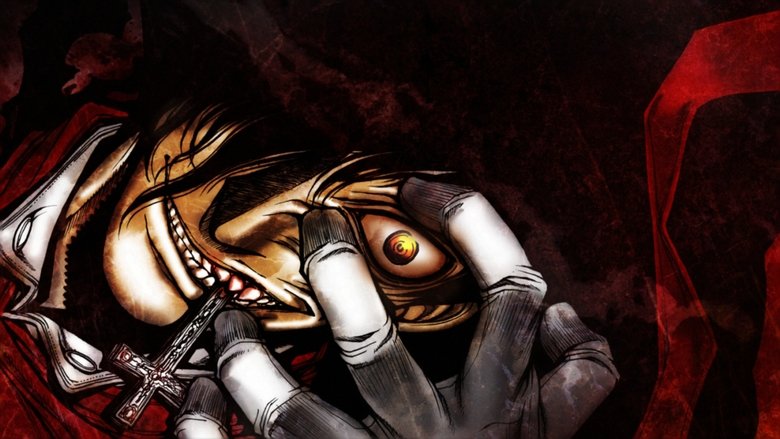
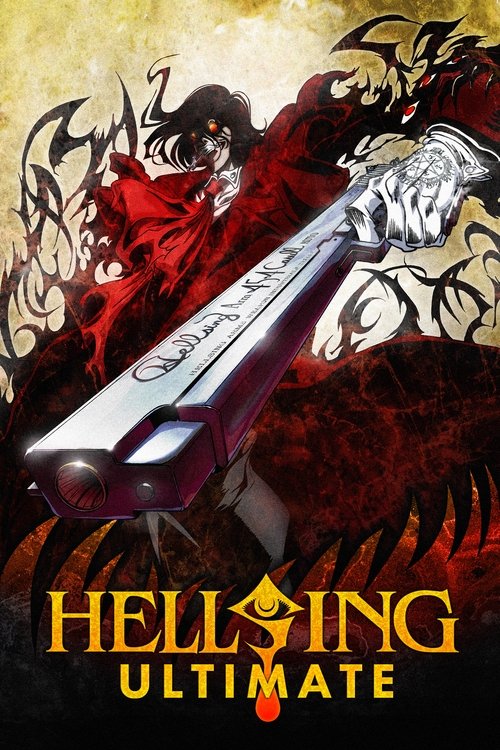
A visceral gothic symphony of blood and gunpowder, where shadows have teeth and immortality is a heavy shroud. It is a crimson-soaked nightmare that transforms the hunt into a beautiful, violent spectacle.
Hellsing Ultimate

Hellsing Ultimate

ヘルシング アルティメット

"The Bird of the Hermes is my name, eating my wings to make me tame."

10 February 2006 — 26 December 2012 Japan 1 season 10 episode Ended ⭐ 8.4 (672)
Cast: Jouji Nakata, Fumiko Orikasa, Yoshiko Sakakibara, Nobuo Tobita, Norio Wakamoto
Drama Animation Sci-Fi & Fantasy
Humanity vs. Monstrosity The Nature of War Duty and Loyalty Loss of Innocence

Overview

Hellsing Ultimate is a ten-episode original video animation (OVA) series that faithfully adapts Kouta Hirano's dark fantasy manga. Set in a modern-day United Kingdom, the story follows the Hellsing Organization, a secret society of Protestant knights tasked with protecting the British Empire from supernatural threats. Led by the steely and uncompromising Sir Integra Hellsing, the organization relies on its ultimate weapon: Alucard, a legendary and nearly invincible vampire who has sworn fealty to the Hellsing bloodline. After Alucard turns a rookie policewoman named Seras Victoria into a vampire to save her life, the series follows their brutal campaign against a surge of artificially created ghouls.

As the series progresses, the scope of the conflict expands into a three-way war involving the Vatican's Section XIII Iscariot—a group of fanatical Catholic assassins—and Millennium, a hidden battalion of Nazi vampires led by the nihilistic Major. Across its run, the narrative shifts from localized vampire hunts to a full-scale apocalyptic siege of London. The series is renowned for its uncompromising violence, intricate character dynamics, and an escalating scale of supernatural warfare that explores the darker depths of human and monstrous nature.
Core Meaning

At its heart, Hellsing Ultimate explores the paradox of humanity and monstrosity. The series posits that being human is not a matter of biological status but of will, mortality, and the refusal to succumb to despair. Through Alucard, a monster who yearns for a human worthy of killing him, the creators suggest that the greatest tragedy is not death, but the abandonment of one's humanity for the sake of power. The story serves as a meditation on duty and resolve, contrasting characters who cling to their human spirit despite physical transformation against those who remain biologically human but have become monsters through their actions and lack of empathy.

Thematic DNA

Humanity vs. Monstrosity 35%
The Nature of War 25%
Duty and Loyalty 20%
Loss of Innocence 20%

Humanity vs. Monstrosity

This is the central pillar of the series. Alucard frequently states that 'only a human can kill a monster'. He views his own immortality as a sign of weakness—a failure to face death as a human. This theme is explored through the contrast between The Major (a cyborg who claims to be human through sheer force of will) and characters like Seras, who struggles to retain her human heart even after losing her human body.

The Nature of War

The series, primarily through the antagonist The Major, examines war as a spectacle and an end in itself. To Millennium, war isn't a means to an objective; it is the ultimate expression of existence. This theme is highlighted in the infamous 'I Love War' speech, which portrays conflict as a grand, bloody theater that strips away all pretenses.

Duty and Loyalty

The relationship between Master and Servant is a recurring motif. Whether it is Seras’s loyalty to Alucard, Alucard’s absolute obedience to Integra, or the fanatical devotion of the Iscariot priests, the show examines how unwavering duty can both empower and dehumanize an individual.

Loss of Innocence

Seras Victoria’s arc is a focused study on the corruption and evolution of innocence. Initially a naive 'Police Girl,' she must navigate a world of depravity and slaughter, eventually realizing that to protect what she loves, she must embrace her inner darkness without losing her moral compass.

Character Analysis

Alucard

Jouji Nakata

Archetype: Anti-hero / Force of Nature
Key Trait: Nihilistic Charisma

Motivation

Initially motivated by his oath to the Hellsing line, his deeper desire is to find a human worthy of ending his immortal life, as he believes he lacks the strength to die as a man.

Character Arc

Alucard begins as an arrogant, nearly omnipotent servant of Hellsing who views humanity with a mix of pity and admiration. Over the series, his past as Vlad III (The Impaler) is revealed, showing his fall from grace. His arc concludes with a quiet acceptance of his master's mortality and his return as an omnipresent entity after 30 years of self-purgatory.

Seras Victoria

Fumiko Orikasa

Archetype: The Everyman / Heroine
Key Trait: Resilient Empathy

Motivation

Driven by a desire to protect the innocent and a deep-seated need for belonging, eventually finding a 'home' within the Hellsing Organization.

Character Arc

Seras transforms from a frightened, hesitant rookie who refuses to drink blood into a True Vampire. Her turning point occurs when she absorbs the soul of Pip Bernadotte, allowing her to reach her full potential while maintaining the compassion that Alucard lacks.

Sir Integra Fairbrook Wingates Hellsing

Yoshiko Sakakibara

Archetype: The Master / Mentor
Key Trait: Iron Resolve

Motivation

Bound by Duty to the British Empire and the Hellsing legacy, she seeks to eradicate all supernatural threats through 'Search and Destroy' tactics.

Character Arc

Integra starts as a young head of the family who must prove her authority. Throughout the series, she remains a bastion of human willpower, never wavering even as London falls. By the end, she is an aged but undefeated leader who has earned the absolute respect of a god-like vampire.

Father Alexander Anderson

Norio Wakamoto

Archetype: The Rival / Fallen Paladin
Key Trait: Zealotry

Motivation

Fanatical devotion to the Catholic Church and the eradication of 'monsters' and 'Protestant heretics'.

Character Arc

Anderson serves as Alucard's foil. Initially a 'Regenerator' who hunts monsters in God's name, he eventually chooses to discard his humanity by using Helena's Nail to kill Alucard, realizing too late that by becoming a monster, he lost the ability to truly defeat one.

The Major

Nobuo Tobita

Archetype: The Villain / Nihilist
Key Trait: Oratory Madness

Motivation

A pure, unadulterated love for war and a personal vendetta to prove that human will can surpass immortal monsters.

Character Arc

The Major remains largely static in his philosophy but is revealed to be a cyborg who has replaced his failing body with machinery. His 'growth' is the fulfillment of a 50-year plan to bring ruin to Alucard and the world, eventually dying with a smile after proving his will was stronger than Alucard's power.

Symbols & Motifs

The Bird of Hermes

Meaning:

Symbolizes self-imposed restraint and transformation. Derived from the Ripley Scroll, the phrase 'The Bird of Hermes is my name, eating my wings to make me tame' represents Alucard’s power being bound by the Hellsing family.

Context:

Written on Alucard's coffin and recited during his Level 0 release, it signifies the moment he sheds his 'tame' exterior to reveal his true, chaotic form.

Silver Cross and Holy Water

Meaning:

Represents faith as a weapon and the institutionalized power of the Church. It often symbolizes the thin, jagged line between divine righteousness and religious fanaticism.

Context:

Used predominantly by Father Alexander Anderson and the Iscariot organization in their crusade against 'heathens' and 'monsters'.

Red Cloak and Sunglasses

Meaning:

Symbolizes identity and the concealment of a predator. The vibrant red mimics the blood Alucard craves, while the glasses hide eyes that have seen centuries of slaughter.

Context:

Alucard's iconic attire remains consistent until his 'Level 0' form, where he reverts to his historical appearance as Vlad the Impaler.

Helena's Nail

Meaning:

Represents the ultimate sacrifice of humanity for divinity. It is a relic that grants god-like power at the cost of one's soul, turning the user into a 'Monster of God'.

Context:

Father Anderson uses it in his final confrontation with Alucard, effectively becoming the very thing he sought to destroy.

Memorable Quotes

The Bird of Hermes is my name, eating my wings to make me tame.

— Alucard

Context:

Recited in various episodes, most notably during the Level 0 release in Episode 8.

Meaning:

A metaphorical acknowledgment of his bound power and his role as a predator who has been domesticated by the Hellsing family.

Gentlemen... I love war.

— The Major

Context:

The centerpiece of his speech to the Millennium battalion in Episode 4.

Meaning:

A terrifying declaration of nihilism that establishes the character's motivation as the pure enjoyment of destruction rather than political or ideological gain.

Search and destroy! SEARCH AND DESTROY!

— Sir Integra Hellsing

Context:

Given as a final order to Alucard during the defense of Hellsing Manor and the invasion of London.

Meaning:

A mantra of absolute, uncompromising intent that defines the Hellsing Organization's operational philosophy.

Amen!

— Alexander Anderson

Context:

Spoken repeatedly during his fights and as his final word in Episode 9.

Meaning:

A declaration of faith and finality, used both as a battle cry and a terminal prayer.

Episode Highlights

Hellsing Ultimate I

S1E1

Introduces the dark world and the core trio. Seras Victoria is turned by Alucard during a ghoul infestation, and the first clash with Alexander Anderson establishes the supernatural stakes.

Significance:

Sets the tone and establishes the 'Master-Servant' dynamics that drive the series arc.

Hellsing Ultimate IV

S1E4

The Major delivers his infamous 'I Love War' speech on the Millennium zeppelins while Rip Van Winkle hijacks a British aircraft carrier.

Significance:

Signals the shift from small-scale skirmishes to global, apocalyptic war.

Hellsing Ultimate VII

S1E7

Focuses on Seras Victoria's defense of Hellsing Manor against Zorin Blitz. It features the death of Pip Bernadotte and Seras's ascension into a True Vampire.

Significance:

Completes Seras's long-term character development, transforming her into a primary combatant.

Hellsing Ultimate VIII

S1E8

Alucard returns to a ruined London and releases 'Cromwell Restriction Level 0', summoning all the souls he has ever consumed into a massive army of the dead.

Significance:

The visual and narrative climax of Alucard's power, revealing his true identity as Dracula.

Hellsing Ultimate X

S1E10

The final confrontation on the Deus Ex Machina zeppelin. Alucard is 'killed' by Schrodinger's paradoxical existence, but returns thirty years later to an aged Integra.

Significance:

The series finale that provides closure to the philosophical questions regarding humanity and immortality.

Philosophical Questions

What defines a human being?

Explored through The Major, who is almost entirely machine but claims his 'will' makes him more human than Alucard, who has the form of a man but the soul of a monster.

Is immortality a gift or a curse?

Seen through Alucard’s deep melancholy and his respect for humans like Integra and the Queen who accept their aging and death with grace.

Can destruction ever be 'beautiful'?

The series presents extreme violence through a highly aestheticized lens, challenging the viewer to find beauty in the 'crimson' of war while simultaneously depicting its horrific cost.

Alternative Interpretations

Some critics interpret the series as a critique of institutions, where the only 'good' characters are the outcasts (mercenaries and monsters) while the established powers (Vatican, Nazis, Government) are depicted as irredeemably corrupt or insane. Another reading suggests that Alucard's return in the finale as an 'everywhere and nowhere' entity represents a transcendence of duality; he is no longer just a monster or a servant, but a fundamental part of the world's fabric, reflecting a Zen-like state of being after purging the millions of souls within him.

Cultural Impact

Hellsing Ultimate is widely regarded as one of the definitive 'seinen' action anime of the 21st century. It revitalized the vampire genre in anime by moving away from romanticized portrayals and returning to the 'monster' roots of the creature, albeit with a hyper-stylized 'rule of cool' aesthetic. Its influence can be seen in later ultra-violent series like Castlevania and Drifters (also by Hirano). The series is a staple of 'Otaku' culture, particularly for its blend of historical references, religious iconography, and visceral action. It remains a high-water mark for OVA production quality, often cited for its fluid animation and cinematic score.

Audience Reception

Hellsing Ultimate received overwhelmingly positive reviews for its faithful adaptation of the manga and its high-budget animation. Fans praised the voice acting—particularly Jouji Nakata and Crispin Freeman (English dub)—and the 'badass' nature of the combat. Criticism was largely limited to the inconsistent release schedule (which took years) and the tonal shifts caused by the 'chibi' comedy segments, which some viewers found jarring compared to the grim atmosphere of the main plot. Overall, it is considered a 'must-watch' for fans of the horror and action genres.

Interesting Facts

  • The series was produced by three different animation studios over its six-year run: Satelight, Madhouse, and Graphinica.
  • Many characters, including Alucard and Seras, were recycled from Kouta Hirano's earlier adult manga 'The Legends of Vampire Hunter'.
  • Alucard's clothing is not actually fabric; it is an illusion created from his own skin and soul.
  • The name 'Alucard' is 'Dracula' spelled backward, a classic trope originating from the 1943 film 'Son of Dracula'.
  • The 'Harkonnen' cannon used by Seras is a direct reference to Baron Vladimir Harkonnen from Frank Herbert's 'Dune'.
  • It took nearly a decade to release all ten episodes due to multiple production delays and rights changes.
  • The English dub features the same core cast as the 2001 TV series, a rarity for re-adaptations.

Easter Eggs

Alucard's gun 'The Jackal' is a reference to the 1997 film 'The Jackal' starring Bruce Willis.

Kouta Hirano is a massive fan of Western action cinema, and the gun's name and power reflect this influence.

In Volume 2, Jan Valentine uses the 'Konami Code' dialogue.

A nod to gaming culture, emphasizing the Valentine brothers' irreverent and 'meta' personalities.

The Major quotes Hamlet and Macbeth during his monologues.

Highlights his perception of himself as a tragic, grand figure in a theatrical production of global destruction.

⚠️ Spoiler Analysis

Click to reveal detailed analysis with spoilers

Frequently Asked Questions

Explore More About This Movie

Dive deeper into specific aspects of the movie with our detailed analysis pages

Comments (0)

Leave a comment

No comments yet. Be the first to share your thoughts!