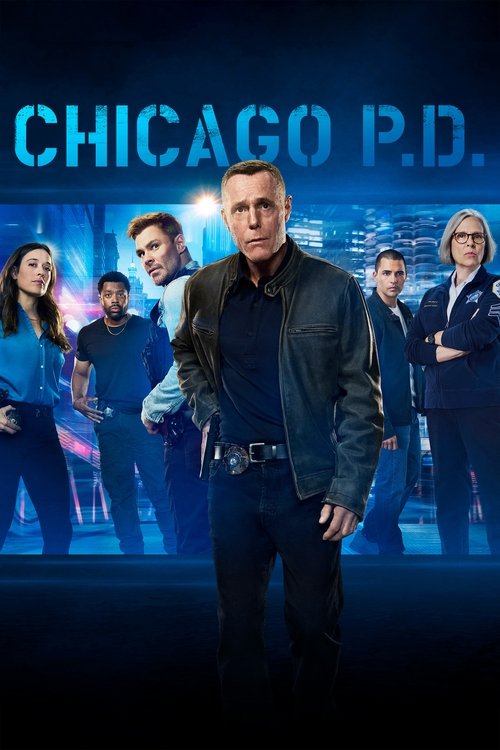
Chicago P.D.
A gritty, high-stakes collision between street-level justice and systemic law, where morality is a shifting shadow cast against the cold, industrial skyline of the Windy City.
Chicago P.D.

Chicago P.D.

"Welcome home."

08 January 2014 — 12 November 2025 United States of America 13 season 252 episode Returning Series ⭐ 8.4 (2,517)
Cast: Jason Beghe, Marina Squerciati, Patrick John Flueger, LaRoyce Hawkins, Amy Morton
Drama Crime
The Gray Area of Morality The Burden of Loyalty Systemic Failure vs. Individual Agency Trauma and Resilience Redemption

Overview

Chicago P.D. follows the elite Intelligence Unit of the 21st District, led by the enigmatic and morally ambiguous Sergeant Hank Voight. The series distinguishes itself within the "One Chicago" franchise by delving into the darkest corners of law enforcement, where the line between criminal and protector often blurs. Spanning thirteen seasons, the narrative evolves from a raw exploration of street-level vigilante justice into a complex meditation on police reform, personal loss, and the heavy price of loyalty.

Across its run, the show balances intense procedural cases with long-form character development. While early seasons focus on the unit's rogue tactics and Voight’s iron-fisted rule, later seasons grapple with the changing landscape of American policing. The central team—including detectives and officers like Kim Burgess, Adam Ruzek, and Kevin Atwater—navigates internal politics, heartbreaking casualties, and the constant threat of corruption from both the streets and the upper echelons of the department.

Core Meaning

The core of Chicago P.D. is an exploration of the Machiavellian dilemma: whether the ends (safety and justice) justify the means (violence and corruption). Through the character of Hank Voight, the creators present a world where the legal system is often too slow or too broken to protect the innocent, forcing the characters to operate in a "gray zone." Ultimately, the series suggests that while true justice may require getting one’s hands dirty, the moral weight of those actions eventually demands a soul-crushing toll from those who carry the badge.

Thematic DNA

The Gray Area of Morality 30%
The Burden of Loyalty 25%
Systemic Failure vs. Individual Agency 20%
Trauma and Resilience 15%
Redemption 10%

The Gray Area of Morality

Throughout all 13 seasons, the show interrogates the concept of "righteous" corruption. It asks if a cop can be "good" while doing "bad" things. This theme is embodied by Voight, who frequently breaks the law to enforce his own brand of justice, creating a recurring conflict between his methods and the more traditional ethics of his subordinates.

The Burden of Loyalty

Loyalty is the currency of the Intelligence Unit. The series repeatedly tests the bonds of the "work family," showing how protecting one's own can lead to catastrophic consequences, such as the imprisonment and death of Alvin Olinsky. It develops from simple camaraderie into a dangerous, life-altering commitment.

Systemic Failure vs. Individual Agency

The series highlights how the bureaucracy of the CPD often hinders real work. Themes of systemic racism and political corruption (epitomized by figures like Deputy Chief Reid in Season 12) force characters to decide whether to work within a flawed system or bypass it entirely to achieve results.

Trauma and Resilience

Every main character undergoes significant trauma—from Burgess being kidnapped and shot to Voight losing his son. The series tracks their long-term recovery (or lack thereof), illustrating that the job leaves permanent scars that dictate future choices and relationships.

Redemption

Many characters start at a point of moral or professional failure and seek a path back to the light. Whether it's Halstead trying to keep Voight in check or Atwater striving to be the moral compass of the unit, the quest for a "better way" is a driving force across the seasons.

Character Analysis

Hank Voight

Jason Beghe

Archetype: Antihero / Patriarch
Key Trait: Moral Ambiguity

Motivation

Initially motivated by personal power and the safety of Chicago, his motivation shifts toward protecting his unit as his only remaining family. He is driven by the belief that he must be the "monster" so his officers don't have to be.

Character Arc

Voight begins the series as a borderline criminal who served time in prison. Over 13 seasons, he evolves from a man who uses the law as a personal tool into a protector who realizes he is a dying breed. His arc is defined by the loss of everyone he loves (his son, his best friend Al, his protégée Erin), leading to a late-series struggle between his "old" violent instincts and the necessity of reform.

Kim Burgess

Marina Squerciati

Archetype: Everyman / Survivor
Key Trait: Resilience

Motivation

Driven by a pure sense of justice and, later, the need to provide a stable life for her adopted daughter, Makayla, while surviving a high-risk profession.

Character Arc

Starting as a bright-eyed patrol officer, Burgess faces immense physical and psychological trauma. Her development takes her from an optimistic rookie to a battle-hardened detective and mother. Her long-term arc is defined by her on-again, off-again relationship with Adam Ruzek, culminating in their marriage in Season 12.

Kevin Atwater

LaRoyce Hawkins

Archetype: The Moral Compass
Key Trait: Integrity

Motivation

Motivated by the desire to reform the system from within and protect his community while maintaining his personal integrity.

Character Arc

Atwater's arc is the most grounded in real-world cultural shifts. He matures from a supporting officer into a leader who often stands at odds with Voight's methods. He frequently grapples with the duality of being a Black man and a police officer in Chicago, often facing systemic racism within the force.

Symbols & Motifs

The Cage

Meaning:

Symbolizes the suppression of civil rights and the darker side of police interrogation. It represents the space where the "Old Voight" operates, away from the eyes of the law.

Context:

A soundproofed room in the basement of the 21st District where suspects are often beaten or coerced into giving information. It appears frequently in early seasons as a sign of the unit's unique power.

The Silos

Meaning:

Represents absolute street justice and the "point of no return." It is the literal and metaphorical graveyard for those who cannot be handled by the courts.

Context:

An isolated industrial area where Voight takes high-level criminals to execute or bury them, most notably used when he avenges his son's death.

The Badge

Meaning:

Symbolizes both a shield and a burden. It represents the authority to act, but also the target that officers carry on their backs from the public and Internal Affairs.

Context:

Visual focus is often placed on characters surrendering their badges or looking at them in moments of moral crisis, such as when Burgess and Torres lose theirs in Season 12.

Memorable Quotes

Tell me the truth so I can lie for you.

— Hank Voight

Context:

A recurring sentiment expressed to many subordinates across multiple seasons to establish trust.

Meaning:

Encapsulates Voight's philosophy: he will protect his team at any cost, but he requires total transparency and loyalty to do so.

You're worse than me.

— Deputy Chief Reid

Context:

Spoken to Voight in the Season 12 finale as Reid lay dying, having been set up for assassination by Voight.

Meaning:

Challenges Voight's self-perception as a "good" man doing "bad" things, suggesting that his manipulation of others makes him the ultimate villain.

Episode Highlights

Start Digging

S3E23

Voight’s son Justin is found murdered, leading Voight on a vengeful rampage that ends with him forcing the killer to dig his own grave.

Significance:

A definitive turning point that proves Voight's personal grief will always override his professional duty, setting the tone for his descent into darkness.

Homecoming

S5E22

Alvin Olinsky is murdered in prison while taking the fall for a crime Voight committed.

Significance:

The series' most tragic loss; it permanently alters Voight’s psyche and removes his only true peer, leaving him isolated as a leader.

Vows

S12E22

The Intelligence Unit takes down the corrupt Deputy Chief Reid, while Kim Burgess and Adam Ruzek finally marry.

Significance:

A rare moment of joy for the team (the wedding) contrasted with Voight's darkest choice yet: orchestrating a murder to save his unit's badges.

Philosophical Questions

Can justice be achieved outside the bounds of the law?

The series repeatedly places Voight in situations where the legal system fails. It explores this through his 'Silo' executions and his orchestration of Deputy Chief Reid's death, forcing the audience to weigh the satisfaction of a 'bad guy' dying against the destruction of due process.

Is the 'Blue Wall of Silence' an act of love or a crime?

By showing the death of Olinsky and the constant cover-ups for team members, the series explores the thin line between professional loyalty and criminal conspiracy, ultimately suggesting that 'family' in the police force can be a death sentence.

Alternative Interpretations

Critics and audiences are divided on whether Voight is a tragic hero or a functional monster. One popular alternative reading suggests that Voight is actually the series' ultimate antagonist, and the tragedy of the show is watching the younger, "good" cops (like Halstead or Upton) slowly become corrupted by his proximity. Another interpretation views the city of Chicago itself as the main character, with the Intelligence Unit acting merely as its immune system—sometimes violent and erratic, but necessary for the host's survival.

Cultural Impact

Chicago P.D. has had a polarizing but undeniable impact on television. As part of the Dick Wolf universe, it helped cement the "crossover" format as a staple of modern broadcast TV. However, it has also been a focal point of the "copaganda" debate. Critics have pointed to its glorification of police brutality (specifically Voight’s torture tactics) as problematic, especially following the 2020 Black Lives Matter protests. In response, the show began incorporating themes of police reform and accountability, specifically through the eyes of Kevin Atwater. Its legacy is that of a show that mirrors the evolving, and often painful, public conversation about law enforcement in major American cities.

Audience Reception

Chicago P.D. has maintained consistently high ratings, often dominating its Wednesday night time slot. Fans praise its gritty realism, intense action, and the chemistry between characters like Burgess and Ruzek (often referred to as 'Burzek'). However, the show has faced criticism for repetitive plot cycles and its handling of police violence. The departure of fan-favorite characters like Erin Lindsay (Sophia Bush) and Jay Halstead (Jesse Lee Soffer) caused temporary dips in audience sentiment, but the show's core fanbase remains loyal due to Jason Beghe's magnetic performance as Voight.

Interesting Facts

  • Jason Beghe's gravelly voice is not a forced effect; it is the result of vocal cord damage sustained during intubation after a near-fatal car accident in 1991.
  • The character of Hank Voight first appeared on 'Chicago Fire' as a villainous recurring character before being given his own spin-off series.
  • Jason Beghe was actually a high-ranking member of the Church of Scientology for many years before leaving and becoming a vocal critic of the organization.
  • Marina Squerciati (Kim Burgess) ran a successful comedy web series called 'Special Skills' which won a competition hosted by Kevin Hart.
  • A real-life Chicago firefighter, Anthony Ferraris, appears as a recurring character across the franchise, highlighting the series' dedication to authentic locations and people.

Easter Eggs

The '5021' Call Signs

All Intelligence Unit radio call signs start with 5021. '50' stands for the unit type, while '21' denotes the fictional 21st District. Characters are assigned phonetic letters (e.g., 5021-Adam for Voight) based on their seniority.

Molly's Bar

The bar used as the team's hangout is a shared location across 'Chicago Fire' and 'Chicago Med,' serving as the primary bridge for the 'One Chicago' universe cameos.

⚠️ Spoiler Analysis

Click to reveal detailed analysis with spoilers

Frequently Asked Questions

Explore More About This Movie

Dive deeper into specific aspects of the movie with our detailed analysis pages

Comments (0)

Leave a comment

No comments yet. Be the first to share your thoughts!