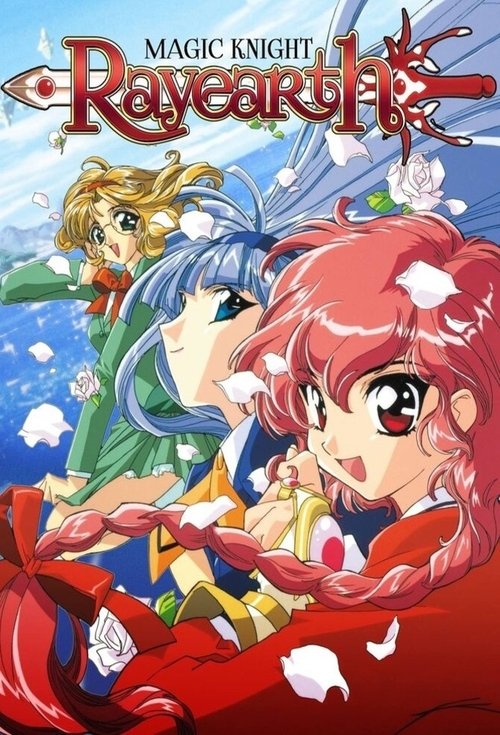
Magic Knight Rayearth
魔法騎士レイアース
Overview
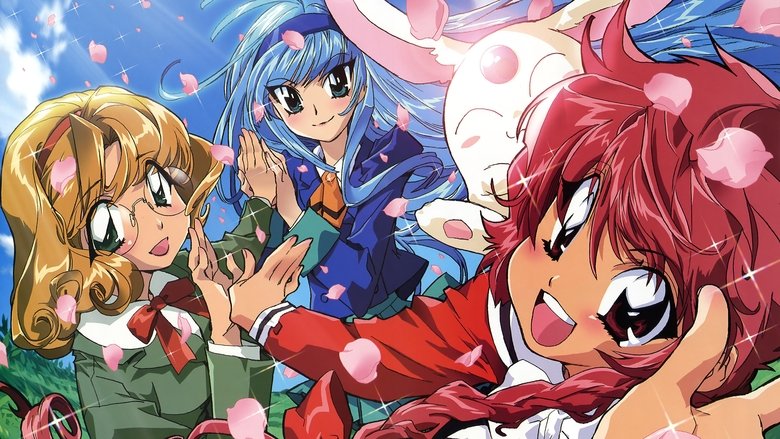
Magic Knight Rayearth is a seminal 1994 anime series that follows three eighth-grade girls—Hikaru Shidou, Umi Ryuuzaki, and Fuu Hououji—who are whisked away from Tokyo Tower to the mystical realm of Cephiro. Summoned by the world's guardian, Princess Emeraude, they are tasked with becoming the Legendary Magic Knights to rescue the Princess from the High Priest Zagato, whose abduction of the 'Pillar' has caused the world to descend into chaos.
Over the course of two seasons, the girls journey across a world where willpower defines reality. In the first season, they seek out the three Rune-Gods (Mashin)—titanic elemental entities—to gain the power necessary to defeat Zagato. However, their victory leads to a devastating realization about the nature of their mission and the true role of the Pillar in Cephiro's survival. The second season deals with the tragic aftermath of their first journey, as the girls return to a crumbling Cephiro to defend it from three invading nations—Autozam, Chizeta, and Fahren—while searching for a way to break the cycle of sacrifice.
Core Meaning
The core of Magic Knight Rayearth is a philosophical critique of rigid systems that demand the erasure of personal identity for the 'greater good.' Through the metaphor of the Pillar System, the creators explore how a world built on the suffering and isolation of a single individual is fundamentally unsustainable and inhumane. The series ultimately argues that true peace cannot be maintained by a solitary savior, but must be the collective responsibility of all people, fueled by a 'heart that believes' in its own agency rather than a preordained fate.
Thematic DNA
The Power of Will (Kokoro)
In Cephiro, 'will' is a literal physical force. Throughout the series, the girls' magic and armor evolve based on their emotional growth and resolve. This theme develops from a simple power-up mechanic into a complex exploration of how intention and desire can both create and destroy entire worlds.
Love vs. Duty
The series centers on the conflict between personal happiness and public obligation. Princess Emeraude’s love for Zagato is the catalyst for the world's decay because her role as the Pillar forbids her from holding any personal desires. This theme evolves to show that repressing human emotion in the name of duty leads to tragedy.
The Burden of Sacrifice
The Magic Knights are initially presented as traditional heroes, but they soon discover they are instruments of institutionalized suicide. The narrative examines the trauma inflicted upon those forced to make 'noble' sacrifices and the moral bankruptcy of a system that requires them.
Collective Responsibility
While Season 1 focuses on the burden of a single Pillar, Season 2 emphasizes that Cephiro's future belongs to everyone. The transition from a monarchical 'Pillar' system to a world where everyone's will matters is the series' ultimate resolution.
Character Analysis
Hikaru Shidou
Hekiru Shiina (JP), Dorothy Elias-Fahn (EN)
Motivation
Initially motivated by a desire to help others and return to her dog, her motivation evolves into a deep commitment to saving the people of Cephiro without resorting to the cycle of sacrifice.
Character Arc
Starts as a naive, energetic tomboy who sees the mission as a simple RPG adventure. After the Season 1 finale, she suffers from intense survivor's guilt and depression. In Season 2, she matures into a selfless leader who eventually attains godhood as the Pillar, only to use that power to end the system forever.
Umi Ryuuzaki
Konami Yoshida (JP), Wendee Lee (EN)
Motivation
Her primary drive is the protection of her friends. By Season 2, she is fully committed to Cephiro, finding a sense of purpose beyond her wealthy life in Tokyo.
Character Arc
Begins as a spoiled, elegant girl who is the most resistant to the quest. Her arc involves moving from self-centeredness to fierce loyalty. She becomes the emotional anchor for the group, often providing the 'voice of reason' when things get dark.
Fuu Hououji
Hiroko Kasahara (JP), Bridget Hoffman (EN)
Motivation
Motivated by the search for truth and the desire to heal others. Her arc focuses on taking responsibility for her actions, especially after the trauma of killing the Pillar.
Character Arc
The polite, analytical member of the trio. Her arc explores the cost of hyper-rationality and selflessness. She eventually learns to balance her logical mind with her feelings, particularly her romantic interest in Ferio.
Princess Emeraude
Megumi Ogata (JP)
Motivation
Driven by the agonizing desire to be with Zagato, which she cannot do while she is the Pillar. She summons the knights specifically to perform an assisted suicide so she can be free.
Character Arc
Appears as the helpless damsel in distress but is revealed to be the world's most powerful being and its secret tormentor. Her transformation from the benevolent Pillar to the vengeful Dark Emeraude is the series' most tragic pivot.
Symbols & Motifs
Tokyo Tower
Symbolizes the threshold between the mundane and the magical, representing the girls' connection to their home and their point of departure and return.
It is the location where the girls are first summoned in Episode 1 and where they reunite in Season 2, serving as a landmark for their shared trauma and destiny.
Evolving Armor and Swords
A visual metaphor for the protagonists' maturity and internal state. The equipment grows more complex as they accept the weight of their roles.
Unlike static power-ups, the girls' weapons physically change in response to their emotional breakthroughs, such as Hikaru's sword turning to fire or Fuu's blade growing to represent her immense sense of responsibility.
The Rune-Gods (Mashin)
Represent the manifestation of the pilot's soul. They are not merely machines but spiritual partners that require a 'pure heart' to awaken.
Rayearth, Selece, and Windam represent Fire, Water, and Air respectively, reflecting the distinct personalities and elemental magic of the three knights.
Princess Emeraude's Crown
Symbolizes the qualifications of the Pillar and the heavy burden of leadership that is more like a crown of thorns than a reward.
In Season 2, the crown is used as a test to find the next Pillar, though it ultimately represents a system that Hikaru chooses to dismantle.
Memorable Quotes
The heart which believes, decides the future!
— Hikaru Shidou
Context:
Repeated throughout both seasons, especially when the girls face seemingly impossible odds against their enemies.
Meaning:
The central mantra of the series, emphasizing that belief and will are the primary architects of reality in Cephiro.
There is no such thing as a coincidence in this world, only inevitability.
— Yuuko Ichihara (via CLAMP meta-narrative)
Context:
Reflects the tragic inevitability of Emeraude's fate and the summoning of the knights.
Meaning:
Though a famous line from xxxHolic, it originates from the philosophical themes explored by CLAMP in Rayearth, suggesting that choices lead to destined outcomes.
I am the one who prayed for the world to be destroyed... because I loved someone.
— Princess Emeraude
Context:
Spoken during the climax of Season 1 as she attacks the Magic Knights in her Dark form.
Meaning:
Reveals the toxicity of the Pillar system, where a simple human emotion like love becomes a catastrophic sin.
Episode Highlights
The Birth of the Legendary Magic Knights!
The girls are transported from Tokyo Tower to Cephiro. Master Mage Clef explains their destiny and grants them magic.
Sets up the classical portal fantasy tropes that the show will later subvert.
The Unbelievable Truth About the Legendary Magic Knights!
The knights kill Zagato, only for Princess Emeraude to go into a rage and reveal that she summoned them to kill her.
One of the most famous twist endings in 90s anime, completely recontextualizing the entire first season.
The Secret of the Pillar of Cephiro
Clef explains the mechanical and spiritual requirements of the Pillar system to the girls.
Deepens the philosophical exploration of Cephiro as a world that enslaves its protector.
Nova: The Magic Knight of the Dream World
Hikaru faces Nova, a being born from her own guilt and shadow, for the first time.
Introduces the concept of psychological shadow-work as a major plot point in the second season.
To the Promised Road
Hikaru becomes the Pillar, defeats Lady Debonair, and makes the choice to abolish the Pillar system.
The definitive resolution of the series, where the protagonists finally achieve true freedom for Cephiro.
Philosophical Questions
Is a world worth saving if it requires the suffering of an innocent?
The series explores the utilitarian nightmare of Cephiro, where one person is 'sacrificed' to maintain the peace of many. It ultimately rejects this, suggesting that a peaceful world built on a victim is a lie.
Can we ever truly choose our destiny?
Through the 'Legend of the Magic Knights,' the series examines whether the girls are agents of their own will or merely following a script written by a dying goddess. Hikaru's final act is a definitive claim of agency over fate.
Is it selfish to value personal love over the safety of the world?
Emeraude and Zagato are initially portrayed as villains for their love, but the show eventually asks the viewer to sympathize with their humanity, suggesting that a system which forbids love is the true antagonist.
Alternative Interpretations
Critics and fans have often viewed the series as a metaphor for the transition to adulthood. The first season represents the idealistic, black-and-white view of childhood heroes, while the second season represents the 'grey' reality of adult responsibility and the need to dismantle broken systems. Another reading suggests the Pillar system is a feminist critique of how society expects women to be selfless pillars of support (mothers/wives) while denying them their own desires; Emeraude's 'sin' of falling in love is actually a rebellion against a patriarchy-like system that requires her total isolation. Some audiences also interpret the 'invaders' in Season 2 as representations of different political philosophies (technocracy, traditionalism, etc.) vying to fill a power vacuum.
Cultural Impact
Magic Knight Rayearth was a groundbreaking series that significantly influenced the development of the Isekai (portal fantasy) genre. By blending the traditionally feminine 'Magical Girl' tropes with the masculine 'Mecha' and 'RPG' elements, it expanded the demographic reach of shojo anime. Historically, it arrived during the mid-90s 'Magical Girl' boom led by Sailor Moon, but it distinguished itself with a darker, more deconstructive narrative that questioned the morality of heroism. Its legacy is seen in modern series like Puella Magi Madoka Magica, which further explored the 'dark magical girl' themes MKR pioneered. The show remains a cult classic for its unique aesthetic—slender, ornate character designs by CLAMP and high-stakes emotional drama—that transitioned shojo storytelling into a more epic, high-fantasy scale.
Audience Reception
Initially, Magic Knight Rayearth was a massive commercial hit in Japan, praised for its stunning art and its fusion of genres. The Season 1 finale remains one of the most talked-about moments in 90s anime history. However, Season 2 received a more divisive reception. While some fans appreciated the deeper psychological focus and the introduction of characters like Nova and Eagle, others found the pacing slower and the 'invader' plot less compelling than the focused journey of Season 1. Modern reviews tend to celebrate the series for its boldness in deconstructing the hero's journey and its lush visual style, though the limited animation quality of certain action scenes is a common point of critique among contemporary viewers.
Interesting Facts
- Most characters and locations are named after cars (Cefiro, Emeraude, Zagato, Autozam, Geo, etc.).
- Mokona, the white rabbit-like guide, became the mascot for the creator group CLAMP and appears in many of their other series.
- The 1995 Sega Saturn game based on the series was the very last official game released for the console in North America.
- The character 'Eagle Vision' was voiced by Megumi Ogata, who also voiced Princess Emeraude, creating a thematic link between the two candidates for the Pillar.
- The series was one of the first major examples of a 'Magical Girl' show featuring giant robots (Mecha).
- In the manga, Mokona is revealed to be a literal god-creator, though the TV series keeps its origins more ambiguous.
Easter Eggs
Mokona's Multiverse Travel
Mokona appears as a major character in Tsubasa: Reservoir Chronicle and xxxHolic, confirming that Rayearth exists in the CLAMP shared multiverse.
Angelic Layer Doll
In the series Angelic Layer, the protagonist Misaki has a doll named Hikaru that is visually identical to Hikaru Shidou, a meta-reference to her 'Magic Knight' origins.
The 'Lexus' Spell
A high-level fire spell used in the series is named 'Lexus,' continuing the show's obsession with luxury car brand references.
⚠️ Spoiler Analysis
Click to reveal detailed analysis with spoilers
Frequently Asked Questions
Explore More About This Movie
Dive deeper into specific aspects of the movie with our detailed analysis pages
Comments (0)
No comments yet. Be the first to share your thoughts!