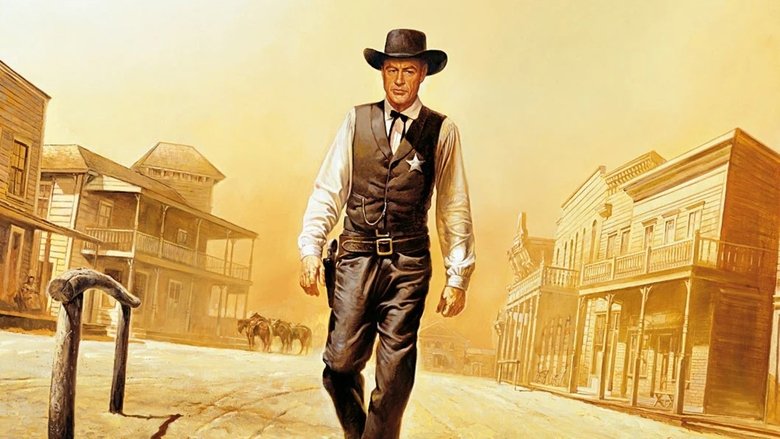
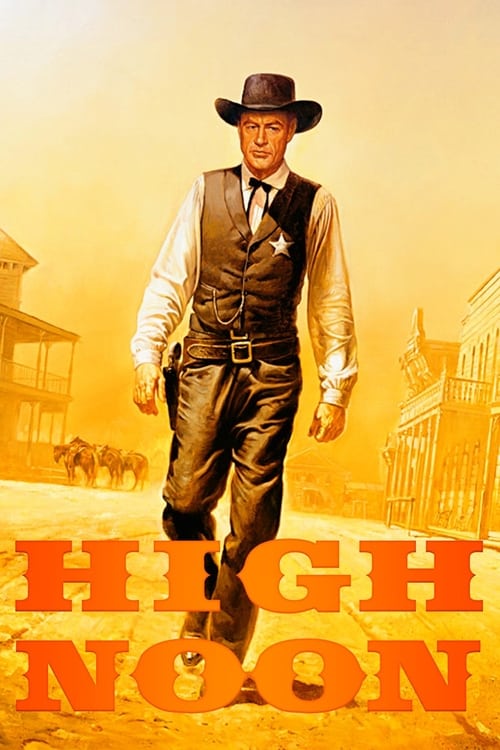
"The story of a man who was too proud to run!"
High Noon - Ending Explained
⚠️ Spoiler Analysis
The climax of High Noon deliberately subverts multiple Western tropes. As the noon train arrives, Frank Miller disembarks and joins his three henchmen. Will Kane is left completely alone to face the four men in the deserted streets. Kane manages to kill two of the gang members through tense, unglamorous, guerrilla-style shootouts in alleys and barns, but he is eventually pinned down and vastly outgunned.
The ultimate twist comes from Amy, Kane's devoutly pacifist Quaker wife. Hearing the gunfire as she waits on the train, she abandons her strict religious principles, runs back into town, and shoots one of Miller's gang members in the back to save her husband. Miller then takes Amy hostage, forcing Kane out into the open. In a final act of defiance, Amy fights back, clawing Miller's face, giving Kane the split-second opportunity he needs to shoot Miller dead.
The most resonant and cynical moment occurs immediately after the gunfight. The cowardly townspeople finally emerge from hiding, swarming the street to congratulate Kane now that it is safe. Instead of accepting their praise, Kane looks at them with silent, utter contempt. He takes off his tin marshal's star, throws it into the dirt at their feet, and rides out of town with Amy without saying a single word. This ending strips the town of any redemption and solidifies the film's harsh view of public morality.
Alternative Interpretations
The most prominent debate surrounding High Noon is its political allegory, which functions perfectly from two entirely opposing viewpoints. Originally, screenwriter Carl Foreman intended the film as a harsh critique of McCarthyism and the Hollywood Blacklist. In this reading, Will Kane represents the persecuted individual, the outlaws represent the HUAC interrogators, and the cowardly townspeople symbolize the Hollywood community who stood by and let their colleagues be ruined out of fear and self-preservation.
However, many conservative viewers and critics, as well as star Gary Cooper himself, interpreted the film as a Cold War/Pro-American allegory. In this interpretation, Kane represents the United States, forced to stand alone against the encroaching evil of Communism (Frank Miller's gang) and fight a necessary war (like Korea) while weak, isolationist, or appeasing allies (the townspeople) refuse to help.
A third interpretation views the film as a Deconstruction of Masculinity and the Western Myth. From a genre perspective, it critiques the violent foundation of the West. Kane's decision to drop his badge in the dirt at the end is seen not just as disgust with the town, but a rejection of the violent lawman archetype itself, choosing instead the domestic, peaceful life represented by Amy.