Hiroshima mon amour
"From the measureless depths of a woman's emotions..."
Director: Alain Resnais
Cast: Emmanuelle Riva, Eiji Okada, Stella Dassas, Pierre Barbaud, Bernard Fresson
Hiroshima Mon Amour — Movie Quotes
Memorable Quotes
Tu n'as rien vu à Hiroshima. Rien.
Context
Spoken repeatedly in the opening sequence as the woman describes the artifacts and films she has seen in the Peace Museum.
Meaning
'You saw nothing in Hiroshima. Nothing.' The film's most famous line, challenging the idea that visiting a museum or seeing a movie allows one to comprehend the horror of the atomic bomb. It establishes the theme of the incommunicability of trauma.
Hi-ro-shi-ma. C'est ton nom.
Context
The final line of the film, spoken in her hotel room.
Meaning
She identifies him entirely with the city and its history, acknowledging that their connection is bound to this place and time.
C'est mon nom. Oui. Ton nom à toi est Nevers. Ne-vers-en-France.
Context
The final response of the film, ending the narrative.
Meaning
He reciprocates, identifying her by her trauma. It signifies that they have ceased to be individuals and have become symbols of their respective histories.
Je te rencontrerai. Je me souviendrai de toi. Qui es-tu ? Tu me tues. Tu me fais du bien.
Context
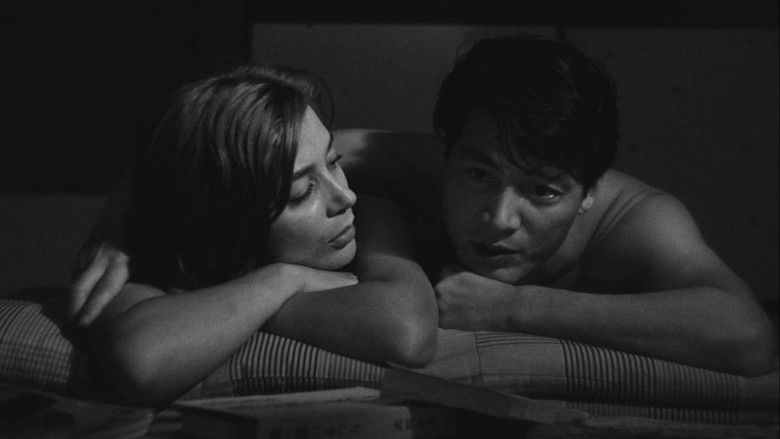
Spoken during their intimacy, blurring the line between her current lover and the memory of the German soldier.
Meaning
'I meet you. I remember you. Who are you? You're destroying me. You're good for me.' Expresses the paradox of their relationship: it is healing because it allows her to feel again, but destructive because it forces her to relive the pain of the past and replace her old love.
J'ai oublié l'amour.
Context
Spoken in the context of her recovery from the madness in Nevers.
Meaning
'I have forgotten love.' A confession that trauma has numbed her, and this affair is a reawakening.
Explore More About This Movie
Dive deeper into specific aspects of the movie with our detailed analysis pages