The core meaning of "Hunter x Hunter" is a profound deconstruction of the classic hero's journey and an exploration of what it truly means to be human. The series posits that the journey and the relationships forged along the way are more significant than the final destination. It challenges traditional notions of good and evil, showcasing protagonists with morally ambiguous actions and antagonists with relatable, sometimes noble, motivations. A central message is that strength without purpose is meaningless, and true power lies not in physical ability but in empathy, sacrifice, and the capacity for love—themes powerfully embodied in the Chimera Ant arc, where the monstrous king discovers his humanity through his connection with a blind girl, while the series' pure-hearted hero descends into a self-destructive abyss of rage.
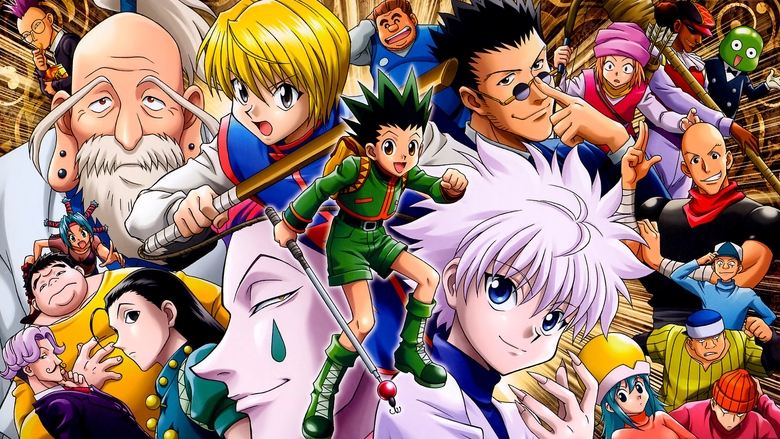
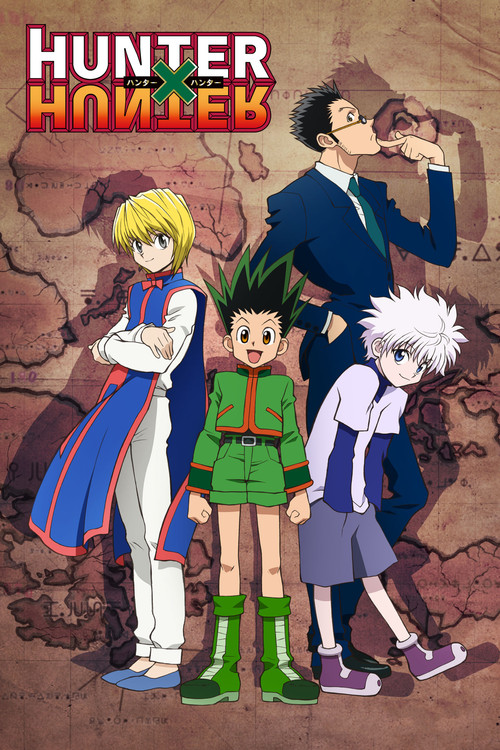
HUNTER×HUNTER
Cast: Megumi Han, Mariya Ise, Issei Futamata, Miyuki Sawashiro, Keiji Fujiwara
Hunter x Hunter — Symbolism & Philosophy
Symbols & Motifs
The Hunter License
The Hunter License symbolizes freedom, access, and power within the world. It grants its holder the ability to travel freely, access restricted information, and act with a degree of impunity. However, it also represents a commitment to a life of endless seeking and the inherent dangers that come with it. For Gon, it is the tangible link to his father and the first step on his journey.
The pursuit of the license drives the first major arc of the series, the Hunter Exam. Its versatile use is demonstrated throughout the show, from being used as collateral for immense wealth to gaining entry into otherwise inaccessible places. Gon ultimately returns his license to his father, Ging, symbolizing the completion of his initial goal, having realized the journey itself was the true prize.
Kurapika's Scarlet Eyes
The Scarlet Eyes of the Kurta Clan, which glow intensely in moments of high emotion, symbolize both immense beauty and deep tragedy. They represent Kurapika's lost heritage and the source of his rage and motivation for revenge. They are a physical manifestation of his emotional state and the power it grants him, but also a coveted treasure that led to his clan's slaughter, symbolizing how unique strengths can be exploited by the predatory nature of others.
The eyes are the central focus of Kurapika's character arc. His goal is to retrieve all the stolen pairs from the black market and avenge his clan by destroying the Phantom Troupe. The activation of his eyes signals a shift in his power and a loss of his usual calm demeanor, plunging him into a state of cold, vengeful fury.
The Phantom Troupe's Spider
The spider tattoo, with a number unique to each member of the Phantom Troupe, symbolizes a twisted sense of family and nihilistic identity. The spider's body represents their leader, Chrollo Lucilfer, and the legs are the members. If the head is removed, the legs are meant to continue functioning. This represents their collective identity; they are both a cohesive unit and a group of individualistic, powerful criminals. It symbolizes their belief that the group is more important than any single member, even the leader.
The spider is the emblem of the series' most prominent antagonistic group. It is seen on each member and is a source of pure hatred for Kurapika. The Yorknew City arc revolves around the Troupe's actions and Kurapika's hunt for the 'spiders', making their symbol a constant presence and a mark of imminent danger and moral decay.
Philosophical Questions
What does it mean to be human?
This is the central question of the Chimera Ant arc. The series explores this by contrasting the Chimera Ant King, Meruem, with the human protagonist, Gon. Meruem, born a monstrous creature bred for domination, gradually develops compassion, empathy, and love through his interactions with the blind Gungi player, Komugi. He begins to question his purpose and value individual life, ultimately dying with more recognizable 'humanity' than many of the show's human characters. Simultaneously, Gon, driven by revenge, sheds his empathy and compassion, making a deal to sacrifice everything for monstrous power. He loses his 'humanity' in the process. The series suggests that humanity is not a matter of birth or species, but a quality defined by one's capacity for empathy, self-sacrifice, and connection, which can be both gained and lost.
Is there a meaningful distinction between good and evil?
"Hunter x Hunter" consistently challenges the audience's moral assumptions by presenting a world steeped in moral ambiguity. The Phantom Troupe are mass murderers, yet they also display unwavering loyalty and grieve for their fallen comrades, forcing Gon to confront his own hypocrisy. The series' hero, Gon, commits morally reprehensible acts in his quest for revenge, while the primary villain of an arc, Meruem, develops a nuanced and sympathetic worldview. The story avoids easy answers, suggesting that 'good' and 'evil' are often matters of perspective and that even the most righteous motives can lead to monstrous actions, and vice versa. It forces the viewer to evaluate characters based on their complex motivations rather than simplistic labels.
What is the true nature of strength?
The series initially presents strength in typical shōnen fashion—physical power and fighting ability. However, it quickly complicates this idea. The Nen system itself is based on personality and self-imposed limitations, rewarding strategy and creativity over raw power. The most profound exploration of this theme comes through characters like Meruem and Netero. Meruem is born with absolute physical power, yet he finds meaning and purpose not through domination, but through intellectual and emotional connection with Komugi, a physically weak human. Netero, the strongest human, is defeated by Meruem, and humanity's ultimate victory is achieved not through honorable combat, but through a weapon of mass destruction—a symbol of humanity's darkest, most cowardly form of 'strength'. The series ultimately argues that true strength is found in purpose, empathy, and the will to protect others, rather than in power itself.
Core Meaning
Explore More About This Movie
Dive deeper into specific aspects of the movie with our detailed analysis pages