Hunter x Hunter
HUNTER×HUNTER
Overview
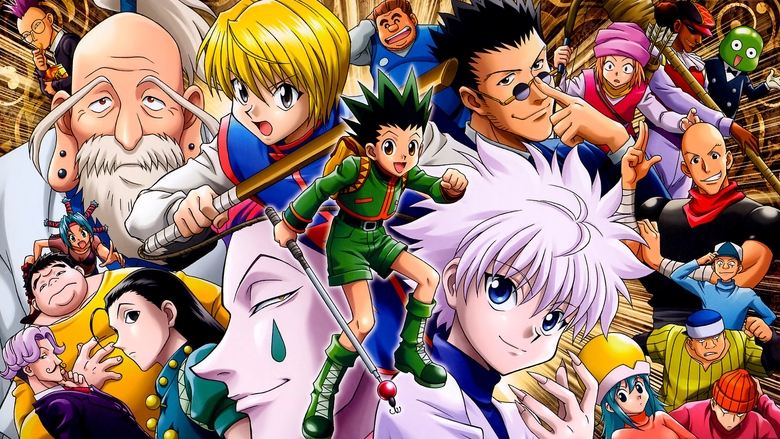
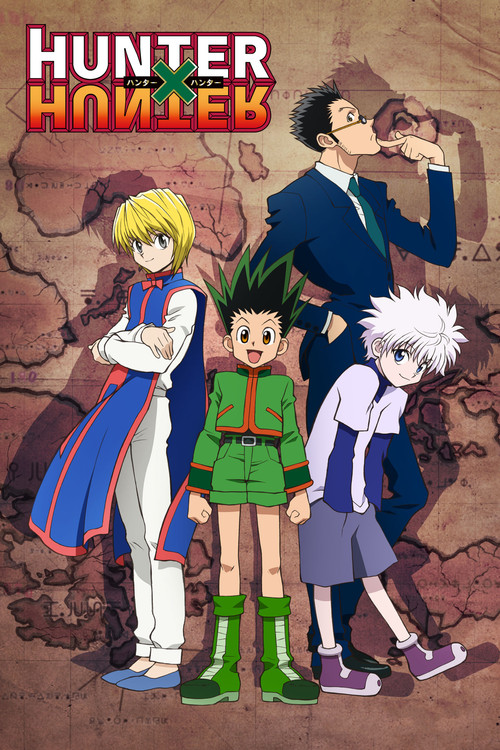
"Hunter x Hunter" (2011) follows Gon Freecss, a cheerful and determined young boy who discovers that his father, whom he believed to be dead, is a world-renowned Hunter. Hunters are elite members of humanity, licensed to pursue fantastical quests like treasure hunting, exploring uncharted territories, and capturing dangerous criminals. Motivated to understand why his father chose this life over raising him, Gon embarks on a perilous journey to pass the rigorous Hunter Examination and find him.
Along the way, Gon forges a powerful bond with three other candidates: Killua Zoldyck, a boy from a notorious family of assassins trying to escape his predetermined path; Kurapika, the sole survivor of his clan seeking vengeance against the Phantom Troupe who massacred his people; and Leorio Paradinight, who aspires to become a doctor to help the poor. The series chronicles their adventures across various arcs, from the high-stakes Hunter Exam and a martial arts tournament to a perilous virtual reality game and a deadly auction in a metropolis run by the mafia. The narrative significantly darkens with the introduction of the Chimera Ants, a monstrous species that threatens humanity, forcing the heroes to confront the depths of their own morality and the true cost of power.
Core Meaning
The core meaning of "Hunter x Hunter" is a profound deconstruction of the classic hero's journey and an exploration of what it truly means to be human. The series posits that the journey and the relationships forged along the way are more significant than the final destination. It challenges traditional notions of good and evil, showcasing protagonists with morally ambiguous actions and antagonists with relatable, sometimes noble, motivations. A central message is that strength without purpose is meaningless, and true power lies not in physical ability but in empathy, sacrifice, and the capacity for love—themes powerfully embodied in the Chimera Ant arc, where the monstrous king discovers his humanity through his connection with a blind girl, while the series' pure-hearted hero descends into a self-destructive abyss of rage.
Thematic DNA
The Duality of Humanity
This theme is central, particularly in the Chimera Ant arc. The series constantly blurs the lines between human and monster. The Chimera Ant King, Meruem, born as a ruthless predator, evolves to possess more compassion and humanity than many of the human characters. Conversely, the protagonist, Gon, driven by grief and revenge, sacrifices his own humanity and innocence for immense power, becoming monstrous in his singular pursuit of vengeance against Neferpitou. The show argues that humanity is not defined by species but by choices, emotions, and the capacity for both incredible kindness and terrifying cruelty.
Friendship and Loyalty
The bond between Gon, Killua, Kurapika, and Leorio is the emotional bedrock of the series. Killua's arc, in particular, revolves around his friendship with Gon, which empowers him to break free from his family's dark influence and discover his own identity and purpose. The unwavering loyalty they show each other, often at great personal cost, serves as a powerful counterpoint to the series' darker, more cynical elements. Their friendship is portrayed as a force capable of saving them not just from external threats, but from their own inner demons.
The Cost of Power and Revenge
"Hunter x Hunter" meticulously explores the idea that great power comes at a significant price. Kurapika's quest for revenge requires him to place a life-threatening Nen vow upon himself, shortening his lifespan with every second he uses his most powerful ability. Gon's ultimate transformation is a literal sacrifice of his future potential and life force for a momentary surge of unbeatable power to avenge his mentor. The series consistently portrays revenge as a self-destructive path that consumes the pursuer, often leading to a loss of the very humanity they sought to protect.
Deconstruction of Shōnen Tropes
Yoshihiro Togashi subverts typical shōnen anime conventions. The bright-eyed, cheerful protagonist, Gon, is revealed to have a terrifyingly selfish and morally ambiguous dark side. Victories are often pyrrhic and laden with trauma, and brute force is frequently less effective than strategy and psychological warfare. The series avoids predictable power-ups, instead focusing on a complex and strategic power system (Nen) where ingenuity and self-imposed limitations are key. The narrative structure itself is unconventional, often shifting focus away from the main protagonist for entire arcs.
Character Analysis
Gon Freecss
Megumi Han
Motivation
Initially, Gon's motivation is a childlike curiosity to find his father, Ging, and understand why he chose the life of a Hunter over his own son. This quest for identity and connection drives him through the early parts of the series. Later, his motivation shifts dramatically to a dark obsession with revenge against Neferpitou for killing Kite. This singular, all-consuming goal highlights his capacity for selfishness and moral ambiguity, proving that his simple desires can twist into something monstrous under extreme emotional distress.
Character Arc
Gon begins his journey as a naive, cheerful, and incredibly determined boy, the epitome of a classic shōnen protagonist. His initial goal is simple: find his father. However, as he grows stronger and is exposed to the world's cruelty, his simple worldview shatters. His arc is not one of straightforward growth but of moral erosion. This culminates in the Chimera Ant arc, where the death of his mentor, Kite, transforms him. Consumed by grief and rage, Gon sacrifices his future, his Nen, and his very humanity for the power to exact revenge, becoming a terrifying, monstrous version of himself. His journey ends not at a peak of power, but in recovery, stripped of his special abilities, forcing him to finally reflect on his actions and the true meaning of strength.
Killua Zoldyck
Mariya Ise
Motivation
Killua's initial motivation is to escape his suffocating family and have fun. He is drawn to Gon's light and freedom. As their bond deepens, his motivation evolves into a fierce desire to protect Gon. This becomes his driving force, pushing him to become stronger, overcome his ingrained fear, and make immense sacrifices. He sees protecting Gon as his new purpose, a way to redeem himself from his past as an assassin and prove he is more than the weapon his family raised him to be.
Character Arc
Killua is introduced as a cheerful but deadly boy, running from his life as the heir to a family of elite assassins. Conditioned to be a ruthless killer, his primary character arc is about breaking free from this indoctrination and finding his own purpose and humanity. His friendship with Gon is the catalyst for this change. He constantly battles the psychological manipulation of his older brother, Illumi, which manifests as a command to flee from any fight he isn't certain he can win. Over the course of the series, particularly during the Chimera Ant arc, Killua learns to defy this conditioning, risking his life for his friends and developing a new form of strength rooted in protection rather than destruction. His journey culminates in him taking responsibility for his powerful but dangerous sister, Alluka, fully severing ties with his family's dark legacy to forge his own path.
Kurapika
Miyuki Sawashiro
Motivation
Kurapika's sole motivation is twofold: to avenge his clan by killing every member of the Phantom Troupe and to recover the stolen Scarlet Eyes of his brethren. This singular, all-consuming purpose drives every decision he makes, from becoming a Blacklist Hunter to affiliating with the Nostrade family mafia. He openly states that his rage is the one thing he fears losing, as it is the fuel for his existence. While he values his friends, his path of vengeance often forces him to act alone.
Character Arc
Kurapika starts as a calm, intelligent, and aloof individual, but beneath the surface lies a deep-seated, burning rage. He is the last survivor of the Kurta Clan, massacred for their coveted Scarlet Eyes. His entire arc is defined by his quest for revenge against the Phantom Troupe. This journey forces him to walk a fine line between justice and self-destruction. In the Yorknew City arc, he achieves a significant part of his revenge but becomes increasingly isolated and morally compromised, willing to sacrifice his own life and well-being through Nen vows. His development shows the corrupting nature of hatred, as his quest causes him to adopt a cold pragmatism that worries his friends, revealing a darker, more ruthless side to his personality.
Leorio Paradinight
Keiji Fujiwara
Motivation
Leorio's primary motivation is to earn enough money to attend medical school and open a free clinic for the poor. He lost a childhood friend to a preventable disease because they lacked the money for treatment, instilling in him a deep-seated desire to prevent others from suffering the same fate. This altruistic goal is the bedrock of his character. He is also fiercely loyal to his friends, and their safety and well-being often become his immediate, passionate motivation, as seen when he punches Gon's father, Ging, for his cavalier attitude towards his son's near-death state.
Character Arc
Leorio is introduced as a seemingly selfish and materialistic character, claiming he only wants to be a Hunter for the money. However, it's quickly revealed that his true goal is to become a doctor to provide free medical care to the poor, a dream born from the tragedy of losing a close friend to a treatable illness he couldn't afford to cure. Leorio's arc is less about gaining physical power and more about his unwavering moral compass and loyalty. He often acts as the group's emotional core, grounding them with his practicality and passionate sense of justice. His development peaks during the Chairman Election arc, where his raw, heartfelt anger over Gon's condition earns him unexpected respect and influence, proving that his strength lies in his empathy and integrity, not combat prowess.
Hisoka Morow
Daisuke Namikawa
Motivation
Hisoka's motivation is pure and simple: hedonism. He seeks pleasure, which he derives almost exclusively from battling powerful fighters. He is constantly searching for and 'grading' potential opponents, becoming obsessed with those he deems worthy, like Chrollo and Gon. He will lie, manipulate, kill, and even aid the protagonists if it serves his ultimate goal of setting up a satisfying, life-or-death battle. His desires are his only moral compass, making him one of the most unpredictable and dangerous characters in the series.
Character Arc
Hisoka is an enigmatic and unpredictable antagonist whose character arc is less about development and more about the consistent pursuit of his hedonistic desires. He is a powerful, bloodthirsty magician who lives for the thrill of fighting strong opponents, to the point of sexual arousal. He doesn't have a traditional arc of growth; instead, he serves as a chaotic force that pushes other characters to develop. He joins the Phantom Troupe only for a chance to fight their leader and spares Gon's life multiple times, not out of kindness, but to cultivate him into a worthy future opponent. Hisoka remains consistently self-serving, amoral, and dangerously whimsical from beginning to end, acting as an ally or enemy based solely on what he finds most entertaining at the moment.
Symbols & Motifs
The Hunter License
The Hunter License symbolizes freedom, access, and power within the world. It grants its holder the ability to travel freely, access restricted information, and act with a degree of impunity. However, it also represents a commitment to a life of endless seeking and the inherent dangers that come with it. For Gon, it is the tangible link to his father and the first step on his journey.
The pursuit of the license drives the first major arc of the series, the Hunter Exam. Its versatile use is demonstrated throughout the show, from being used as collateral for immense wealth to gaining entry into otherwise inaccessible places. Gon ultimately returns his license to his father, Ging, symbolizing the completion of his initial goal, having realized the journey itself was the true prize.
Kurapika's Scarlet Eyes
The Scarlet Eyes of the Kurta Clan, which glow intensely in moments of high emotion, symbolize both immense beauty and deep tragedy. They represent Kurapika's lost heritage and the source of his rage and motivation for revenge. They are a physical manifestation of his emotional state and the power it grants him, but also a coveted treasure that led to his clan's slaughter, symbolizing how unique strengths can be exploited by the predatory nature of others.
The eyes are the central focus of Kurapika's character arc. His goal is to retrieve all the stolen pairs from the black market and avenge his clan by destroying the Phantom Troupe. The activation of his eyes signals a shift in his power and a loss of his usual calm demeanor, plunging him into a state of cold, vengeful fury.
The Phantom Troupe's Spider
The spider tattoo, with a number unique to each member of the Phantom Troupe, symbolizes a twisted sense of family and nihilistic identity. The spider's body represents their leader, Chrollo Lucilfer, and the legs are the members. If the head is removed, the legs are meant to continue functioning. This represents their collective identity; they are both a cohesive unit and a group of individualistic, powerful criminals. It symbolizes their belief that the group is more important than any single member, even the leader.
The spider is the emblem of the series' most prominent antagonistic group. It is seen on each member and is a source of pure hatred for Kurapika. The Yorknew City arc revolves around the Troupe's actions and Kurapika's hunt for the 'spiders', making their symbol a constant presence and a mark of imminent danger and moral decay.
Memorable Quotes
You should enjoy the little detours to the fullest. Because that's where you'll find the things more important than what you want.
— Ging Freecss
Context:
This is said during the long-awaited conversation between Gon and Ging atop the World Tree in the final episode of the series, Episode 148, "Past x And x Future". It serves as the narrative's closing statement, bringing Gon's journey full circle and providing a profound lesson that validates all of his adventures and hardships.
Meaning:
This quote encapsulates one of the central themes of the series: the journey is more important than the destination. Ging says this to Gon, summarizing the philosophy that guided his own life and encouraging his son to value the experiences and friendships he gains along the way, rather than focusing solely on the goal of finding him.
If you want to get to know someone, find out what makes them angry.
— Mito Freecss
Context:
This is said to Gon in Episode 1, "Departure x And x Friends," as he is preparing to leave Whale Island to take the Hunter Exam. He is trying to understand his father, Ging, and this is the wisdom his aunt imparts to guide him on his quest for understanding.
Meaning:
Mito's advice to Gon suggests that a person's true character and deepest values are revealed not in moments of peace, but in moments of righteous anger. It's a key piece of insight that frames how Gon, and the audience, should understand people's motivations throughout the complex moral landscape of the series.
I do not fear death. I fear only that my rage will fade over time.
— Kurapika
Context:
Kurapika expresses this sentiment during the Yorknew City arc, specifically in Episode 52, "Assault x And x Impact," while confronting one of the Phantom Troupe members. It perfectly captures his mindset as he dives deeper into the criminal underworld to achieve his goals.
Meaning:
This quote powerfully illustrates the depth of Kurapika's commitment to his revenge. His rage is not just an emotion; it is the core of his identity and the source of his strength and resolve. He sees it as the only thing connecting him to his fallen clan and fears losing it more than his own life, showcasing the self-destructive nature of his path.
Gon, you are light. Sometimes you shine so brightly, I must look away. But even so, is it still okay for me to stay by your side?
— Killua Zoldyck
Context:
Killua has this internal monologue during the Chimera Ant arc, specifically in Episode 85, "Light x And x Darkness," as he reflects on his relationship with Gon. It highlights his emotional vulnerability and the profound impact their friendship has had on his life and character development.
Meaning:
This quote is the cornerstone of Killua's devotion to Gon. Coming from a world of darkness and assassination, Killua sees Gon as his moral compass and salvation. It reveals his deep-seated feelings of inadequacy and his fear that his own darkness will tarnish Gon's light, while also showing his desperate longing for the friendship and acceptance Gon offers him.
Episode Highlights
Condition x And x Condition
This episode showcases the brilliance of the Nen power system through Kurapika's fight with Uvogin, a powerhouse of the Phantom Troupe. It's not a battle of pure strength, but one of strategy, intellect, and sacrifice. Kurapika reveals his Nen abilities, specifically Chain Jail, which is bound by a powerful vow that he can only use it on members of the Phantom Troupe, at the cost of his life if he breaks it. The episode masterfully builds tension and delivers a stunning, methodical victory for Kurapika.
This episode is pivotal for establishing the depth and strategic nature of Nen battles in the series. It's the culmination of Kurapika's preparation and rage, marking his first major victory against the Troupe and cementing him as a formidable and tragic character. It demonstrates that in "Hunter x Hunter", limitations and self-imposed rules are a source of immense power, a core concept of the series.
Guts x And x Courage
Set during the Greed Island arc, this episode features an epic and high-stakes game of dodgeball against the formidable Game Master, Razor. Gon, Killua, and Hisoka must team up and push their abilities to the absolute limit. The episode turns a simple sport into a life-or-death battle of wits and raw power, highlighting Gon's reckless determination and the trio's incredible teamwork, with Hisoka's Bungee Gum playing a key strategic role.
This episode is a fan favorite for its perfect blend of shōnen action, strategy, and character dynamics. It's the first time Hisoka truly acts as an ally to Gon and Killua, showcasing his power in a cooperative context. The match is a masterclass in creative fight choreography and demonstrates Gon's terrifying potential and willingness to shatter his own body for victory.
Revenge x And x Recovery
A major turning point in the series and for Gon's character. After confirming that Kite is truly dead and cannot be saved, Gon confronts Neferpitou. The cheerful boy vanishes, replaced by a cold, empty vessel of rage. The episode is a slow, tense, and emotionally devastating buildup to his horrific transformation. The audience witnesses Gon's complete emotional breakdown as he prepares to make the ultimate sacrifice for vengeance.
This episode marks the death of Gon's innocence. It's the moment the series' subversion of the shōnen hero archetype becomes terrifyingly clear. His confrontation with Pitou sets the stage for the climax of the Chimera Ant arc and fundamentally changes the trajectory of his character, showing the dark potential that lay dormant within him all along.
Zero x And x Rose
This episode features the climax of the legendary battle between Hunter Association Chairman Isaac Netero and the Chimera Ant King, Meruem. It's a fight not just of physical power, but of clashing ideologies. Netero, the pinnacle of human potential, unleashes his most powerful techniques against the biologically perfect King. When his strength fails, Netero reveals humanity's ultimate, ugliest weapon: the Miniature Rose, a poison-laced bomb, sacrificing himself to ensure the King's demise.
Netero vs. Meruem is one of the most acclaimed fights in anime history. This episode subverts the expectation of a clean victory, instead showing that humanity's capacity for malice and self-destruction is its most terrifying power. It's a profound commentary on war, strength, and the nature of humanity, solidifying the Chimera Ant arc as a masterpiece of storytelling.
Anger x And x Light
This episode unleashes the terrifying result of Gon's Nen contract. He transforms into an adult version of himself, possessing all the power he would ever have, and proceeds to utterly annihilate Neferpitou. The "fight" is brutal, one-sided, and horrifying. Killua arrives just in time to witness his best friend, unrecognizable and consumed by darkness, mercilessly crushing their enemy. The juxtaposition of Gon's immense power and his complete loss of self is chilling.
This is the climax of Gon's character arc and the full realization of the series' dark potential. It's a graphic depiction of the cost of revenge, showing that in achieving his goal, Gon destroyed himself. The event leaves him on the brink of death and severs his connection to Nen, creating long-lasting consequences for the rest of the series. Killua's horrified reaction underscores the tragedy of the moment.
Past x And x Future
The final episode of the 2011 series provides a deeply satisfying, albeit open-ended, conclusion. After being healed by Alluka's power, Gon finally meets his father, Ging, atop the World Tree. Their conversation is not one of grand emotion, but of mutual respect between two adventurers. Ging shares his philosophy about the importance of the journey and the detours along the way. The episode beautifully wraps up the current storylines, showing Gon and Killua parting ways to follow their own paths.
This episode brings the anime's central narrative to a poignant close. It fulfills Gon's initial quest but reframes it, suggesting that finding Ging was never the true goal. It emphasizes the theme of moving forward and sets the stage for future adventures (covered in the manga), ending the series on a hopeful and thematically resonant note that celebrates friendship and the endless journey of discovery.
Philosophical Questions
What does it mean to be human?
This is the central question of the Chimera Ant arc. The series explores this by contrasting the Chimera Ant King, Meruem, with the human protagonist, Gon. Meruem, born a monstrous creature bred for domination, gradually develops compassion, empathy, and love through his interactions with the blind Gungi player, Komugi. He begins to question his purpose and value individual life, ultimately dying with more recognizable 'humanity' than many of the show's human characters. Simultaneously, Gon, driven by revenge, sheds his empathy and compassion, making a deal to sacrifice everything for monstrous power. He loses his 'humanity' in the process. The series suggests that humanity is not a matter of birth or species, but a quality defined by one's capacity for empathy, self-sacrifice, and connection, which can be both gained and lost.
Is there a meaningful distinction between good and evil?
"Hunter x Hunter" consistently challenges the audience's moral assumptions by presenting a world steeped in moral ambiguity. The Phantom Troupe are mass murderers, yet they also display unwavering loyalty and grieve for their fallen comrades, forcing Gon to confront his own hypocrisy. The series' hero, Gon, commits morally reprehensible acts in his quest for revenge, while the primary villain of an arc, Meruem, develops a nuanced and sympathetic worldview. The story avoids easy answers, suggesting that 'good' and 'evil' are often matters of perspective and that even the most righteous motives can lead to monstrous actions, and vice versa. It forces the viewer to evaluate characters based on their complex motivations rather than simplistic labels.
What is the true nature of strength?
The series initially presents strength in typical shōnen fashion—physical power and fighting ability. However, it quickly complicates this idea. The Nen system itself is based on personality and self-imposed limitations, rewarding strategy and creativity over raw power. The most profound exploration of this theme comes through characters like Meruem and Netero. Meruem is born with absolute physical power, yet he finds meaning and purpose not through domination, but through intellectual and emotional connection with Komugi, a physically weak human. Netero, the strongest human, is defeated by Meruem, and humanity's ultimate victory is achieved not through honorable combat, but through a weapon of mass destruction—a symbol of humanity's darkest, most cowardly form of 'strength'. The series ultimately argues that true strength is found in purpose, empathy, and the will to protect others, rather than in power itself.
Alternative Interpretations
One of the most prominent alternative interpretations of "Hunter x Hunter" revolves around the idea that Gon Freecss is not the hero of the story, but rather a burgeoning monster or antihero whose journey is a descent into darkness. This view posits that Gon's characteristic determination is actually a form of extreme selfishness. He pursues his goals with a single-mindedness that disregards the safety and well-being of others, including his closest friend, Killua. His simple, black-and-white morality is seen not as innocence, but as a dangerous lack of empathy; he judges people solely on their utility to him. The Chimera Ant arc is the primary evidence for this reading, where his grief manifests not as sadness but as a terrifying, narcissistic rage that leads him to sacrifice his own humanity for power, threatening an innocent person (Komugi) to get what he wants.
Another interpretation focuses on the series as a critique of obsession. Nearly every major character is driven by an all-consuming obsession: Gon with finding his father, Kurapika with revenge, Hisoka with fighting strong opponents, and Meruem with understanding his own identity and purpose. The series consistently shows that these obsessions, while providing purpose, are ultimately destructive. Kurapika sacrifices his lifespan, Gon destroys his body and potential, and Hisoka's obsession leads him to be a chaotic, amoral force. In this light, the series is a cautionary tale about the dangers of allowing a single goal to define one's entire existence.
Cultural Impact
"Hunter x Hunter" has had a profound and lasting impact on the anime and manga landscape. Created by the notoriously reclusive but highly respected Yoshihiro Togashi, the series is often hailed as one of the greatest shōnen of all time. Its initial publication in 1998 placed it among the titans of the genre, but its sophisticated storytelling set it apart. The 2011 anime adaptation by Madhouse is particularly acclaimed for its high-quality animation and faithful retelling of the manga, bringing the story to a new generation of fans and solidifying its legacy.
The series' greatest influence lies in its deconstruction of shōnen tropes. It introduced a level of moral complexity and psychological depth that was uncommon for the genre at the time. Its protagonist, Gon, subverts the heroic ideal by displaying terrifying selfishness and moral ambiguity, a departure from the genre's typically unwavering heroes. Furthermore, its intricate and logical power system, Nen, is frequently cited as one of the best in all of fiction, influencing countless subsequent series by emphasizing strategy and personal limitations over simple power scaling.
The Chimera Ant arc, in particular, received massive critical acclaim for its dark, philosophical themes, complex character development, and unflinching exploration of what it means to be human. It elevated the series from a clever adventure story to a profound piece of literature. Despite its infamous, long-running hiatuses due to Togashi's health, the series' popularity has never waned, a testament to its quality and dedicated fanbase. Its influence can be clearly seen in modern hits like 'Jujutsu Kaisen' and 'My Hero Academia,' whose creators have openly cited Togashi as an inspiration. 'Hunter x Hunter' remains a benchmark for narrative ambition, complex world-building, and character-driven storytelling in the world of anime.
Audience Reception
The 2011 adaptation of "Hunter x Hunter" is overwhelmingly praised by audiences and critics alike, frequently cited as one of the greatest anime series ever made. It holds exceptionally high ratings on user-based sites like IMDb and MyAnimeList. Viewers consistently praise its complex and mature storytelling, which subverts traditional shōnen tropes, and its deep, well-developed characters. The intricate and strategic Nen power system is another point of universal acclaim, lauded for its logic and creativity.
The reception of its story arcs varies, though most are highly regarded. The Yorknew City and Chimera Ant arcs are often singled out as masterpieces of storytelling. The Chimera Ant arc, in particular, is a frequent topic of discussion; while some viewers found its pacing slow and its tone jarringly dark compared to earlier arcs, the vast majority consider it the series' magnum opus due to its profound thematic depth, emotional weight, and exceptional character development, especially for Meruem and Gon. The primary point of criticism from audiences is not directed at the show itself, but at its source material's infamous and ongoing hiatuses, which led to the 2011 anime ending at a natural stopping point but without adapting the full story that is yet to be written by Yoshihiro Togashi.
Interesting Facts
- The creator of 'Hunter x Hunter', Yoshihiro Togashi, is married to Naoko Takeuchi, the creator of the legendary manga series 'Sailor Moon'.
- Yoshihiro Togashi is an avid gamer and horror film buff, influences that can be seen in the Greed Island arc and the darker, more terrifying elements of the series, respectively.
- The 'x' in the title 'Hunter x Hunter' is silent. Togashi was inspired to use it after watching a TV variety show where the hosts would repeat words for comedic effect.
- The 2011 anime is a reboot and a more faithful adaptation of the manga than the original 1999 series, and it was the first to animate the entirety of the critically acclaimed Chimera Ant arc.
- The manga is famous for its frequent and often lengthy hiatuses due to Togashi's chronic health issues, particularly severe back pain.
- Many successful modern manga artists, such as Masashi Kishimoto (Naruto) and Gege Akutami (Jujutsu Kaisen), have cited Togashi and 'Hunter x Hunter' as a major influence on their work.
Easter Eggs
During the Yorknew City arc auction, a copy of the 'Greed Island' game is listed as item #775. The buyer is a character named Battera, who bears a strong resemblance to a character named Sakyo from Yoshihiro Togashi's previous major work, 'Yu Yu Hakusho'.
This serves as a nod to Togashi's prior series. In 'Yu Yu Hakusho', Sakyo was a wealthy member of a gambling syndicate involved in the Dark Tournament, making his anime counterpart's appearance as a billionaire game collector a fitting tribute.
In the Zoldyck Family home, Killua's younger sister, Kalluto, is seen playing with dolls that are designed to look like the main characters from 'Yu Yu Hakusho'.
This is another direct and charming reference to Yoshihiro Togashi's previous manga, 'Yu Yu Hakusho'. It's a fun, hidden detail for longtime fans of Togashi's work, connecting his two most famous fictional universes in a small way.
Several of the 'Greed Island' game cards feature names and designs that reference other famous manga and anime series, including 'Dragon Ball' and 'JoJo's Bizarre Adventure'.
These references showcase Togashi's appreciation for his peers in the manga industry and the works that have influenced the shōnen genre. They are playful winks to the audience that place 'Hunter x Hunter' within the larger culture of manga and anime.
⚠️ Spoiler Analysis
Click to reveal detailed analysis with spoilers
Frequently Asked Questions
Explore More About This Movie
Dive deeper into specific aspects of the movie with our detailed analysis pages
Comments (0)
No comments yet. Be the first to share your thoughts!