Skip to content
If Wishes Could Kill
A suffocating young-adult supernatural horror where digital convenience bleeds into visceral dread, etching a harrowing nightmare of unchecked desire like blood slowly pooling across a glowing, cold smartphone screen.
If Wishes Could Kill

If Wishes Could Kill

기리고

"Got a wish worth dying for?"

24 April 2026 — 24 April 2026 South Korea 1 season 8 episode Ended 8.1 (157)

Cast: Jeon So-young, Baek Sun-ho, Kang Mi-na, Hyun Woo-seok, Lee Hyo-je

Drama Mystery The Deadly Price of Unchecked Desire Technological Alienation and Modern Urban Folklore Adolescent Envy, Guilt, and Broken Friendships The Collision of Traditional Shamanism and Modernity

Overview

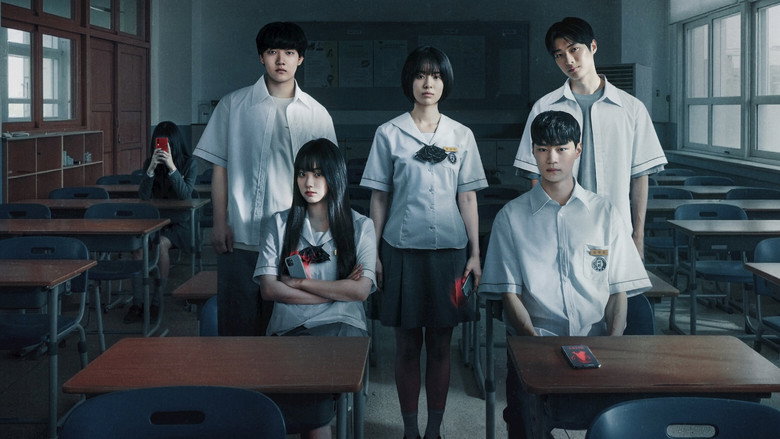
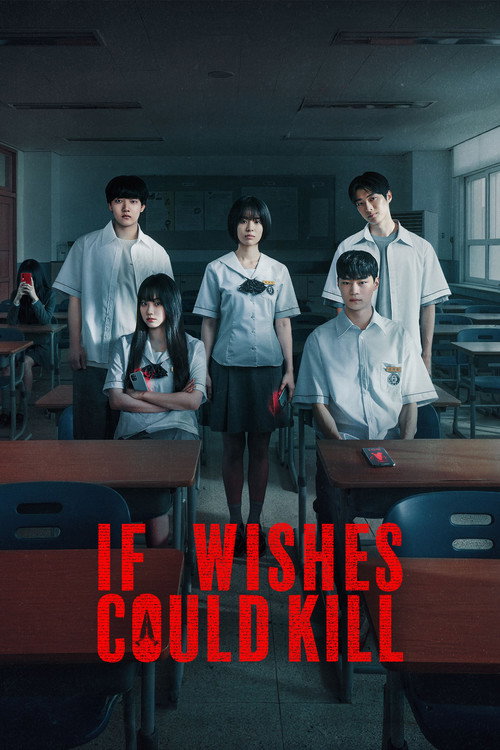
If Wishes Could Kill (Original Korean Title: 기리고 / Girigo) is an eight-episode Netflix South Korean supernatural horror and mystery series released globally on April 24, 2026. Set in Seorin High School, the series follows five ordinary high school friends whose lives are thrown into dark chaos after discovering Girigo, a mysterious mobile application that promises to grant any wish uploaded as a short video message.

What initially appears to be a harmless rumor or digital gimmick turns horrific when student wishes begin coming true with unsettling perfection, immediately followed by a terrifying catch: a 24-hour digital countdown that culminates in violent, inescapable death. After an early tragedy strikes their inner circle, track-and-field athlete Yoo Se-ah and her friends realize they are caught in a deadly chain reaction where one wish triggers another in a desperate bid for survival.

As the curse claims more victims, the surviving students must navigate a claustrophobic web of suspicion, paranoia, and terrifying supernatural omens. Teaming up with local spirit mediums, the group digs deep into Seorin High’s dark history, uncovering a tragic origin story buried in broken promises and digital malice—leading to a desperate confrontation with the ancient spirit haunting the app.

Core Meaning

At its core, If Wishes Could Kill serves as a modern cautionary tale exploring the dark intersection of adolescent ambition, digital escapism, and the ancient human temptation of short-cut gratification. The creators use the metaphor of a cursed smartphone app (Girigo) to illustrate how modern technology weaponizes deep-seated envy, social anxiety, and emotional insecurity among youth.

Through its complete narrative arc, the series conveys that attempting to force one's desire onto the world without earning it or considering its consequences inevitably incurs a destructive cost. By blending traditional Korean shamanism (musok) with contemporary mobile technology, the show emphasizes that while mediums of human connection change, trauma, resentment, and greed remain timeless curses that feed upon human vulnerability.

Thematic DNA

The Deadly Price of Unchecked Desire 35%
Technological Alienation and Modern Urban Folklore 25%
Adolescent Envy, Guilt, and Broken Friendships 20%
The Collision of Traditional Shamanism and Modernity 20%

The Deadly Price of Unchecked Desire

The central thematic pillar of the show is the idea that no wish is free. Throughout the series, characters make seemingly innocent or desperate wishes—to ace an exam, to protect a loved one, or to gain popularity—only to find that the app distorts their intent and demands a lethal retribution.

Technological Alienation and Modern Urban Folklore

The show explores how digital devices, intended to connect people, often isolate them and amplify their darkest thoughts. Girigo transforms the phone from a daily utility into a "Jugu"—a spiritual vessel or conduit for demonic curses that weaponizes private desires.

Adolescent Envy, Guilt, and Broken Friendships

The curse does not act randomly; it thrives on pre-existing fissures in teenage relationships. The narrative demonstrates how unexpressed jealousy and fear of abandonment can rot a friendship from within, creating fertile ground for supernatural corruption.

The Collision of Traditional Shamanism and Modernity

The series contrasts modern digital logic (apps, coding, algorithms) with ancient Korean occult traditions (saju fortune-telling, talismans, spirit realms). It shows that technical solutions cannot resolve spiritual trauma; only confronting emotional truths can break spiritual chains.

Character Analysis

Yoo Se-ah

Jeon So-young

Archetype: The Reluctant Hero / Determined Protagonist Key Trait: Relentless physical and emotional resilience

Motivation

Driven by loyalty to her friends and a fierce desire to stop the cycle of death.

Character Arc

Begins as a promising track-and-field student athlete focused on her sports career. When her friends fall victim to the curse, she evolves into a courageous protector willing to venture into the spirit realm to end the horror.

Lim Na-ri

Kang Mi-na

Archetype: The Fallen Friend / Tragic Antagonist Key Trait: High social charm masking profound vulnerability

Motivation

Craves social validation and deep affection, which gets twisted into toxic possessiveness.

Character Arc

Starts as a highly popular student with idol-like looks who dismisses the app as silly. As insecurity and envy consume her, she succumbs to spiritual possession and gradually transforms into a primary vessel for the curse.

All 5 characters and cast

Symbols & Motifs

The Girigo App / Smartphone Screen

Meaning:

Symbolizes the illusion of effortless control and digital escapism.

Context:

The glowing interface acts as a threshold between the physical world and the spirit realm.

The 24-Hour Digital Countdown

Meaning:

Represents mortality, inevitability, and the anxiety of time running out for youth under immense social pressure.

Context:

Appears as a countdown timer on the screen of anyone whose wish has been granted.

Bleeding Eyes / Oozing Blood

Meaning:

A recurring bodily horror visual motif indicating that a user is under the app's spiritual possession and their human vitality is draining away.

Context:

Visible on characters undergoing spiritual corruption and impending death.

Box Cutter / Metal Blades

Meaning:

Symbolizes self-destructive impulses and the sharp, severing nature of broken trust.

Context:

Featured in key tragic moments of self-harm under supernatural influence and betrayal.

Paper Saju & Talismans

Meaning:

Represents traditional Korean spiritual protection and the human attempt to alter fate through ancestral rites.

Context:

Used by shamans Haetsal and Bangwool to provide spiritual defense and ward off cursed spirits.

}],

Memorable Quotes

사주를 적고 소원을 말하면 이루어진다는 말, 들어 본 적 있어?
— Kwon Si-won

Context

Spoken to Do Hye-ryung in a flashback during Episode 6.

Meaning

Sets the entire origin story of how the physical ritual was conceived before becoming digitized.

소원의 대가는 죽음이다.
— Girigo App / Narration

Context

Appears across episodes on the screen of anyone whose wish is granted.

Meaning

Cements the non-negotiable rule of the curse.

All 3 quotes

Episode Highlights

The Wish

S1E1

Introduces Seorin High School and Choi Hyeong-wook’s wish for a perfect math score.

Significance:

Hyeong-wook horrifically cuts his own throat in front of class, establishing the terrifying stakes immediately.

24 Hours

S1E2

Geon-woo makes a wish to help Se-ah, initiating his own 24-hour death countdown.

Significance:

Reveals the rule that timers only pause when a new wish is passed to someone else.

Shaman's Advice

S1E4

The group meets Haetsal and Bangwool, shifting the narrative from technical investigation to occult shamanism.

Significance:

Introduces spiritual rituals and temporary protection talismans.

2022

S1E6

Flashback episode revealing the tragedy of Kwon Si-won and Do Hye-ryung in 2022.

Significance:

Explains how Si-won’s coding project merged with Hye-ryung’s spirit, creating the original curse vessel.

Never Look Back

S1E8

The series finale. Se-ah travels into the spirit realm guided by Haetsal to destroy the original phone.

Significance:

Features a high-stakes spiritual battle, Na-ri’s fate, and the bittersweet resolution.

Philosophical Questions

If desire requires sacrifice, where does true value lie?

Explored through characters seeking unearned success.

Can modern technology erase ancient human flaws or merely amplify them?

Explored through the evolution of the curse from paper to app.

Is self-sacrifice justified to break a cycle of inherited guilt?

Explored through Se-ah’s climax in the spirit realm.

Alternative Interpretations

Viewers interpret the show through several lenses:

Full ending explanation

Cultural Impact

Released in April 2026, If Wishes Could Kill coincided with a broader "K-Horror Renaissance," streaming alongside the theatrical box-office success of Korean horror film Salmokji. The show capitalized on South Korean youth culture's fascination with MBTI, saju fortune-telling, and modern occult trends.

Critically, the show performed exceptionally well globally, reaching #1 on Netflix's Top 10 Non-English TV list across 13 countries (including South Korea, Mexico, India, and Thailand) and garnering over 7.5 million views within weeks.

Audience Reception

Praise: Audiences praised the fast pacing, effective practical gore, strong chemistry among the young cast, and the creative blending of Korean shamanism with modern tech.

Criticism: Some reviewers noted occasional YA high-school horror tropes and felt frustrated by characters ignoring warnings (specifically Na-ri’s stubbornness).

Overall Verdict: A thrilling, tightly executed 8-episode Korean horror series that successfully revitalizes school-curse tropes for the streaming era.

Interesting Facts

  • Directed by Park Youn-seo, who previously served as co-director on the hit series Moving and B-director on Kingdom Season 2.
  • Screenplay written by Park Joong-seop, writer of the supernatural film Dr. Cheon and the Lost Talisman.
  • Formally marketed as Netflix’s first official Korean "Young Adult Horror" original series.
  • Lead actor Baek Sun-ho (playing Geon-woo) enlisted in mandatory military service shortly before release and could not participate in live promotional events.
  • A functional marketing demo of the Girigo app was released on Google Play and web platforms for fans to test wish-recording features safely.

Easter Eggs

Episode 6 Opening Title Shift

Uniquely in Episode 6, the series title card Girigo is displayed at the very end of the episode instead of the beginning, symbolizing that the episode is an origin story precursor to the main timeline.

Homage to J-Horror Classics

The plot mechanics (a digital curse spreading through phones via countdowns) pay direct homage to Japanese horror classics like One Missed Call (Chakushin Ari) and Ringu.

The "Jugu" Concept

References authentic classical Korean shamanic lore regarding cursed physical objects (jugu) used to bind restless spirits (wonhon).

Frequently Asked Questions

Explore More About This Movie

Dive deeper into specific aspects of the movie with our detailed analysis pages

Comments (0)

Leave a comment

No comments yet. Be the first to share your thoughts!

Similar Movies