Skip to content
Lanterns
A sun-baked neo-Western noir drenched in cosmic dread and quiet human vulnerability, where emerald light cuts through the shadowed dust of rural heartland secrets like a lone flare in an abyss.
Lanterns

Lanterns

"Only one can wear the ring."

16 August 2026 — 16 August 2026 United States of America 1 season 8 episode Returning Series 8.1 (107)

Cast: Kyle Chandler, Aaron Pierre, Kelly Macdonald, Garret Dillahunt, Poorna Jagannathan

Drama Sci-Fi & Fantasy Mystery Overcoming Fear vs. Suppressing Fear Systemic Duty and Flawed Institutions Generational Legacy and Racial Burden Isolation of the Heartland and Hidden Conspiracies

Overview

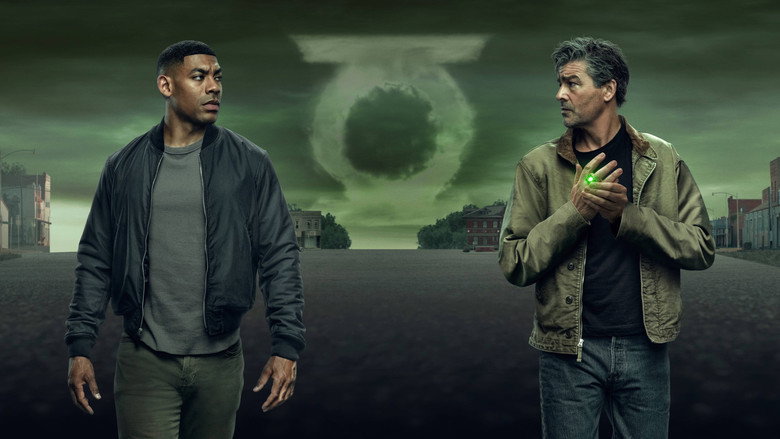
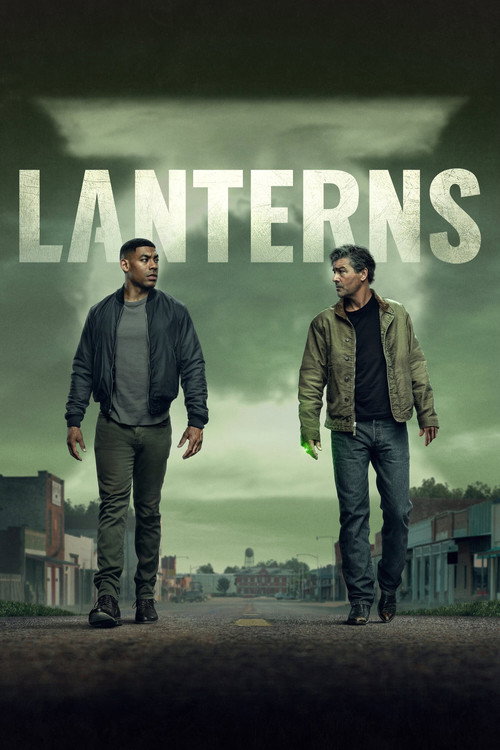
Lanterns is a grounded science-fiction crime drama that recontextualizes DC Comics' cosmic mythology into an intimate, terrestrial detective procedural. The story centers on seasoned Green Lantern veteran Hal Jordan and his newly chosen recruit, former Marine John Stewart, who are tasked with investigating a bizarre, gruesome murder in the remote town of Rushville, Nebraska. As local law enforcement clashes with intergalactic jurisdiction, what initially looks like small-town violence rapidly reveals deep roots tied to extraterrestrial conspiracies and a much larger, foundational threat targeting Earth and the Green Lantern Corps.

Spanning interconnected timelines—anchored largely in 2016 with pivotal narrative framing in 1996 and 2026—the overarching arc explores the uneasy partnership between two disparate men bound by duty. Rather than leaning on non-stop cosmic battles, the narrative unfolds with the deliberate pacing of modern noir, peeling back town conspiracies, personal familial traumas, and intergalactic cover-ups layer by layer.
Core Meaning

The core thesis of Lanterns investigates the true nature of willpower, fear, and institutional justice. The series strips away the romanticized gloss of superhero myth to argue that the hardest battle against darkness does not happen in outer space, but within ordinary, flawed human communities and scarred psyches. By contrasting the generational, racial, and ideological differences of its leads, the show conveys that genuine heroism is not fearlessness, but the resilience to confront uncomfortable truths, systemic biases, and the corruptive nature of unchecked power.

Thematic DNA

Overcoming Fear vs. Suppressing Fear 30%
Systemic Duty and Flawed Institutions 25%
Generational Legacy and Racial Burden 25%
Isolation of the Heartland and Hidden Conspiracies 20%

Overcoming Fear vs. Suppressing Fear

Explores the Green Lantern philosophy that courage is not the absence of fear, but mastery over it. Hal's emotional detachment and John's internalized discipline demonstrate two contrasting ways trauma and dread are navigated.

Systemic Duty and Flawed Institutions

Examines the morality of policing, comparing the interstellar mandate of the Green Lantern Corps with local municipal law enforcement, questioning whose interests are truly being protected.

Generational Legacy and Racial Burden

Contrasts Hal Jordan's privileged legacy as Earth's first celebrity hero with John Stewart's experience as a Black veteran who must perform with zero margin for error under higher scrutiny.

Isolation of the Heartland and Hidden Conspiracies

Explores how small, forgotten rural communities become breeding grounds for paranoia, insular militia loyalty, and concealed extraterrestrial interference.

Character Analysis

Hal Jordan

Kyle Chandler

Archetype: The Cynical Veteran / Reluctant Mentor Key Trait: Unapologetic grit tempered by stubborn nobility

Motivation

To maintain order on Sector 2814 and fulfill his duty while keeping his inner cynicism from completely breaking him.

Character Arc

Begins as an emotionally weary, grumpy space cop who masks his past trauma and disillusionment with snark; through training John, he is forced to confront his own isolation, reconnect with his humanity, and trust a successor.

John Stewart

Aaron Pierre

Archetype: The Disciplined Rookie / Emerging Hero Key Trait: Stoic calculation and unwavering internal integrity

Motivation

To prove his capability to wield the Green Lantern power and uncover the truth behind the heartland mystery while honoring his family's high expectations.

Character Arc

A former Marine used to rigid tactical discipline and bearing the heavy weight of societal expectations, John evolves from a frustrated, ringless trainee into a discerning detective with an unshakeable moral compass.

All 5 characters and cast

Symbols & Motifs

The Power Ring

Meaning:

Symbolizes both divine power and emotional burden. John is initially withheld the ring, making it an emblem of earned worthiness, self-mastery, and restraint rather than a weapon.

Context:

Kept away from John Stewart during his training and car rides with Hal Jordan to evaluate his inner readiness.

The 1996 Television Interview

Meaning:

Contrasts the public myth of a superhero with the cynical reality of Hal's later life.

Context:

A recurring broadcast motif featuring a young, confident Hal Jordan proclaiming he is "just a normal person" on television.

Nebraska Dust and Cornfields

Meaning:

Represents the deceptive stillness of the American heartland, masking deep cosmic rot beneath ordinary domestic life.

Context:

Pervades the setting of Rushville, Nebraska, where the central investigation and militia activities unfold.

The Emerald Glow (Constructs)

Meaning:

Represents pure will and truth piercing through literal and psychological shadows.

Context:

Used sparingly throughout the series to highlight critical moments of clarity and power against the dark noir backdrop.

Memorable Quotes

Don't get hung up on the jewelry, Junior. You'll wear it when it chooses you.
— Hal Jordan

Context

Spoken to John Stewart during a tense car ride in Season 1, Episode 1.

Meaning

Establishes the Green Lantern ring's selective, psychological nature and sets up the mentor-mentee friction.

With all due respect, we've been doing this, what, two months? And I haven't even worn the ring yet.
— John Stewart

Context

Delivered by John in Season 1, Episode 1 while questioning Hal's training methods.

Meaning

Highlights John's growing frustration with Hal's unorthodox and withholding mentorship style.

All 4 quotes

Episode Highlights

Pilot / Series Premiere

S1E1

Establishes the three time periods (1996, 2016, and 2026), introduces Hal Jordan's mentorship dynamic with rookie John Stewart, and begins the murder investigation in Rushville, Nebraska.

Significance:

Sets the grounded tone and distinguishes the DCU's detective-procedural approach from standard comic-book fare.

Episode 2

S1E2

Directed by James Hawes; dives deep into the Macon family dynamics, the small-town militia tensions, and the jurisdictional clash with Sheriff Kerry Kane.

Significance:

Expands the local mystery and cements the neo-Western atmosphere.

Episode 3

S1E3

Explores the Stewart family backstory through historical flashbacks (featuring J. Alphonse Nicholson and Jasmine Cephas Jones) while deepening the Rushville investigation.

Significance:

Serves as a pivotal emotional turning point that enriches John Stewart's characterization and personal stakes.

Episode 4

S1E4

Uncovers undeniable extraterrestrial evidence linking the local heartland killing directly to a wider cosmic threat.

Significance:

Critically praised as a narrative high-water mark of the season, escalating the grounded procedural into broader cosmic stakes.

Episodes 5–8 (Climax & Finale Arc)

S1E5

Integrates cosmic lore (including Sinestro, Guy Gardner, and Manhunter ties) and bridges the 2016 investigation into the 2026 DCU timeline.

Significance:

Resolves the Rushville conspiracy while setting up John Stewart's central role in the broader DC cinematic universe and Season 2.

Philosophical Questions

Can an institution dedicated to cosmic order remain just when operating inside fractured local societies?

Explored through the jurisdictional clashes between the Green Lantern Corps and small-town Nebraska law enforcement, exposing systemic disconnects.

Is willpower born from suppressing vulnerability, or from leaning into one's deepest fears?

Examined via the contrasting psychological approaches of Hal's emotional detachment versus John's internal tactical discipline and self-confrontation.

Who polices the peacekeepers when their authority is extraterrestrial and unchecked by human law?

Analyzed through the tension between Sheriff Kerry Kane's municipal boundaries and the extraterrestrial mandate of the Corps.

How do generational expectations and racial barriers reshape what it costs an individual to serve?

Explored through John Stewart's journey as a Black veteran facing heightened scrutiny compared to Hal Jordan's celebrated status.

Alternative Interpretations

The narrative invites several distinct analytical lenses:

  • The Existential Reading: The cosmic threat is secondary; the real conflict is the burden of consciousness and fear. The power ring only functions when one accepts one's inevitable mortality and fragility.
  • The Deconstructed Police Procedural: Hal and John represent the past and future of law enforcement. Hal operates under old-school intuition and unilateral action, while John embodies structured morality, restraint, and community-first justice.
  • The Heartland Isolation Perspective: The corrupt Macon empire mirrors contemporary American rural decay and conspiratorial radicalization, utilizing sci-fi elements as metaphors for political extremism and cover-ups.

Full ending explanation

Cultural Impact

Lanterns arrived during a pivotal rebuilding phase for DC Studios under the leadership of James Gunn and Peter Safran. Following the uneven cinematic reception of earlier genre films, Lanterns was positioned on HBO as prestige television aimed at adult audiences seeking tonal maturity.

Drawing narrative lineage from prestige crime dramas like True Detective, Fargo, and Wind River, the series demonstrated that superhero IP can function effectively as slow-burn regional noir. The show's cultural commentary regarding Black excellence, police oversight, and midwestern militia culture provides socio-political weight rare in comic book adaptations.

Audience Reception

Reviewers widely praised the chemistry between Kyle Chandler and Aaron Pierre, highlighting Chandler's weary charisma and Pierre's commanding restraint. Critics lauded the show's willingness to avoid superficial franchise cameos in favor of character-driven drama.

Conversely, some franchise purists and casual viewers found the slow-burn pacing and limited use of ring constructs in early episodes jarring for a Green Lantern property, while a few critics noted the transition from grounded detective noir to cosmic stakes in the final third felt tonally challenging. Overall, it was hailed by major outlets as arguably the best and most mature installment in DC Studios' new slate.

Interesting Facts

  • Developed by showrunners and creators Chris Mundy (Ozark), Damon Lindelof (Watchmen, Lost), and acclaimed DC comic author Tom King (Supergirl: Woman of Tomorrow).
  • James Gunn and Peter Safran greenlit the series with the deliberate mandate to create an Earth-based mystery styled after True Detective rather than a traditional CGI-heavy spectacle.
  • Kyle Chandler was the creators' prototype for Hal Jordan; despite initially hesitating due to having never done superhero genre work, he was swayed by the intimate noir script.
  • Visuals were crafted by celebrated cinematographers Florian Hoffmeister, Gregory Middleton, and Armando Salas.
  • Season 1 episodes were directed by veteran filmmakers including James Hawes, Stephen Williams, Geeta Vasant Patel, and Alik Sakharov.
  • Season 2 was commissioned into early writing development with Christopher Cantwell attached before the broadcast rollout of Season 1.

Easter Eggs

Guy Gardner Cameo/Appearances

Nathan Fillion reprises his DCU role as the brash, bowl-cut sporting Green Lantern Guy Gardner, connecting the show to the broader universe.

Thaal Sinestro & Abin Sur Lore

Ulrich Thomsen appears as Thaal Sinestro, with dialogue detailing the tragic history of fallen predecessor Abin Sur.

Manhunter Lore Connections

The investigation taps into deep comic lore regarding ancient Manhunter androids and extraterrestrial cover-ups.

DCU World Anchors

Casual, grounded allusions to Superman, Batman, and Martian Manhunter integrate the series firmly into Chapter One: Gods and Monsters.

Frequently Asked Questions

Explore More About This Movie

Dive deeper into specific aspects of the movie with our detailed analysis pages

Comments (0)

Leave a comment

No comments yet. Be the first to share your thoughts!

Similar Movies