
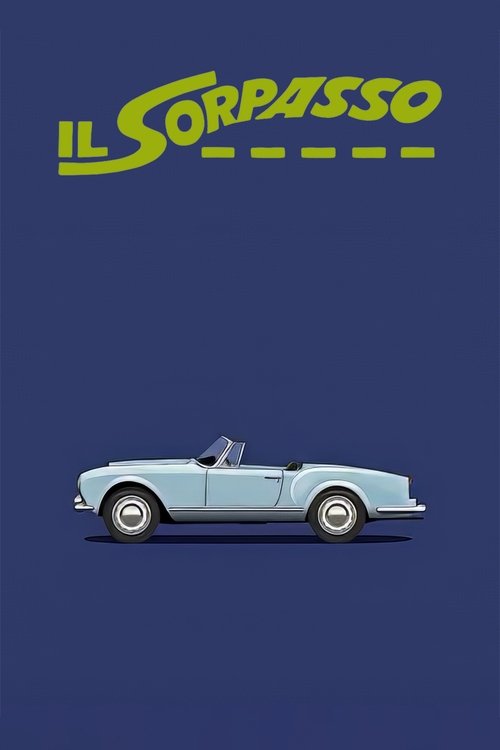
The leisurely, comedic tone of Il Sorpasso is a deliberate setup for its devastatingly abrupt and tragic conclusion. Throughout the film, there are subtle hints of foreshadowing. Bruno's reckless driving is a constant source of both comedy and tension. An early scene where the pair passes a fatal car accident on the highway explicitly plants the seed of danger.
The film's final minutes mark a crucial reversal. Roberto, having been fully converted to Bruno's impulsive philosophy, sheds his last inhibitions. In a moment of exhilarated liberation, he is the one who encourages Bruno to drive faster and engage in a dangerous race with another car. It is at this peak of Roberto's transformation that the story culminates in disaster. While attempting a final, reckless 'sorpasso' on a winding coastal road, Bruno swerves to avoid an oncoming truck. The car goes off the cliff. Bruno is thrown clear, surviving with injuries, but Roberto is trapped and killed in the crash. The final shot shows a police officer asking Bruno for the victim's details, to which Bruno can only reply that he doesn't even know Roberto's full name, underscoring the superficiality of their bond and the ultimate tragedy of Roberto's meaningless death. The ending reframes the entire film, turning the freewheeling comedy into a dark cautionary tale about the deadly consequences of a shallow, thrill-seeking existence and the destruction of innocence by careless modernity.