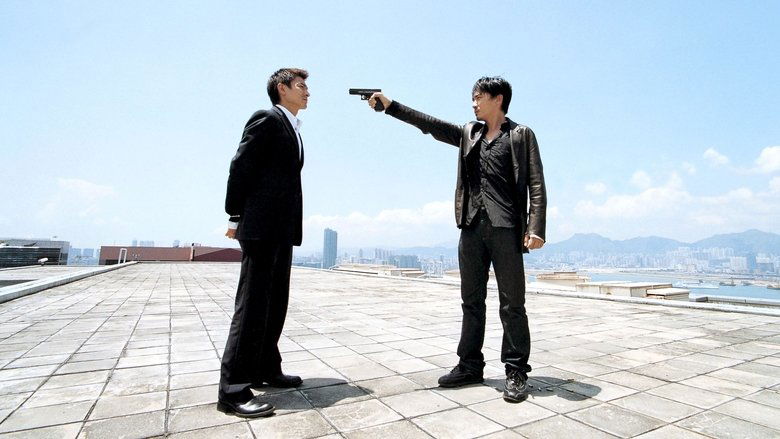
The film's climax is a series of devastating twists. After Superintendent Wong is murdered, Chan and Lau finally meet and cooperate to kill the Triad boss, Hon Sam. However, while in Lau's office, Chan discovers the original 'envelope'—evidence that Lau was the Triad mole. Chan flees, leading to the rooftop confrontation. The true tragedy occurs in the elevator: Chan is suddenly shot in the head by Inspector 'Big B', another secret mole for Hon Sam whom the audience (and the characters) never suspected. Lau then kills Big B to erase the final witness to his secret past. The film ends with Chan being buried with honors (his identity restored only in death), while Lau salutes his grave. Lau 'wins' his career and his 'good man' reputation, but the final Buddhist sutra clarifies his fate: he is now a resident of Avici Hell, trapped forever in a lie with the blood of his only peer on his hands.
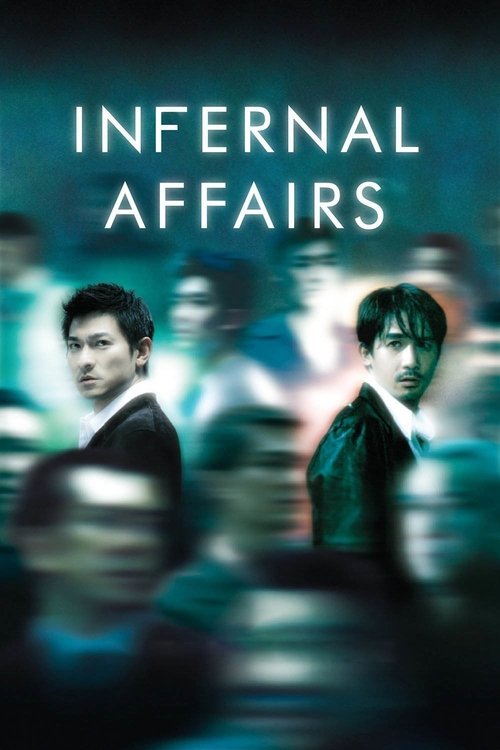
無間道
"Loyalty. Honor. Betrayal."
Director: Alan Mak Siu-Fai, Andrew Lau Wai-Keung
Cast: Andy Lau, Tony Leung Chiu-wai, Anthony Wong Chau-Sang, Eric Tsang Chi-Wai, Kelly Chen
Infernal Affairs — Ending Explained
⚠️ Spoiler Analysis
Alternative Interpretations
Beyond the literal crime story, many critics view the film as a political allegory for Hong Kong's status after 1997. Chan and Lau represent the 'split personality' of a city that must navigate two different systems (the Triad world/the Police force) while its true history is slowly erased. Another interpretation focuses on psychological disintegration, suggesting that the characters aren't just moles, but manifestations of the same person struggling to reconcile their darker impulses with their public persona. Some audiences also argue that Chan Wing-yan is the only one who truly 'wins'; through death, he escapes the unceasing cycle of suffering, while Lau is left in the 'Avici Hell' of his own success.
Explore More About This Movie
Dive deeper into specific aspects of the movie with our detailed analysis pages