
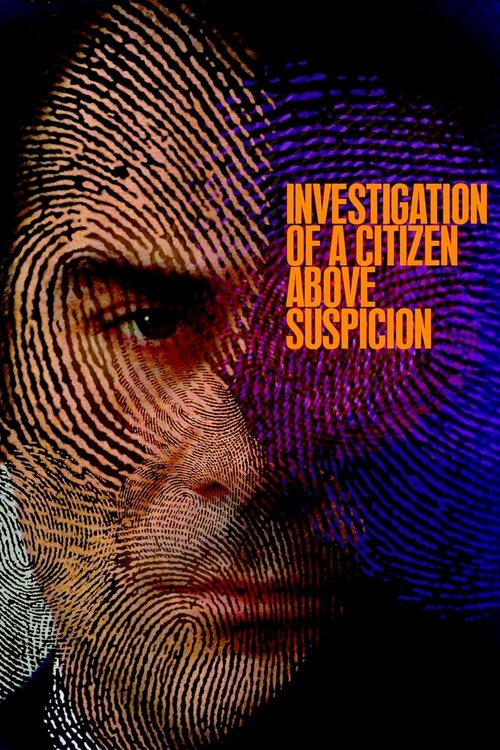
The central twist of "Investigation of a Citizen Above Suspicion" is not a 'whodunnit,' as the killer is revealed in the opening scene, but a 'will he get away with it.' The Inspector, a high-ranking police official, murders his mistress and then deliberately plants clues to incriminate himself. The suspense of the film comes from watching him manipulate the investigation, taunting his subordinates with his guilt, while they remain willfully blind to the truth. The true spoiler lies in the film's unsettling conclusion and the psychological unraveling of its protagonist.
As the investigation progresses, it becomes clear that the Inspector's motive is not simply to prove he is above the law, but to have his absolute power affirmed by the very system he represents. His desperation grows as his colleagues, including the Police Commissioner, refuse to even consider him a suspect. They create elaborate alternative theories and ignore the mountain of evidence that points directly to him. The system is so invested in protecting its own that it cannot even conceive of one of its leaders being a common criminal.
The film's climax is a surreal and ambiguous sequence in which the Inspector, having finally confessed to his superiors, finds that they refuse to believe him. They force him to sign a confession of his innocence, a moment of supreme absurdity that underscores the film's satirical critique of power. This scene is then revealed to be a dream, and the Inspector wakes up to find his colleagues arriving at his apartment. The film ends on this cliffhanger, leaving the audience to ponder whether the dream was a premonition of reality or a manifestation of the Inspector's deepest desires. The final quote from Kafka suggests that, as a 'servant of the law,' the Inspector is ultimately beyond human judgment, implying that he will, in fact, get away with his crime. The hidden meaning that becomes clear upon reflection is that the Inspector's true punishment is not legal but psychological; he is a man trapped by the very power he so desperately sought to affirm.