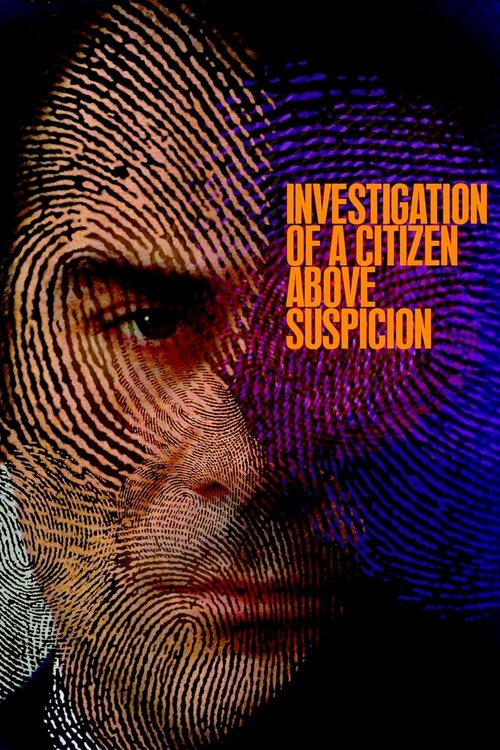
Investigation of a Citizen Above Suspicion
A Kafkaesque thriller's descent into the chilling abyss of unchecked power, where a man's guilt becomes a testament to his untouchable authority.
Investigation of a Citizen Above Suspicion

Investigation of a Citizen Above Suspicion

Indagine su un cittadino al di sopra di ogni sospetto

16 October 1970 Italy 111 min ⭐ 8.2 (838)
Director: Elio Petri
Cast: Gian Maria Volonté, Florinda Bolkan, Gianni Santuccio, Orazio Orlando, Sergio Tramonti
Drama Thriller
Abuse of Power Fascism and Authoritarianism Psychological Corruption Critique of the Justice System

Overview

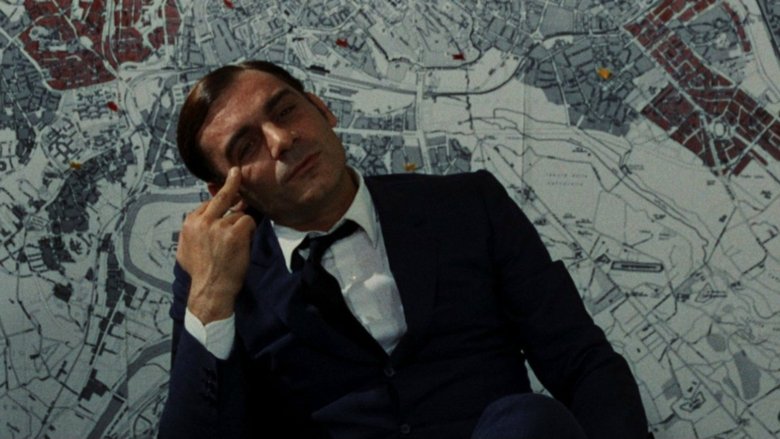
"Investigation of a Citizen Above Suspicion" is a satirical Italian thriller that tells the story of a high-ranking police inspector, known only as 'Il Dottore' (The Doctor), who murders his mistress, Augusta Terzi. Immediately after the crime, he begins to intentionally plant clues that point directly to himself as the killer. This act is not born of a desire to be caught, but rather a perverse experiment to test the limits of his own power and to prove that his position places him above the very laws he is sworn to uphold.

As the investigation unfolds, led by his own subordinates, The Doctor actively manipulates the case, steering them away from the obvious evidence of his guilt. His colleagues, blinded by their respect for his authority and their ingrained deference to the power structure, either fail to see or willfully ignore the clues laid before them. The film uses flashbacks to explore the complex and sadomasochistic relationship between The Doctor and Augusta, revealing her own fascination with his power and her role in goading him.

The narrative becomes a chilling and increasingly surreal examination of the corrupting nature of absolute power and the complicity of those who serve it. The Doctor's initial confidence gives way to a desperate need for his guilt to be recognized, not as a sign of remorse, but as the ultimate affirmation of his immunity from justice. The film's climax is a surreal and ambiguous confrontation that leaves the audience questioning the very nature of justice and accountability in a society where some are deemed untouchable.
Core Meaning

The core meaning of "Investigation of a Citizen Above Suspicion" is a scathing critique of the corrupting nature of absolute power and the inherent flaws within institutional authority. Director Elio Petri sought to expose how power structures, particularly law enforcement, can become self-serving entities that operate outside the laws they are meant to enforce. The film suggests that those in positions of immense authority can become so detached from moral and legal accountability that they are effectively "above suspicion."

The protagonist's bizarre experiment of framing himself for murder is a powerful allegory for the impunity of the ruling class. He is not a simple psychopath; his actions are a deliberate test of the system, a system he fully expects will protect its own, even at the cost of justice. The film carries a profound message about the psychological effects of power, suggesting it can lead to a form of madness where the only way to feel alive is to push the boundaries of societal norms and laws. Ultimately, Petri's film is a cautionary tale about the dangers of unchecked authority and the ease with which justice can be subverted by those who wield power.

Thematic DNA

Abuse of Power 40%
Fascism and Authoritarianism 30%
Psychological Corruption 20%
Critique of the Justice System 10%

Abuse of Power

The central theme of the film is the corrupting influence of power. The protagonist, a high-ranking police official, uses his authority not to uphold the law, but to subvert it in a grotesque display of his own impunity. He murders his mistress and then meticulously plants clues to incriminate himself, confident that his position will shield him from any real consequences. This theme is explored through his interactions with his subordinates, who are either too intimidated or too ingrained in the hierarchical structure to challenge him, even when faced with overwhelming evidence of his guilt. The film starkly portrays how absolute power can lead to a complete detachment from morality and a belief that one is above the law.

Fascism and Authoritarianism

The film is a thinly veiled critique of the authoritarian tendencies within the Italian state during the "Years of Lead." The protagonist's speeches and actions are filled with fascist rhetoric, celebrating repression as a necessary tool for maintaining social order. His belief in his own superiority and his contempt for dissenters and minorities reflect a fascistic mindset. Elio Petri uses the character to explore how the mechanisms of the state, particularly the police, can be used to suppress opposition and maintain a rigid, hierarchical society. The film's depiction of a police force that is more concerned with protecting its own than with seeking justice serves as a powerful allegory for the dangers of an unchecked, authoritarian government.

Psychological Corruption

Beyond the political commentary, the film delves into the psychological decay of its protagonist. His need to commit a perfect crime and then have his guilt acknowledged reveals a deeply disturbed psyche. His actions are driven by a complex mix of arrogance, insecurity, and a desire to affirm his own god-like power. The flashbacks to his sadomasochistic relationship with his mistress highlight his need for dominance and control, which extends from his personal life into his professional one. The film suggests that the constant exercise of power can lead to a form of madness, a detachment from reality where the lines between right and wrong become blurred and ultimately meaningless.

Critique of the Justice System

The film presents a deeply cynical view of the justice system, portraying it as a tool of the powerful rather than a bastion of fairness and equality. The investigation into the murder is a farce, with the police force actively, if subconsciously, working to protect one of their own. Evidence is ignored, and alternative suspects are pursued despite the clear trail leading back to the protagonist. This theme challenges the very notion of an impartial justice system, suggesting that it is inherently biased towards those in positions of authority. The film's message is that the law is not a fixed set of principles but a malleable concept that can be manipulated by those who hold power.

Character Analysis

Il Dottore (The Doctor)

Gian Maria Volonté

Archetype: Antihero
Key Trait: Arrogant

Motivation

The Doctor's primary motivation is to test the limits of his own power and to prove that he is untouchable. He is driven by a profound sense of arrogance and a belief in his own superiority. His actions are also fueled by a deep-seated insecurity, which is revealed in his relationship with his mistress. He seeks to dominate and control every aspect of his life, and the murder is the ultimate expression of this desire. His motivation is not personal gain in the traditional sense, but the philosophical and psychological affirmation of his place above the moral and legal constraints of society.

Character Arc

The Doctor begins the film as a confident and arrogant police inspector who believes himself to be above the law. His arc is not one of redemption, but of a descent into a specific kind of madness born from his unchecked power. He murders his mistress to prove his immunity, but as the investigation progresses, his need for his guilt to be acknowledged becomes an obsession. By the end of the film, he is a desperate man, not seeking forgiveness, but demanding the validation of his power through the recognition of his crime. His journey is a chilling exploration of how absolute power corrupts absolutely, leading to a complete psychological breakdown.

Augusta Terzi

Florinda Bolkan

Archetype: Femme Fatale
Key Trait: Provocative

Motivation

Augusta is motivated by a desire to explore the boundaries of power and sexuality. She is attracted to the Inspector's authority but also seems to derive pleasure from mocking it. Her motivations are a mixture of masochism, intellectual curiosity, and a self-destructive impulse. She is not simply a passive victim; she actively engages in the psychological games with the Inspector, pushing him to the brink. Her ultimate motivation seems to be a desire to see how far he will go, a curiosity that proves to be fatal.

Character Arc

Augusta's character is revealed primarily through flashbacks. She is a complex woman who is both a victim and a willing participant in the Inspector's power games. Her arc is one of escalating danger as she continuously taunts and challenges his authority. She seems to be drawn to his power, yet she also seeks to undermine it by exposing his vulnerabilities. Ultimately, her provocations lead to her own demise, making her a tragic figure who underestimated the true extent of the Inspector's depravity.

Antonio Pace

Sergio Tramonti

Archetype: The Witness/The Rebel
Key Trait: Ideological

Motivation

Antonio's motivation is rooted in his anarchist beliefs. He sees the Inspector not as an individual criminal, but as a symptom of a corrupt and oppressive system. His refusal to identify the Inspector is a political act, a way of demonstrating the inherent criminality of the state. He believes that a murderer in charge of law enforcement is the perfect embodiment of the system's hypocrisy. His motivation is not to see one man punished, but to expose the rotten core of the entire power structure.

Character Arc

Antonio Pace is a young anarchist who is having an affair with Augusta and witnesses the Inspector leaving her apartment after the murder. His arc is one of a man who holds the key to the Inspector's guilt but chooses not to use it in a conventional way. He represents a different form of opposition to the state, one that is more ideological than legal. He understands that exposing the Inspector would not necessarily change the corrupt system. His arc is one of defiance, as he refuses to play by the rules of a system he despises.

The Police Commissioner

Gianni Santuccio

Archetype: The Bureaucrat
Key Trait: Compliant

Motivation

The Commissioner's primary motivation is the preservation of the status quo. He is a career bureaucrat who understands that rocking the boat could be detrimental to his own position. He is motivated by a desire to avoid scandal and to maintain the public's (and his own) faith in the infallibility of the police force. His actions are not necessarily born of personal loyalty to the Inspector, but of a loyalty to the institution he represents. He is motivated by self-preservation and a deep-seated belief in the importance of maintaining the hierarchy of power.

Character Arc

The Police Commissioner represents the institutional inertia and complicity that allows the Inspector to get away with his crime. His arc is essentially static; he remains a symbol of the establishment throughout the film. He is more concerned with maintaining the reputation of the police force than with uncovering the truth. His refusal to even consider the Inspector as a suspect, despite the mounting evidence, demonstrates the deep-seated corruption within the system. He is the embodiment of the power structure that protects its own.

Symbols & Motifs

The Photographs

Meaning:

The photographs that the Inspector takes of Augusta posed as various murder victims symbolize his detached and clinical view of death and violence. They also represent his desire to control and objectify her, reducing her to a series of morbid images. This act blurs the line between his personal and professional life, showing how his obsession with crime has seeped into his intimate relationships. The photos are a chilling premonition of her actual murder and serve as a tangible representation of his psychological decay.

Context:

In flashbacks, we see the Inspector arranging Augusta's body in various poses mimicking crime scenes he has investigated. He photographs her in these staged scenarios, turning her into a piece of his macabre collection. This disturbing hobby highlights the power dynamics in their relationship and foreshadows the ultimate act of violence he will commit against her.

The Tie Fiber

Meaning:

The lavender silk tie fiber that the Inspector deliberately leaves under Augusta's fingernail is a symbol of his arrogant challenge to the justice system. It is a direct and undeniable link to him, a clue that he believes his colleagues will be too afraid or too incompetent to properly investigate. The fiber represents his contempt for the investigative process and his absolute certainty that he is untouchable. It is a tangible manifestation of his belief that he is "above suspicion."

Context:

After murdering Augusta, the Inspector carefully plants the tie fiber on her body. Throughout the investigation, he repeatedly draws attention to this piece of evidence, almost taunting his subordinates with it. Their failure to connect this clue to him underscores the film's central theme of the impotence of the law in the face of absolute power.

The Wiretapped Conversations

Meaning:

The extensive wiretapping operation that the Inspector oversees in his new position symbolizes the pervasive surveillance and repression of the state. The constant listening in on the private conversations of citizens, particularly political dissidents, highlights the authoritarian nature of the government. It also reflects the Inspector's own paranoia and his obsession with control. The wiretaps create an atmosphere of distrust and fear, where no one is truly free from the prying eyes and ears of the state.

Context:

Upon his promotion to the political intelligence division, the Inspector is shown a vast room filled with agents monitoring and recording phone conversations. He embraces this new power with zeal, seeing it as a necessary tool for maintaining order and suppressing dissent. This imagery is a powerful commentary on the erosion of civil liberties in the name of security.

Memorable Quotes

Repressione è il nostro vaccino! Repressione è civiltà!

— Il Dottore

Context:

The Inspector delivers this line in a passionate speech to his colleagues upon his promotion to the head of the political intelligence division. He is outlining his vision for his new role, a vision that is rooted in the aggressive suppression of any perceived threat to the established order. The scene is a powerful indictment of the authoritarian mindset and its celebration of power for its own sake.

Meaning:

"Repression is our vaccine! Repression is civilization!" This quote encapsulates the Inspector's fascist ideology. He sees the suppression of dissent and the strict enforcement of authority as not only necessary but also beneficial to society. It reveals his belief that the role of the police is not to protect and serve the people, but to control and dominate them. The quote is a chilling expression of his authoritarian worldview and serves as a direct critique of the political climate in Italy at the time.

Un criminale a capo della repressione, è perfetto!

— Antonio Pace

Context:

Antonio says this when he is being interrogated by the police. He is aware of the Inspector's guilt but refuses to cooperate with the investigation. His statement is a form of political protest, a way of using his knowledge to make a larger point about the illegitimacy of the state. It is a moment of profound insight that cuts to the heart of the film's themes.

Meaning:

"A criminal in charge of repression, it's perfect!" This quote from the young anarchist, Antonio Pace, articulates the film's central critique of the state. He sees the Inspector's guilt not as an aberration, but as the logical conclusion of a corrupt system. In his view, a murderer leading the police force perfectly exposes the hypocrisy and inherent criminality of the power structure. The quote highlights the film's cynical and deeply political message about the nature of authority.

Qualunque impressione egli possa farci, è pur sempre un servitore della legge, perciò appartiene alla legge e sfugge al giudizio umano.

— Narrator (closing title card)

Context:

This quote appears on a title card at the very end of the film, after the ambiguous final scene. It serves as a final, unsettling commentary on the events that have transpired. It forces the audience to confront the disturbing possibility that the Inspector, despite his monstrous actions, will ultimately face no consequences because of his position within the legal system. The quote leaves the film's central questions unanswered, lingering in the viewer's mind long after the credits have rolled.

Meaning:

"Whatever impression he makes on us, he is a servant of the law, therefore he belongs to the law and escapes human judgment." This quote from Franz Kafka's "The Trial" concludes the film, leaving the audience with a sense of unease and ambiguity. It suggests that those who are part of the machinery of the law are not subject to the same moral and legal standards as ordinary citizens. They are, in a sense, extensions of the law itself and therefore cannot be judged by human standards. The quote reinforces the film's central theme of a power structure that is accountable only to itself.

Philosophical Questions

Does absolute power inevitably lead to corruption?

The film explores this question through the character of the Inspector, who begins as a respected and effective police officer but becomes a murderer in his quest to prove his own invincibility. His journey suggests that the constant exercise of power, without any checks or balances, can erode a person's moral compass and lead to a complete detachment from the values they are supposed to uphold. The film presents a deeply pessimistic view on this subject, implying that the very nature of power is to corrupt and that those who wield it are in constant danger of succumbing to its seductive and destructive force.

What is the relationship between law and justice?

"Investigation of a Citizen Above Suspicion" draws a stark distinction between the law as a set of rules and justice as a moral concept. The film argues that the law can be manipulated and subverted by those in power to serve their own interests, rather than to achieve true justice. The Inspector, as a 'servant of the law,' believes he is exempt from its constraints. The film forces the audience to question whether a system that protects the powerful at the expense of the truth can ever be considered just. The closing quote from Kafka reinforces this idea, suggesting that the law is a self-contained system that operates beyond the realm of human morality.

Can an individual ever truly be 'above suspicion'?

The film's title poses this question directly. The Inspector's entire experiment is designed to prove that he is, in fact, above suspicion. While he succeeds in a practical sense, as his colleagues refuse to hold him accountable, the film suggests that he is not above his own psychological torment. His desperate need for his guilt to be recognized shows that, on some level, he is not truly free from the consequences of his actions. The film leaves it to the audience to decide whether being above the law is the same as being above suspicion, and whether a man who is not held accountable by society can ever truly be at peace with himself.

Alternative Interpretations

One of the most debated aspects of "Investigation of a Citizen Above Suspicion" is its ambiguous ending. After the Inspector's frantic confession to his superiors, which they refuse to accept, he wakes up in his bed as they arrive at his door. This has led to several alternative interpretations of the film's conclusion.

One interpretation is that the entire confession scene was a dream or a fantasy. In this reading, the Inspector's deepest desire is to be held accountable, not out of remorse, but as the ultimate confirmation of his power. The dream represents his ideal scenario, where the system is so corrupt that it will protect him even from himself. The arrival of his colleagues at the end then becomes a moment of truth, where the audience is left to wonder if reality will mirror his dream.

Another interpretation is that the dream sequence is a deliberately surreal and satirical device used by Petri to heighten the film's absurdist tone. In this view, the dream is not meant to be taken literally, but as a symbolic representation of the inherent absurdity of the situation. The 'real' ending, with the arrival of the police, is deliberately open-ended to suggest that the cycle of corruption and impunity will continue, regardless of the Inspector's personal crisis.

A third perspective suggests that the film is not about a literal investigation at all, but is a broader allegory for the political state of Italy at the time. The Inspector represents the ruling class, and his crime is a metaphor for the crimes of the state against its people. The investigation is a sham, and the ending reflects the inability of the system to reform itself. In this reading, the specific outcome of the Inspector's case is less important than the film's overall critique of a society in which the powerful are unaccountable.

Cultural Impact

"Investigation of a Citizen Above Suspicion" had a profound cultural impact, both in Italy and internationally. Released during the tumultuous "Years of Lead," a period of widespread social and political unrest in Italy, the film resonated deeply with audiences who were grappling with issues of police brutality, government corruption, and political extremism. The film's daring critique of the Italian state and its institutions was seen as both a reflection of the times and a bold act of political protest.

The film's success at the Academy Awards and the Cannes Film Festival brought international attention to Italian political cinema and to the work of Elio Petri. It influenced a generation of filmmakers to tackle controversial social and political issues in their work. The film's unflinching portrayal of the dark side of power and its exploration of the psychology of authoritarianism have been cited as influences on numerous subsequent films.

The film also sparked a great deal of debate and controversy in Italy. Some saw it as a courageous exposé of the truth, while others criticized it for its perceived anti-police sentiment. The film's enduring legacy lies in its powerful and unsettling examination of the relationship between power, justice, and morality. It remains a relevant and thought-provoking work of cinema that continues to resonate with audiences today, particularly in an era where questions of police accountability and the abuse of power are at the forefront of public discourse.

Audience Reception

Upon its release, "Investigation of a Citizen Above Suspicion" was met with widespread critical acclaim and was a commercial success in Italy. Audiences were drawn to its bold and timely political commentary, as well as its gripping narrative and powerful central performance by Gian Maria Volonté. The film's themes of corruption and abuse of power resonated strongly with the Italian public during a period of significant social and political upheaval.

Internationally, the film was also well-received, winning several prestigious awards, including the Oscar for Best Foreign Language Film. Critics praised its intelligent and satirical screenplay, its stylish direction, and its thought-provoking exploration of complex themes. However, some critics found the film's political message to be heavy-handed and its characterizations to be somewhat one-dimensional. The film's cynical and pessimistic tone was also a point of contention for some viewers.

Over the years, the film's reputation has only grown, and it is now widely regarded as a masterpiece of Italian cinema. Its relevance has endured, and new generations of viewers continue to be impressed by its daring and incisive critique of power. The film's ambiguous ending remains a topic of discussion and debate among audiences, contributing to its lasting legacy as a complex and challenging work of art.

Interesting Facts

  • The film won the Academy Award for Best Foreign Language Film in 1971.
  • Director Elio Petri and his co-writer Ugo Pirro were also nominated for the Academy Award for Best Original Screenplay.
  • The film was made during Italy's 'Years of Lead,' a period of intense social and political turmoil, which heavily influenced its themes.
  • Gian Maria Volonté, who played the lead role, was a well-known leftist activist, and his political beliefs often informed his choice of roles.
  • The film's score was composed by the legendary Ennio Morricone, whose music adds to the film's unsettling and satirical tone.
  • There was a bombing in Milan at the Banca Nazionale dell'Agricoltura during the film's production that was eerily similar to a bombing depicted in the movie.
  • In 2008, the film was included in the Italian Ministry of Cultural Heritage's list of 100 Italian films to be saved.

⚠️ Spoiler Analysis

Click to reveal detailed analysis with spoilers

Frequently Asked Questions

Explore More About This Movie

Dive deeper into specific aspects of the movie with our detailed analysis pages

Comments (0)

Leave a comment

No comments yet. Be the first to share your thoughts!