It's Such a Beautiful Day - Ending Explained
⚠️ Spoiler Analysis
The central twist of the film is not a traditional plot twist, but rather a profound shift in perspective. As Bill's neurological condition deteriorates, he is told by his doctor that he does not have long to live. This diagnosis, which would typically be a tragic endpoint, instead becomes a catalyst for Bill's spiritual awakening. The true surprise is that in losing his mind, Bill finds a deeper connection to the world. He begins to see the beauty in the mundane details of his life that he had always ignored.
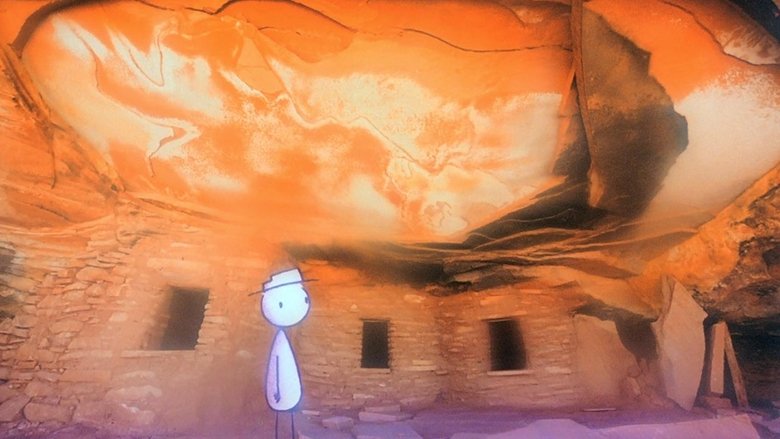
The film's ending is its most significant and ambiguous element. As Bill lies dying under a tree, the narrator refuses to accept his death and instead constructs a new reality for him. In this imagined future, Bill becomes immortal and lives for eons, outlasting humanity and witnessing the end of the universe. This final sequence reveals that the narrator is not an objective observer but is deeply and emotionally invested in Bill's fate. This can be interpreted as Bill's own consciousness creating a final, comforting fantasy, or as a meta-commentary on the power of storytelling to defy mortality. This ending reframes the entire film, suggesting that the ultimate tragedy is not death, but an endless existence devoid of the meaning that finitude provides.
Alternative Interpretations
One of the most debated aspects of the film is its ending. The primary interpretation is that Bill does indeed die, and the final sequence of him living an immortal life is a fantasy created by the narrator (or Bill's own dying consciousness) as a way to cope with the finality of death. This reading emphasizes the film's message about the value of a finite existence.
An alternative interpretation is that the ending is a literal depiction of Bill's transcendence. In this view, Bill's consciousness breaks free from the limitations of his physical body and experiences a timeless, eternal existence. This interpretation leans into the more metaphysical and spiritual elements of the film, suggesting a more optimistic, albeit abstract, conclusion to Bill's journey.
A third perspective suggests that the entire film is a metaphor for the process of creating art. Bill's deteriorating mind and his subsequent re-engagement with the world can be seen as a representation of the artist's struggle to deconstruct and then reassemble reality in a meaningful way. The final act of the narrator continuing Bill's story could be seen as the artwork taking on a life of its own, independent of its creator.