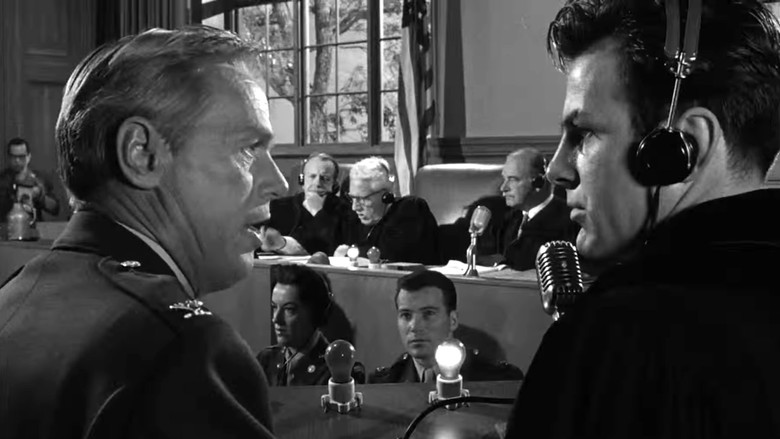
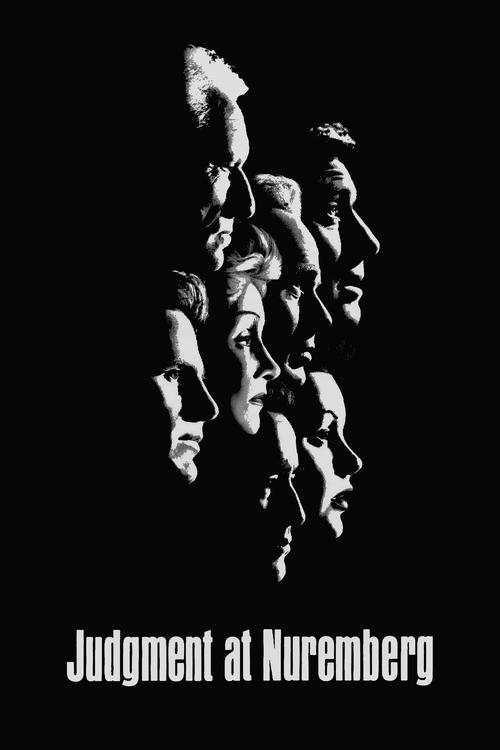
"The event the world will never forget."
Director: Stanley Kramer
Cast: Spencer Tracy, Richard Widmark, Maximilian Schell, Burt Lancaster, Marlene Dietrich
Judgment at Nuremberg — Movie Quotes
Memorable Quotes
A country isn't a rock. It's not an extension of one's self. It's what it stands for. It's what it stands for when standing for something is the most difficult!
Context
This is part of the powerful monologue delivered by Judge Haywood as he sentences the four defendants to life in prison, directly refuting the defense's argument that the judges were simply being patriotic.
Meaning
This line, from Haywood's closing verdict, encapsulates the film's core message. It rejects blind patriotism ('my country, right or wrong') and argues that a nation's true worth is defined by its commitment to moral principles like justice and truth, especially under pressure.
Herr Janning, it came to that the first time you sentenced a man to death you knew to be innocent.
Context
In the final scene, Janning asks Haywood to visit him in his cell and pleads for Haywood to believe that he never knew the full extent of the Nazi atrocities. Haywood delivers this line calmly and unequivocally before walking away, ending the film on a stark note of individual accountability.
Meaning
This is the film's final, devastating moral judgment. It dismisses the excuse of ignorance ('I didn't know it would go that far') and pinpoints the origin of genocide in the first small, deliberate compromise of individual conscience and justice. It argues that great evil grows from seemingly small acts of moral cowardice.
But to be logical is not to be right. And nothing on God's earth could ever make it right!
Context
This line is spoken during Haywood's deliberation with the other judges. One of his colleagues is swayed by Hans Rolfe's logical arguments, prompting Haywood to passionately declare that some actions are inherently wrong, regardless of any legal or logical justification.
Meaning
This quote is a powerful rebuttal to the defense's purely logical and legalistic arguments, which attempt to justify the defendants' actions within the framework of Nazi law. Haywood asserts that there is a higher, universal morality that transcends flawed human logic and unjust laws.
We must forget if we want to go on living.
Context
Marlene Dietrich's character, the widow of an executed Nazi general, says this to Judge Haywood during one of their conversations outside the courtroom. She is trying to make him understand the German mindset and encourage a more lenient, forward-looking approach to justice.
Meaning
This line represents the perspective of many ordinary Germans who, overwhelmed by guilt and the trauma of war, believe that moving forward requires a willful amnesia about the past. The film presents this view but ultimately argues against it.
Explore More About This Movie
Dive deeper into specific aspects of the movie with our detailed analysis pages