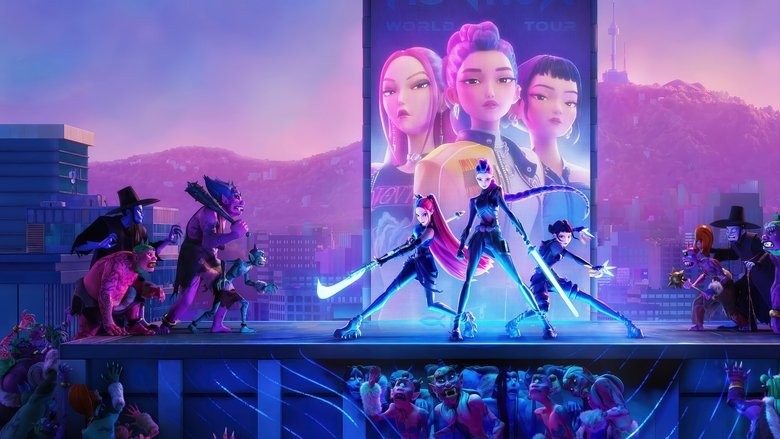
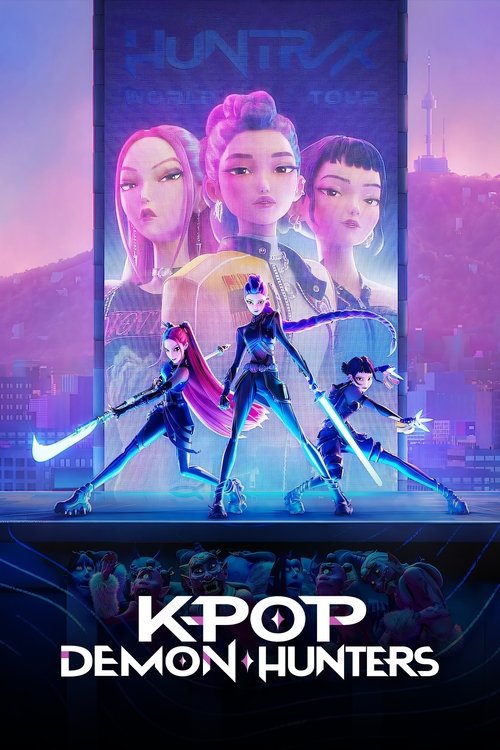
"They sing. They dance. They battle demons."
KPop Demon Hunters - Symbolism & Philosophy
Symbols & Motifs
Demonic Markings
The markings on Rumi's body, which she is forced to hide, are a physical manifestation of her secret heritage and her internalized shame. They represent the parts of oneself that are deemed unacceptable by society or by oneself. Her journey to accept and reveal them symbolizes the broader theme of self-acceptance.
Rumi is shown diligently covering her markings throughout the film, a constant source of anxiety and isolation from her bandmates. The demon lord Gwi-Ma's power is explicitly linked to feeding on feelings of shame, which he refers to as the "markings" on one's soul. The climax involves Rumi revealing her markings to the world, turning a symbol of shame into one of strength.
The Honmoon
The Honmoon is the magical barrier powered by HUNTR/X's music that protects the human world from demons. It symbolizes collective spiritual strength, unity, and the protective power of art and positive connection. Its strength is directly tied to the sincerity of the artists and the genuine connection they have with their fans.
The film opens with the Honmoon being strong, but it weakens as the Saja Boys begin to steal the public's adoration with their manufactured pop songs. The ultimate goal of every generation of hunters is to turn the barrier into the permanent "Golden Honmoon," representing a final victory over the forces of shame and division.
Fandom (Light Sticks)
The fans and their collective energy, often visualized through seas of light sticks at concerts, represent the source of the hunters' power. They symbolize the positive, symbiotic relationship between artists and their audience. The fandom's belief and emotional investment literally fuel the magic that protects the world.
During performances, the light from the audience's light sticks is shown flowing towards HUNTR/X, strengthening the Honmoon. The Saja Boys' strategy is not to attack the hunters directly, but to steal their fandom, recognizing that this is the true source of their power. This dynamic explores the nature of parasocial relationships and celebrity influence.
Philosophical Questions
What is the nature of identity and authenticity?
The film delves into this question by presenting characters who all maintain dual identities. Rumi's central conflict is the belief that her two halves—hunter and demon—are irreconcilable. The narrative challenges this by suggesting that authenticity is not about choosing one part of yourself over another, but in integrating all facets of your identity, including the flawed, hidden, or "monstrous" parts. The film posits that true identity is complex and that embracing this complexity is a source of profound strength.
Can art be a literal force for good or evil?
"KPop Demon Hunters" literalizes the philosophical idea that art can change the world. Music in the film is not just entertainment; it is a tangible weapon and a shield. HUNTR/X's heartfelt music strengthens the human spirit and protects the world, while the Saja Boys' manufactured hits weaken it by promoting superficiality. The film explores the responsibility of the artist, suggesting that the intention and sincerity behind the art determine its ultimate impact on society, capable of either unifying and healing or dividing and draining.
Is shame a more powerful prison than any external force?
The primary antagonist, Gwi-Ma, is less a physical threat and more a psychological one. His power is derived entirely from the shame and insecurity of his targets. He controls Jinu through the shame of his past and nearly defeats the heroes by amplifying their deepest self-doubts. The film argues that these internal feelings are the true demons we face. Rumi's ultimate victory is not a physical defeat of Gwi-Ma, but a rejection of the shame he represents, suggesting that true freedom is an internal state achieved by confronting and disarming our own negative self-perceptions.
Core Meaning
The central message of "KPop Demon Hunters" revolves around the themes of self-acceptance and confronting inner shame. The film explores the idea that true strength comes not from flawless perfection, but from embracing one's hidden scars and vulnerabilities. Director Maggie Kang intended the film as a "love letter to K-pop" and her Korean heritage, using the premise to delve into personal and universal struggles. The external battle against demons serves as a powerful metaphor for the internal battle against self-doubt, insecurity, and the societal pressures to maintain a perfect image, a theme particularly resonant within the context of K-pop idol culture. Ultimately, the film suggests that freedom and power are found by accepting all parts of oneself, the light and the dark, and that shared vulnerability is the foundation of true connection and sisterhood.