KPop Demon Hunters
A vibrant, action-packed animated musical where the dazzling world of K-pop collides with supernatural demon-slaying, creating an emotional tapestry of sisterhood, identity, and the courage to face one's inner demons.
KPop Demon Hunters

KPop Demon Hunters

"They sing. They dance. They battle demons."

20 June 2025 United States of America 96 min ⭐ 8.3 (1,584)
Director: Chris Appelhans Maggie Kang
Cast: Arden Cho, May Hong, Ji-young Yoo, Ahn Hyo-seop, Yunjin Kim
Animation Family Fantasy Comedy Adventure Music
Self-Acceptance vs. Shame Sisterhood and Found Family The Power of Music Duality and Hidden Identities
Budget: $100,000,000
Box Office: $19,200,000

Overview

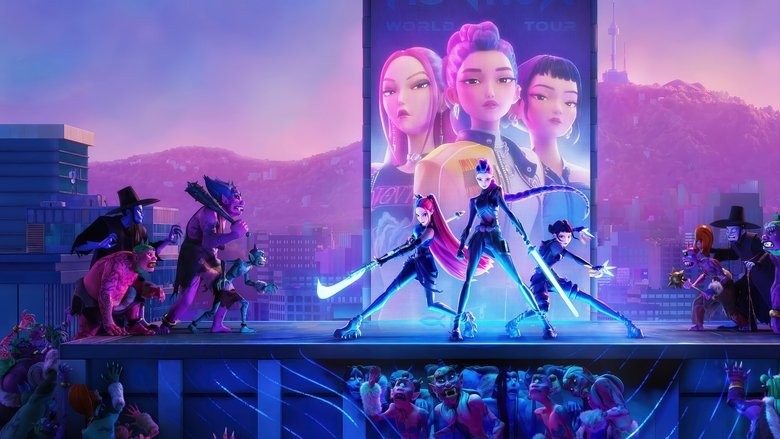
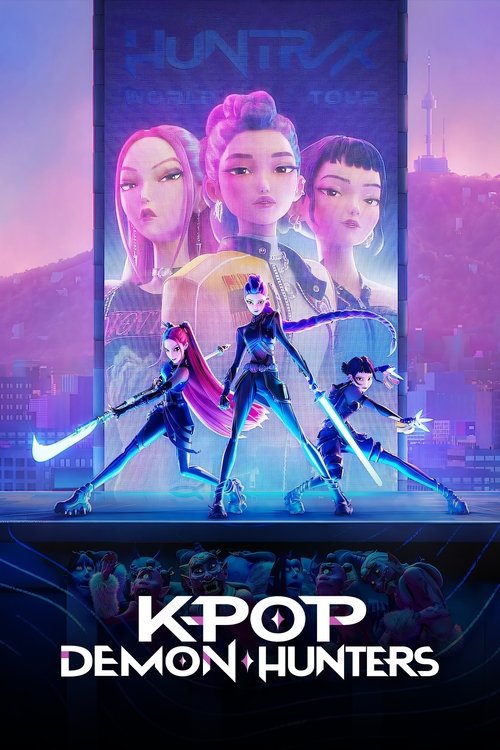
"KPop Demon Hunters" follows the sensational K-pop girl group HUNTR/X, composed of leader Rumi, dancer Mira, and rapper Zoey. By day, they are global superstars selling out stadiums. By night, they are the latest in a long line of powerful demon hunters, using their music and magical abilities to protect humanity from soul-stealing demons. Their mission is to strengthen a mystical barrier called the Honmoon, which keeps the demon world at bay.

Their quest to create a permanent Golden Honmoon is threatened by the arrival of the Saja Boys, a charismatic rival K-pop boy band. However, the Saja Boys are secretly demons, led by the conflicted Jinu, working for the nefarious demon lord Gwi-Ma. Their goal is to steal HUNTR/X's fanbase, thereby weakening the Honmoon and allowing demons to flood the human world. As the two groups battle for the top of the charts and the fate of the world, Rumi must also confront a dangerous secret about her own identity that connects her to the very demons she fights.

Core Meaning

The central message of "KPop Demon Hunters" revolves around the themes of self-acceptance and confronting inner shame. The film explores the idea that true strength comes not from flawless perfection, but from embracing one's hidden scars and vulnerabilities. Director Maggie Kang intended the film as a "love letter to K-pop" and her Korean heritage, using the premise to delve into personal and universal struggles. The external battle against demons serves as a powerful metaphor for the internal battle against self-doubt, insecurity, and the societal pressures to maintain a perfect image, a theme particularly resonant within the context of K-pop idol culture. Ultimately, the film suggests that freedom and power are found by accepting all parts of oneself, the light and the dark, and that shared vulnerability is the foundation of true connection and sisterhood.

Thematic DNA

Self-Acceptance vs. Shame 40%
Sisterhood and Found Family 30%
The Power of Music 20%
Duality and Hidden Identities 10%

Self-Acceptance vs. Shame

This is the film's core theme, primarily explored through Rumi's character arc. As a half-demon, she lives in constant fear of her true identity being exposed, covering her demonic markings and hiding this part of herself from her closest friends. Her mentor, Celine, reinforces this shame by insisting she hide her heritage. The demon lord Gwi-Ma weaponizes these feelings, using shame to control his minions and manipulate the heroes. The narrative argues that shame is the true enemy. Rumi's ultimate victory comes not from defeating Gwi-Ma with force, but by publicly accepting her demonic side in a powerful song, breaking the hold of shame on herself and others.

Sisterhood and Found Family

The bond between Rumi, Mira, and Zoey is the emotional heart of the film. While the plot focuses heavily on Rumi, the strength of HUNTR/X as a unit is paramount. Mira and Zoey have their own backstories of feeling like outsiders; Mira left a family that considered her a "problem child," and Zoey struggles with feeling like she doesn't belong. Together, they form a found family, finding strength and belonging in one another. The conflict tests their trust, particularly with Rumi's secret, but their reunion and ultimate triumph reinforce the idea that found family can overcome internal and external threats.

The Power of Music

In the world of "KPop Demon Hunters," music is literal power. The hunters' songs generate the Honmoon, a spiritual shield protecting the world. This concept is rooted in the history of Korean shaman women who would sing and dance to protect their communities. The film contrasts how music can be used for good or ill. HUNTR/X's music connects people and strengthens their souls, while the Saja Boys' catchy but hollow tracks are designed to drain their audience's energy and weaken the barrier. The film's soundtrack became a real-world phenomenon, topping charts and underscoring music's ability to tell stories and forge emotional connections.

Duality and Hidden Identities

Nearly every character leads a double life. The members of HUNTR/X are global pop stars who are secretly demon hunters. The Saja Boys are adored idols who are secretly demons in disguise. This theme is most pronounced in Rumi, who is both a hunter and part demon. The film explores the pressures of maintaining these separate identities and the eventual necessity of integrating them to become whole. The narrative suggests that everyone has hidden facets, and authenticity is more powerful than a carefully constructed facade.

Character Analysis

Rumi

Arden Cho

Archetype: The Divided Hero
Key Trait: Determined

Motivation

To honor her mother's legacy, protect her fans, and permanently seal the demon world away by completing the Golden Honmoon, all while desperately trying to keep her own demonic nature a secret.

Character Arc

Rumi begins the film as a focused and determined leader, driven by the legacy of her demon-hunter mother. Her primary motivation is to protect her fans and complete the Golden Honmoon. However, she is burdened by the secret of her half-demon heritage, which causes her to be emotionally guarded. Her arc revolves around moving from shame and concealment to radical self-acceptance. Through her connection with Jinu and the threat posed by Gwi-Ma, she learns that hiding her true self is a weakness, not a strength. She culminates her journey by revealing her identity to the world, embracing her duality and finding a new, more authentic power.

Mira

May Hong

Archetype: The Loyalist
Key Trait: Fierce

Motivation

To protect her found family (HUNTR/X) and prove her worth outside of the family that rejected her.

Character Arc

Mira is introduced as the aloof, fierce lead dancer of HUNTR/X. She projects an image of tough confidence, having left her wealthy family who saw her as a "problem child." While initially distrusting, she is fiercely loyal to her found family in the group. Though her backstory is not as central as Rumi's, she grapples with insecurities about not being good enough. Her arc involves learning to trust Rumi fully and finding her strength not just in her own skills but in the collective power of their sisterhood.

Zoey

Ji-young Yoo

Archetype: The Heart
Key Trait: Bubbly

Motivation

To prove herself as a valuable member of the team and maintain the harmony and success of her found family, HUNTR/X.

Character Arc

Zoey is the bubbly, high-energy rapper and youngest member (maknae) of the group. Having grown up in California before moving to Korea, she sometimes struggles with feelings of not belonging and is eager to please. Her arc involves finding her own confidence and voice within the group. She is often the comedic relief but also demonstrates great courage in battle. Her journey is about recognizing that her unique energy is a vital part of the group's strength.

Jinu

Ahn Hyo-seop

Archetype: The Noble Anti-villain
Key Trait: Conflicted

Motivation

To successfully weaken the Honmoon in exchange for having his painful human memories erased by Gwi-Ma.

Character Arc

Jinu is the leader of the rival demon boy band, the Saja Boys. A former human musician bound to the demon lord Gwi-Ma, he is outwardly charming but deeply conflicted by his lingering humanity and his demonic servitude. His initial goal is to defeat HUNTR/X to have his painful human memories erased. However, his connection with Rumi forces him to confront his past and question his mission. His arc is one of redemption, culminating in him sacrificing himself to protect Rumi and defy Gwi-Ma, choosing his humanity over freedom from pain.

Symbols & Motifs

Demonic Markings

Meaning:

The markings on Rumi's body, which she is forced to hide, are a physical manifestation of her secret heritage and her internalized shame. They represent the parts of oneself that are deemed unacceptable by society or by oneself. Her journey to accept and reveal them symbolizes the broader theme of self-acceptance.

Context:

Rumi is shown diligently covering her markings throughout the film, a constant source of anxiety and isolation from her bandmates. The demon lord Gwi-Ma's power is explicitly linked to feeding on feelings of shame, which he refers to as the "markings" on one's soul. The climax involves Rumi revealing her markings to the world, turning a symbol of shame into one of strength.

The Honmoon

Meaning:

The Honmoon is the magical barrier powered by HUNTR/X's music that protects the human world from demons. It symbolizes collective spiritual strength, unity, and the protective power of art and positive connection. Its strength is directly tied to the sincerity of the artists and the genuine connection they have with their fans.

Context:

The film opens with the Honmoon being strong, but it weakens as the Saja Boys begin to steal the public's adoration with their manufactured pop songs. The ultimate goal of every generation of hunters is to turn the barrier into the permanent "Golden Honmoon," representing a final victory over the forces of shame and division.

Fandom (Light Sticks)

Meaning:

The fans and their collective energy, often visualized through seas of light sticks at concerts, represent the source of the hunters' power. They symbolize the positive, symbiotic relationship between artists and their audience. The fandom's belief and emotional investment literally fuel the magic that protects the world.

Context:

During performances, the light from the audience's light sticks is shown flowing towards HUNTR/X, strengthening the Honmoon. The Saja Boys' strategy is not to attack the hunters directly, but to steal their fandom, recognizing that this is the true source of their power. This dynamic explores the nature of parasocial relationships and celebrity influence.

Memorable Quotes

No more hiding. No more lies.

— Rumi

Context:

This is part of Rumi's impromptu song during the film's climax at the awards show. After Gwi-Ma has nearly won by turning her bandmates against her using their own insecurities, Rumi takes the stage not to fight, but to confess her truth through music, breaking Gwi-Ma's trance and inspiring others.

Meaning:

This line is the thematic crux of the film. It signifies Rumi's ultimate decision to reject the shame she has carried and embrace her full identity. It is her declaration of freedom and the moment she claims her true power, which is rooted in authenticity rather than concealment.

I should have let the jagged edges meet the light instead.

— Rumi (in the song "Golden")

Context:

This is a key line from the film's anthem, "Golden," the song Rumi performs at the climax. The song itself is about embracing imperfections and finding the strength within one's own story. It has been highlighted by critics as a particularly strong piece of songwriting that resonates with the film's themes.

Meaning:

This poetic lyric encapsulates the film's message about self-acceptance. The "jagged edges" are a metaphor for one's flaws, scars, and hidden parts. The line expresses a regret for hiding these parts and an understanding that true beauty and strength lie in allowing them to be seen ("meet the light").

Philosophical Questions

What is the nature of identity and authenticity?

The film delves into this question by presenting characters who all maintain dual identities. Rumi's central conflict is the belief that her two halves—hunter and demon—are irreconcilable. The narrative challenges this by suggesting that authenticity is not about choosing one part of yourself over another, but in integrating all facets of your identity, including the flawed, hidden, or "monstrous" parts. The film posits that true identity is complex and that embracing this complexity is a source of profound strength.

Can art be a literal force for good or evil?

"KPop Demon Hunters" literalizes the philosophical idea that art can change the world. Music in the film is not just entertainment; it is a tangible weapon and a shield. HUNTR/X's heartfelt music strengthens the human spirit and protects the world, while the Saja Boys' manufactured hits weaken it by promoting superficiality. The film explores the responsibility of the artist, suggesting that the intention and sincerity behind the art determine its ultimate impact on society, capable of either unifying and healing or dividing and draining.

Is shame a more powerful prison than any external force?

The primary antagonist, Gwi-Ma, is less a physical threat and more a psychological one. His power is derived entirely from the shame and insecurity of his targets. He controls Jinu through the shame of his past and nearly defeats the heroes by amplifying their deepest self-doubts. The film argues that these internal feelings are the true demons we face. Rumi's ultimate victory is not a physical defeat of Gwi-Ma, but a rejection of the shame he represents, suggesting that true freedom is an internal state achieved by confronting and disarming our own negative self-perceptions.

Alternative Interpretations

While the film's primary message is one of self-acceptance, some analyses have viewed the narrative through a more critical lens. One interpretation frames the story as a commentary on the K-pop industry itself. The demon lord Gwi-Ma, who feeds on insecurity and demands perfection, can be seen as a metaphor for the immense pressures placed on K-pop idols by their agencies and the public. The Saja Boys represent a manufactured, soulless version of pop music designed for maximum consumption, contrasting with HUNTR/X's more authentic artistry.

Another reading, particularly from a religious perspective, interprets the film's spiritual themes through a Christian lens. This viewpoint sees the struggle against demons and the concept of "markings of shame" as a parallel to the struggle with sin and guilt. While acknowledging the film's humanistic conclusion (overcoming flaws through self-actualization), this interpretation finds resonance with the Christian concept of finding salvation and moving on from the power of past sins. A Jungian analysis posits the film as an exploration of the Shadow self, with Rumi's half-demon nature representing the unconscious parts of her psyche that she must integrate to achieve wholeness.

Cultural Impact

Upon its release on June 20, 2025, "KPop Demon Hunters" rapidly became a cultural phenomenon. It dominated Netflix's streaming charts, becoming the platform's most-watched original animated film and eventually its most-watched film of all time, surpassing previous record-holder "Red Notice" with over 236 million views by August 2025. The film received wide critical acclaim, with a 95% rating on Rotten Tomatoes, praised for its stunning animation, catchy music, heartfelt story, and voice acting.

The film's soundtrack became a massive success in its own right, with its lead songs topping real-world music charts like the Billboard Hot 100 and Spotify's Global Top 50. This success demonstrated the powerful appeal of blending authentic K-pop musical sensibilities with a compelling narrative. The movie's popularity led to a sing-along theatrical release, which was the first for a Netflix film to top the U.S. weekend box office. Its influence extended into pop culture with a major collaboration with the video game 'Fortnite', introducing characters skins and a special game mode, cementing the franchise's global reach. The film has been lauded for its positive representation, particularly of multifaceted female characters and its authentic celebration of Korean culture and mythology, resonating with a global audience and leading to widespread demand and official talks for a sequel.

Audience Reception

"KPop Demon Hunters" was met with overwhelming enthusiasm from audiences worldwide. It achieved a 95% positive rating from critics and an even higher audience score on Rotten Tomatoes. Viewers praised its vibrant and stylish animation, often drawing favorable comparisons to Sony Pictures Animation's other hit, 'Spider-Man: Into the Spider-Verse'. The film's original soundtrack was a major highlight, with songs like "Golden" and "Soda Pop" becoming viral hits that audiences enjoyed both within the film and as standalone music. The story's emotional depth, particularly its themes of self-acceptance and sisterhood, resonated strongly with viewers. While some reviews noted that the side characters Mira and Zoey could have been more developed, the central arc for Rumi and her dynamic with Jinu were widely praised for their nuance. The film successfully appealed to both dedicated K-pop fans and newcomers, becoming a massive, multi-generational hit that spawned a dedicated online following and repeat viewings.

Interesting Facts

  • The film was in development for approximately nine years before its release.
  • The film's directors, Maggie Kang and Chris Appelhans, drew inspiration for the film's blend of dark and comedic tones from the works of Oscar-winning director Bong Joon-ho ('Parasite').
  • The character design for Rumi was originally created for another, unproduced project. Director Maggie Kang loved the design so much she adapted it for this film.
  • Actor Lee Byung-hun, who voices the main villain Gwi-Ma, also played the villainous Front Man in Netflix's other global hit, 'Squid Game'.
  • The rival Saja Boys were inspired by a mix of real-life K-pop boy bands, including BTS, BIGBANG, Monsta X, and Stray Kids.
  • The character design for Jinu, the leader of the Saja Boys, was inspired by popular K-drama actors Cha Eun-woo and Nam Joo-hyuk.
  • Members of the popular K-pop girl group TWICE performed two of the original songs on the soundtrack, including the lead single "Takedown".
  • Arden Cho, the voice of Rumi, intended for this to be her final acting project but was so motivated by the experience that she decided to continue her career.
  • A final standoff song between Rumi and her mentor Celine was written and recorded but ultimately cut from the film because it didn't fit the story's arc.

Easter Eggs

Comedian and actor Joel Kim Booster voices multiple small roles.

Besides voicing the Saja Boys member Romance Saja, Joel Kim Booster, known for his work in 'Loot' and 'Fire Island', also lent his voice to a variety show host and an idol host, adding a layer of comedic talent to the film's background characters.

Liza Koshy has a voice cameo.

The prominent YouTuber and actress Liza Koshy has a cameo as the voice of an on-air host during an interview scene with the main characters, a nod to real-world celebrity media culture.

⚠️ Spoiler Analysis

Click to reveal detailed analysis with spoilers

Frequently Asked Questions

Explore More About This Movie

Dive deeper into specific aspects of the movie with our detailed analysis pages

Comments (0)

Leave a comment

No comments yet. Be the first to share your thoughts!