In "The Black Hair", the samurai wakes up to find his 'youthful' wife is actually a rotted corpse; he is then attacked and aged rapidly by her animated hair. In "The Woman of the Snow", the wife reveals she is the snow spirit Minokichi met years ago; she spares him for the sake of their children but abandons him forever. In "Hoichi", the ghosts tear off Hoichi's ears because they were the only part of him left unprotected by the sutras. In "In a Cup of Tea", the writer is revealed to be missing, and the final shot shows him trapped inside the large water jar in his garden, implying he was consumed by the very spirits he was writing about.
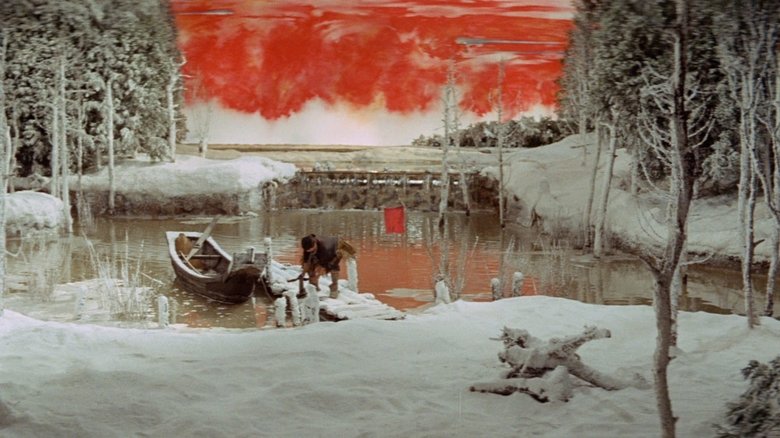
An ethereal anthology of ghost stories where high art meets supernatural terror. Through expressionist sets and haunting silence, it visualizes the spiritual weight of broken vows and the indifference of the cosmos.
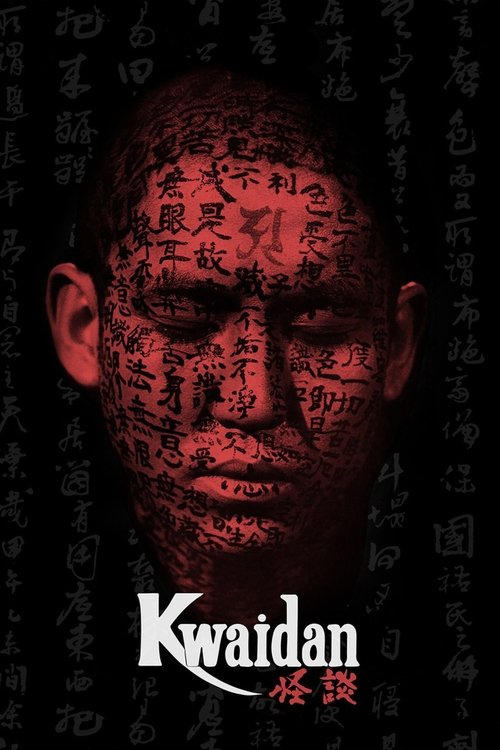
Kwaidan
怪談
"In the tradition of "RASHOMON" and "GATE OF HELL.""
06 January 1965
Japan
183 min
7.7
(435)
Director: Masaki Kobayashi
Cast: Michiyo Aratama, Rentaro Mikuni, Misako Watanabe, Kenjirō Ishiyama, Ranko Akagi
Drama
Fantasy
Horror
The Consequence of Broken Vows
The Intersection of Art and Spirit
Artificiality vs. Reality
The Indifference of Nature
Kwaidan — Ending Explained
⚠️ Spoiler Analysis
Alternative Interpretations
The ending of "In a Cup of Tea" is often debated. Some interpret the author's disappearance into the jar as a warning that obsession with the macabre can consume the artist. Others see it as a playful, surrealist joke by Kobayashi, breaking the fourth wall to show that the 'ghosts' are merely creations of the mind—yet powerful enough to trap their creator. The entire film can be read not as a collection of literal hauntings, but as a psychological study of guilt and trauma manifesting as supernatural entities.
Explore More About This Movie
Dive deeper into specific aspects of the movie with our detailed analysis pages