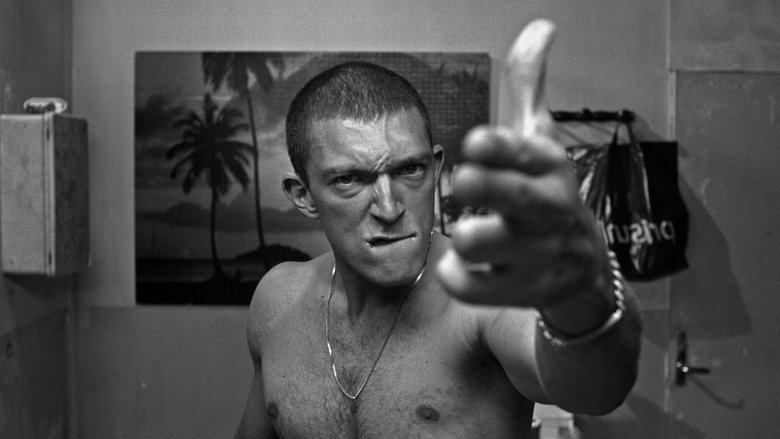
The entire narrative of "La Haine" builds towards its devastating and tragic conclusion. After a day of escalating tensions, the news breaks that Abdel, the friend whose beating by police sparked the riots, has died in the hospital. This removes the moral restraint Vinz had placed on using the gun. However, in a pivotal moment of character development, Vinz confronts a group of violent skinheads and has a clear opportunity to kill one of them. He finds himself unable to pull the trigger, realizing he is not a killer. This catharsis leads him to hand the gun over to Hubert, the character who has been the voice of reason throughout the film. It seems as if the crisis has been averted and the cycle of violence broken by Vinz's choice.
This hope is shattered in the final scene. As the trio returns to their estate, they are confronted one last time by the police. A plainclothes officer, seen earlier in the film, taunts Vinz and presses his gun against his head to intimidate him. The gun accidentally discharges, killing Vinz instantly. This shocking turn of events renders Vinz's entire moral journey meaningless in the face of systemic brutality and chance. In a final, tense standoff, a grief-stricken Hubert raises the gun that Vinz gave him and points it at the officer, who points his own gun back. Saïd closes his eyes, the screen cuts to black, and a single gunshot is heard. The film ends without revealing who fired, forcing the audience to contemplate the inescapable nature of the cycle of hatred. The ambiguity implies that in this societal freefall, the specifics of who shoots whom are less important than the inevitability of the violent "landing."