La Jetée
A haunting sci-fi photo-novel where fragmented memories become a haunting corridor through time, leading to a devastating and inescapable romantic destiny.
La Jetée
La Jetée

"A man's obsession with an image of his past"

16 February 1962 France 29 min ⭐ 7.9 (953)
Director: Chris Marker
Cast: Jean Négroni, Hélène Chatelain, Davos Hanich, Jacques Ledoux, André Heinrich
Drama Romance Science Fiction
Memory and Subjectivity Fate and Predestination Love and Loss in a Dystopian World The Nature of Cinema and the Image

La Jetée - Ending Explained

⚠️ Spoiler Analysis

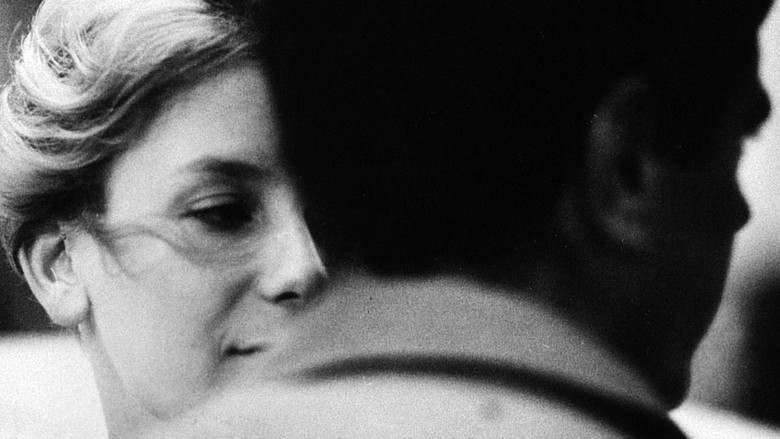
The entire narrative of "La Jetée" is a meticulously constructed causal loop, where the ending is the direct cause of the beginning. The protagonist is selected for time travel experiments because of his powerful, haunting memory of a man's death and a woman's face at Orly Airport's jetty. Throughout the film, he travels to the past, falls in love with this woman, and then travels to the future to retrieve a power source to save his present.

Having fulfilled his mission, he knows his captors will execute him. The beings from the future offer him escape to their time, but he refuses, asking only to be sent back to the pre-war jetty to be with the woman. His wish is granted. He arrives on the jetty and sees her waiting. As he runs towards her, he notices an agent from his own time who has followed him. In his final moments, as the agent shoots him, he understands the devastating truth: the traumatic event he witnessed as a child, the memory that has defined his entire life and served as the catalyst for his journey, was the spectacle of his own death. His younger self is in the crowd, watching him die. The loop is closed. The memory is not of a stranger's death, but a premonition of his own, witnessed by himself across time. This revelation recasts the entire film, transforming it from a story of escape and romance into a tragedy of inescapable fate, where the very key to his life was the image of his end.

Alternative Interpretations

While the film's surface narrative is a tragic, fatalistic time loop, critics and viewers have proposed several alternative readings:

1. The entire experience is an internal dream or hallucination: One interpretation suggests that the time travel is not literal. Instead, the entire film could be the dying dream or mental projection of a prisoner in a post-war camp. His obsession with a pre-war memory causes his mind to construct this elaborate narrative as a way to cope with his grim reality. The 'experiments' are merely a psychological breakdown, and the love story is an invented fantasy to 'prop up the madness to come.'

2. A metaphor for filmmaking and spectatorship: This reading views "La Jetée" as an allegory for the experience of cinema itself. The protagonist, strapped into a device that feeds him images, is like the viewer in a movie theater. He is passively transported to another time and place through a sequence of still frames. The singular moment of movement (the woman blinking) represents the magical instant when the illusion of cinema becomes life, a moment of pure connection between the viewer and the image.

3. A Platonic Allegory: Some scholars interpret the film through the lens of Plato's Allegory of the Cave. The underground survivors are prisoners living in a world of shadows. The protagonist is the philosopher who is sent out of the cave into the 'real' world of the past (the realm of ideal forms, of sunlight, and 'real' things). He tries to bring back knowledge to save the others. His love for the woman represents a longing for this ideal reality, but he ultimately cannot remain there, and his death is a consequence of trying to bridge the world of shadows and the world of forms.