Skip to content
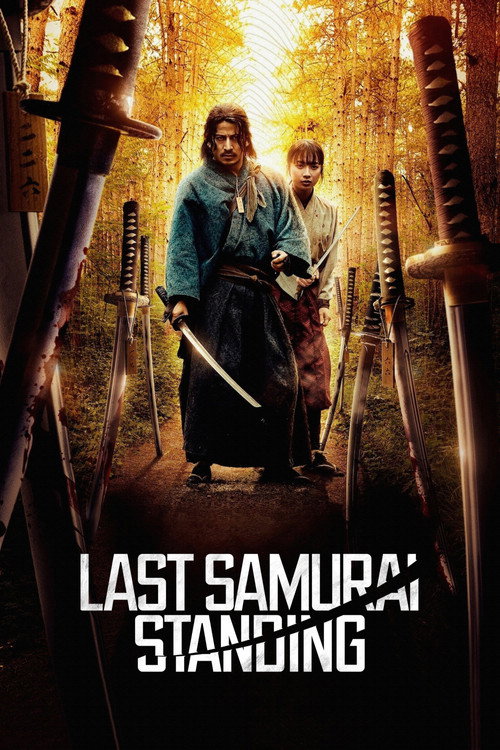
Last Samurai Standing
A blood-soaked Meiji-era survival epic in which the last sparks of the samurai burn out along a moonlit road, each sword stroke a desperate prayer for the people they love.
Last Samurai Standing

Last Samurai Standing

イクサガミ

13 November 2025 — 13 November 2025 Japan 2 season 6 episode Returning Series 7.9 (255)

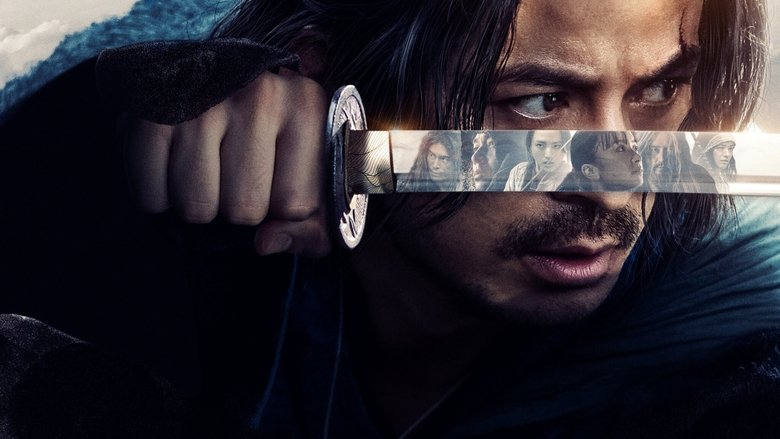
Cast: Junichi Okada, Yumia Fujisaki, Kaya Kiyohara, Masahiro Higashide, Taichi Saotome

Drama Action & Adventure Obsolescence and the end of an era Protection and chosen family Survival versus honor Exploitation and spectacle The past that returns

Overview

Set in 1878, when Japan's modernizing Meiji state has left the samurai class without a place, Last Samurai Standing (original title Ikusagami) opens at night at Tenryūji Temple in Kyoto. There, 292 warriors gather after being promised a huge cash prize. They learn they have entered Kodoku, a deadly game in which they must travel the old Tōkaidō Road to Tokyo within one month, collecting points to get through seven checkpoints. Only the last one standing gets paid.

The story follows Shujiro Saga (Junichi Okada), a haunted swordsman who joins the game for one reason: to save his sick wife and child. On the road he takes a frightened teenager, Futaba, under his protection. He also meets people from his own past, including Iroha, a woman who trained beside him, and a growing list of rivals, some desperate and some who simply enjoy killing.

The six-episode first season works like a road movie, a battle royale and a period drama at once. It ends in the middle of the journey. Netflix has renewed the series for a second season, so the fight for the Tōkaidō is still going.

Core Meaning

At heart, Last Samurai Standing is about what happens to people when history decides they are no longer needed. The Kodoku game takes a whole class of men and women that the new Japan has made obsolete and turns them into a show. Their skill with the sword becomes something to buy, sell and use up. Against this, the series sets protective love. Shujiro fights for his family and to keep Futaba alive, not for glory. The show suggests that what gives a warrior's violence meaning is whom it protects, and that humanity can survive even inside a system built to wipe it out.

Thematic DNA

Obsolescence and the end of an era 25%
Protection and chosen family 25%
Survival versus honor 20%
Exploitation and spectacle 15%
The past that returns 15%

Obsolescence and the end of an era

The game is set in 1878, when the samurai class is being taken apart, so every fighter is a relic of a dying order. The series frames Kodoku as a final, twisted outlet for skills society no longer wants. Season 2 is expected to carry the journey toward Tokyo, the seat of the new regime.

Protection and chosen family

Shujiro enters the game to save his wife and child. His bond with the teenager Futaba becomes the emotional core of the show and turns a solo survival contest into a story about guarding someone else.

Survival versus honor

The rules reward killing, since points are taken from other players. Each character has to choose whether to keep a code or give it up to survive. Reviewers compared the setup to Squid Game and Kingdom, with a focus on revenge and survival.

Exploitation and spectacle

Mysterious organizers stage the game, and the promised prize lures people who have nothing left. The series looks at how powerful people turn the desperation of the poor into entertainment.

The past that returns

Shujiro's history comes back to him through fighters he once knew, like Iroha, who trained with him. The road to Tokyo also becomes a road back through old guilt and old loyalties.

Character Analysis

Shujiro Saga

Junichi Okada

Archetype: Reluctant hero / fallen warrior Key Trait: Deadly skill held back by compassion

Motivation

To save his sick wife and child. This grows into keeping Futaba alive and facing what he used to be.

Character Arc

He starts as a haunted man who enters the game only to pay for his family's survival. Over Season 1 his role as Futaba's protector and his run-ins with his past bring back the warrior he tried to leave behind. The season ends with his journey unfinished, and Season 2 will continue it.

Futaba

Yumia Fujisaki

Archetype: Innocent / ward Key Trait: Vulnerability tempered by resolve

Motivation

To survive the game with her own reasons intact.

Character Arc

A teenager who is out of her depth when the game begins. Under Shujiro's protection she learns to survive in a world run by violence.

All 4 characters and cast

Symbols & Motifs

The Tōkaidō Road

Meaning:

The passage from old Japan to new Japan, and a road of trial for each fighter.

Context:

Players must travel the historic road from Kyoto to Tokyo within one month and pass seven checkpoints.

Kodoku ("solitary poison")

Meaning:

Named after the practice of sealing venomous creatures together until only one is left. It stands for a society that forces people to destroy each other.

Context:

This is the name of the game announced at Tenryūji, and it drives the whole plot.

Tenryūji Temple

Meaning:

A spiritual sanctuary turned into a killing ground: the sacred used as a stage for slaughter.

Context:

The night gathering of 292 samurai in Episode 1 takes place here.

The points taken from other players

Meaning:

Human life reduced to a counter, which makes the violence into a transaction.

Context:

Fighters need points to get through each checkpoint, so every duel becomes a trade.

Episode Highlights

Kodoku

S1E1

The 292 warriors gather at night at Tenryūji and the rules of Kodoku are revealed. The opening battle was shot with real performers and no digital cloning.

Significance:

It sets up the premise, the route along the Tōkaidō, and Shujiro's reason for fighting: his family.

Fate

S1E3

Recapped by The Review Geek, this middle chapter moves the journey forward and tightens the bonds and rivalries along the road.

Significance:

It moves the show from the opening massacre into a character-driven road story.

Episode 6 (Season 1 finale)

S1E6

The season ends in the middle of the story, with the journey to Tokyo unfinished. Fan discussion notes that Bukotsu survives.

Significance:

This open ending leads straight into the Season 2 renewal.

Philosophical Questions

Can violence be honorable when a system forces it on you?

The rules make killing necessary to survive. The series asks whether Shujiro's protective fighting is morally different from Bukotsu's killing for pleasure.

What happens to people whose purpose history has erased?

The 292 fighters are former samurai with no place in Meiji Japan. The game exploits their lost identity and turns it into a show.

Is it right to take another life to save someone you love?

Shujiro's goal of saving his wife and child is sympathetic, but reaching it means other desperate people have to die.

How It Ends

Alternative Interpretations

As a battle royale: Some viewers take it mainly as a stylish survival thriller, closer to Squid Game with swords.

Full ending explanation

Cultural Impact

The series arrived as Japanese period drama was drawing more global attention. Critics described it as Kingdom meets Squid Game, pairing samurai history with the battle-royale format. It topped Netflix's Global Top 10 (Non-English Series), made the Top 10 in 88 countries, and held No. 1 in Japan for four straight weeks. Netflix called it "a global sensation proudly made in Japan" when it announced the Season 2 renewal.

In interviews with Deadline, Okada and Fujii described streaming as a "place to experiment." The show's practical, large-scale action is an example of Japanese productions using that freedom. Its 1878 setting, the moment samurai lost their place, puts it among stories that deal with Japan's troubled modernization, and TIME published a piece on the real history behind the show.

Audience Reception

Season 1 was widely acclaimed. It held a 100% Rotten Tomatoes score and reached the top of Netflix's global non-English chart. Reviewers praised the stunning production, the practical large-scale action, the fast pace and the character-driven storytelling. Heaven of Horror highlighted the focus on revenge and survival.

The main complaint was structural: after only six episodes the season ends in the middle of the story, which left some viewers frustrated. The quick Season 2 renewal eased that concern. Overall, it was one of Netflix Japan's standout hits of 2025.

Interesting Facts

  • The series adapts Ikusagami, a best-selling historical novel by Naoki Prize-winning author Shogo Imamura, illustrated by Katsumi Tatsuzawa.
  • It was written by Kento Yamaguchi and Michihito Fujii, and directed by Michihito Fujii, Kento Yamaguchi and Toru Yamamoto.
  • Junichi Okada and Michihito Fujii had worked together before on the 2023 film Hard Days.
  • All 292 samurai in the Episode 1 night gathering were real actors, not visual effects. Fujii called it the most complex scene he directed.
  • The opening battle took three weeks to shoot, and a 20-person action unit trained about 300 actors and stunt performers.
  • Okada admitted that CGI was used for one scene that was practically impossible to film for real.
  • Fujii said he pictured the story running two or three seasons, though Season 1 was built to be as self-contained as possible.
  • The six-episode first season premiered on Netflix on November 13, 2025.

Frequently Asked Questions

Explore More About This Movie

Dive deeper into specific aspects of the movie with our detailed analysis pages

Comments (0)

Leave a comment

No comments yet. Be the first to share your thoughts!

Similar Movies