Skip to content
Gachiakuta
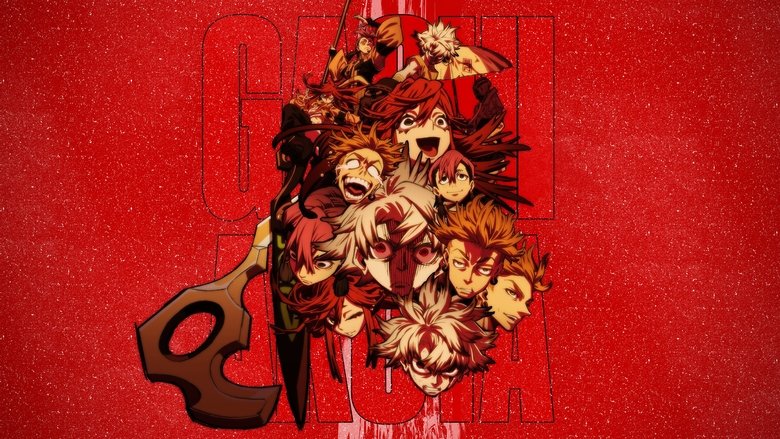
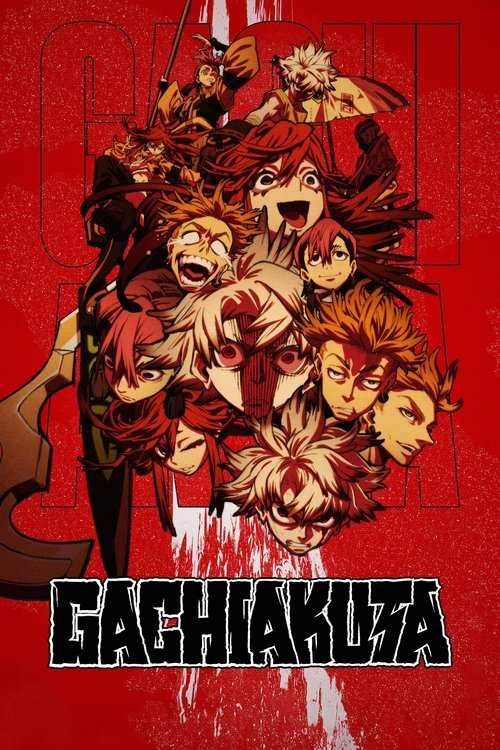
Drenched in raw grit and kinetic urban rebellion, Gachiakuta channels scorching fury and found-family warmth into a blazing neon spark ignited inside humanity's discarded wasteland.
Gachiakuta

Gachiakuta

ガチアクタ

"My goal has worth!"

06 July 2025 — 21 December 2025 Japan 1 season 24 episode Returning Series 8.6 (323)

Cast: Aoi Ichikawa, Katsuyuki Konishi, Yumiri Hanamori, Ryunosuke Watanuki, Junichi Yanagita

Drama Animation Sci-Fi & Fantasy Action & Adventure Disposability vs. Inherent Worth (Material & Human) The Poison of Vengeance vs. Healing through Community Systemic Segregation & Class Oppression Consumerism, Sentimentality, and Anima

Overview

Gachiakuta takes place in a rigidly segregated dystopia dominated by "The Sphere," an affluent floating city suspended above a toxic wasteland known as "The Ground" or "The Pit". The Spherite upper class maintains their immaculate paradise by exiling everything deemed unworthy—masses of consumer waste and descendants of criminals branded as "tribe folk"—casting them down into the Abyss. The story follows Rudo Surebrec, an underprivileged youth living in the slums who survives by salvaging discarded goods. When his beloved foster father Regto is murdered, Rudo is framed for the crime and cast off the edge into the chasm below.

Expecting death, Rudo instead awakens in a sprawling subterranean wasteland populated by monstrous "Trash Beasts"—amorphous creatures born from the accumulated neglect and negative emotions clinging to humanity's discarded trash. After being rescued by Enjin, Rudo discovers he is a "Giver," a rare human who can channel spirit into beloved objects to transform them into powerful weapons called "Vital Instruments" (Jinki).

To survive and find a path back up to the Sphere to avenge Regto, Rudo joins the "Cleaners"—a syndicate of battle-hardened janitors tasked with purging Trash Beasts and safeguarding human settlements. Across the 24-episode run of Season 1, the narrative widens from a localized survival quest into an expansive war against the "Raiders" (or Vandals), a faction scheming to tear down the Sphere using mysterious relics known as the Watchman Series. Rudo must navigate brutal ideological conflicts, the nature of his own bloodline, and the true cost of vengeance.
Core Meaning

At its core, Gachiakuta is a profound deconstruction of consumer culture, systemic disposability, and human dignity. Through the lens of Tsukumogami folklore (the belief that inanimate tools gain a soul through care and longevity), the series argues that true value is never inherent in material wealth or social pedigree; rather, worth is cultivated through personal love, dedication, and memory.

By juxtaposing an immaculate yet morally hollow ruling class against the "human garbage" fighting to survive below, the series delivers a resonant critique of how societies dehumanize and discard the vulnerable. The ultimate message across the narrative is that nothing and no one is irredeemable trash; even from the deepest pits of abandonment, empathy and community can forge life, purpose, and revolutionary power.

Thematic DNA

Disposability vs. Inherent Worth (Material & Human) 30%
The Poison of Vengeance vs. Healing through Community 25%
Systemic Segregation & Class Oppression 25%
Consumerism, Sentimentality, and Anima 20%

Disposability vs. Inherent Worth (Material & Human)

The narrative continually parallels how society treats everyday tools with how it treats people. Rudo's ability to unlock supernatural power through trash challenges the upper class's throwaway mentality. As the series progresses, characters labeled as "scum" realize their agency, proving that external validation cannot dictate a soul's worth.

The Poison of Vengeance vs. Healing through Community

Rudo begins his journey fueled entirely by hate and bloodlust against those who condemned him. However, his interactions with Team Akuta force him to confront the self-destructive emptiness of revenge, shifting his motivation toward protecting his newfound found-family.

Systemic Segregation & Class Oppression

The physical divide between the heavenly Sphere and the Ground serves as an explicit visual metaphor for extreme class disparity. The story highlights how institutional power justifies violence by branding underclasses as inherently "dirty" or criminal by birth.

Consumerism, Sentimentality, and Anima

Grounded in Shinto-adjacent philosophies, the show explores how modern hyper-capitalism detaches humans from meaning. Unloved waste becomes toxic Trash Beasts, whereas cherished items become defensive instruments, showing that carelessness breeds monsters while gratitude fosters strength.

Character Analysis

Rudo Surebrec

Aoi Ichikawa

Archetype: The Vengeful Outcast / Reluctant Hero Key Trait: Intense tactile empathy for discarded objects.

Motivation

Shifted from exterminating the Sphere to safeguarding his comrades and dismantling systemic corruption.

Character Arc

Starts as an aggressive, trauma-scarred boy consumed by vengeance; gradually learns emotional vulnerability, trust, and leadership among the Cleaners.

Enjin

Katsuyuki Konishi

Archetype: The Mentor / Unorthodox Guide Key Trait: Charismatic nonchalance masking lethal combat mastery.

Motivation

Maintaining order on the Ground, protecting his squad, and uncovering the truth of the Sphere.

Character Arc

A laid-back, street-smart veteran who acts as Rudo's anchor and tactical teacher, concealing deep knowledge of the Ground's darkest secrets.

All 5 characters and cast

Symbols & Motifs

Gloves ("3R")

Meaning:

Symbolize foster parental love, dignity, and Rudo's bridge between destruction and restoration.

Context:

Gifted by Regto to cover Rudo's scarred hands, they function as his primary Vital Instrument, allowing him to awaken power in any object he touches.

The Pit / The Abyss

Meaning:

A literal and metaphorical manifestation of social cleansing and the dark underbelly that consumerist paradises hide from view to keep their own conscience clean.

Context:

The massive chasm beneath the Sphere where trash and condemned people are discarded into the toxic wasteland below.

Graffiti and Street Art

Meaning:

Serves as a motif of identity, protest, and street-level reclamation in an oppressive world.

Context:

Integrated continuously into the character designs, world aesthetic, urban layouts, and battle sequences.

Trash Beasts (Aberrant Beasts)

Meaning:

The physical embodiment of collective human apathy, consumer guilt, and discarded souls mutating into predatory monsters.

Context:

Monstrous creatures born from the accumulated neglect and negative emotions clinging to humanity's discarded trash across the Ground.

The Watchman Series

Meaning:

Symbolizing absolute power, ancient history, and systemic boundary control.

Context:

Five legendary Vital Instruments that govern the barrier between the worlds.

Memorable Quotes

物に心を宿すのは、それを大切にする人間だ。
— Regto / Enjin

Context

Season 1, Episode 2, "Imbued".

Meaning

The central philosophical thesis defining how Vital Instruments operate, translating to: "It is humans who cherish things that give them a soul."

俺をゴミのように捨てた奴ら全員、地獄へ突き落としてやる!
— Rudo Surebrec

Context

Season 1, Episode 1, "The Sphere". Delivered as Rudo falls into the Abyss.

Meaning

Translates to: "Everyone who discarded me like trash—I'll drag them all straight down to hell!" Establishing his initial vendetta and raw fury.

All 3 quotes

Episode Highlights

The Sphere

S1E1

Establishes the dystopian caste division of the Sphere, Rudo's relationship with Regto, the murder frame-up, and Rudo's descent into the Abyss.

Significance:

Serves as the catalyst for the entire series, setting up Rudo's initial vendetta and introducing the central societal conflict.

Imbued

S1E2

Rudo encounters Enjin on the Ground and awakens his Vital Instrument power through his cherished gloves "3R".

Significance:

Introduces the core magic system of Givers and Vital Instruments, saving Rudo from the Ground's hazards.

It's a Hit!!

S1E6

Features high-octane battles against raiders and Trash Beasts, proving Rudo's tactical synergy with Team Akuta.

Significance:

Solidifies Rudo's place as a dependable member of the Cleaners and demonstrates team combat dynamics.

Penta: The Desert No Man's Land

S1E10

The crew ventures into uncharted toxic territory, expanding the world lore and demonstrating the environmental desolation of the Ground.

Significance:

Expands the world-building beyond localized settlements into dangerous uncharted regions.

Amo's Hospitality

S1E11

The introduction of Amo and the bizarre skyscraper in No Man's Land, revealing tragic backstories and the sinister mechanics of border crossing.

Significance:

Deepens the overarching mystery of border crossing and sets off the emotional Tower of Penta arc.

Gloves of the Past

S1E19

Expands on Regto's backstory and the moment he gifted Rudo the gloves, cementing the emotional heart of Rudo's abilities.

Significance:

Anchors Rudo's character motivation and explains the profound bond tied to his primary weapon.

The Boundary

S1E24

The climax of the first season where the truth regarding the Watchman Series, Amo's fate, and Rudo's lineage (Canis Surebrec) is revealed.

Significance:

Serves as the explosive season finale setting up the impending cross-world war against Zodyl.

Philosophical Questions

Does an object's value derive from its utility, its market price, or the love bestowed upon it?

Explored through the mechanism of Vital Instruments, showing that spiritual power and true value are generated only when items are genuinely cherished and cared for over time.

When an oppressive system discards you, can true justice be found in retaliatory violence, or does that perpetuate the cycle of degradation?

Examined via the ideological conflict between Rudo's evolving perspective and Zodyl's ruthless, genocidal revolutionary methods.

Is human society fundamentally defined by what it creates, or by what it chooses to throw away?

Investigated through the juxtaposition of the pristine Sphere against the toxic Ground, highlighting how upper-class perfection relies directly on externalizing refuse and suffering.

Alternative Interpretations

The story lends itself to multiple layered interpretations:

Full ending explanation

Cultural Impact

Debuting in 2025, Gachiakuta tapped into global anxieties concerning late-stage consumerism, global waste crises, and urban gentrification. By reinterpreting Japanese animism (Tsukumogami) in a contemporary cyberpunk-meets-grunge fantasy, the series revitalized stylized shonen aesthetics. Critics celebrated it as a spiritual successor to classic early-2000s counter-culture anime, praising its distinct visual identity and non-traditional aesthetic.

Audience Reception

Gachiakuta is regarded as one of the standout breakout anime hits of 2025, holding high review averages (~8.0/10) and earning immediate anticipation for Season 2.

Critics and fans lauded Bones Film's kinetic animation, Taku Iwasaki's vibrant soundtrack, the striking character designs, and the thematic depth of the "junkpunk" setting. On the other hand, some viewers found the early pacing slightly formulaic during introductory monster-of-the-week battles (around episodes 4–7) before the broader political plotline involving the Raiders escalated.

Interesting Facts

  • Fumihiko Suganuma (noted for animation and episode direction on Shirobako and Charlotte) made his series director debut leading Gachiakuta at Bones Film.
  • Manga artist Kei Urana partnered directly with real-world graffiti designer Hideyoshi Andou, who provided authentic street tags, iconography, and urban designs integrated into both the manga and the anime's layouts.
  • Kei Urana previously served as an assistant to legendary creator Atsushi Ohkubo (Soul Eater, Fire Force), which heavily influenced Gachiakuta's sharp silhouette designs and dynamic battle framing.
  • The score was composed by industry veteran Taku Iwasaki (Gurren Lagann, Soul Eater, Bungo Stray Dogs), mixing electronic hip-hop and orchestral dissonance to mirror the urban decay.
  • Studio Bones organized the 24-episode season to air continuously across consecutive cours to maintain high-octane pacing without seasonal breaks.

Easter Eggs

Soul Eater Visual Callbacks

Action sequences feature geometric smoke bursts, jagged grin designs, and dynamic perspective distortions that pay direct homage to Urana's mentor Atsushi Ohkubo.

Hideyoshi Andou Tags

Real-world graffiti tags from designer Hideyoshi Andou appear hidden on the walls of the Cleaner HQ and in the City of Graffiti.

Apparel and Sewing Motifs

Character abilities and clothing (such as Riyo's giant scissors, Rudo's patchwork gloves, and needle-like weapons) reflect themes of repair, upcycling, and garment restoration.

Frequently Asked Questions

Explore More About This Movie

Dive deeper into specific aspects of the movie with our detailed analysis pages

Comments (0)

Leave a comment

No comments yet. Be the first to share your thoughts!

Similar Movies