Skip to content
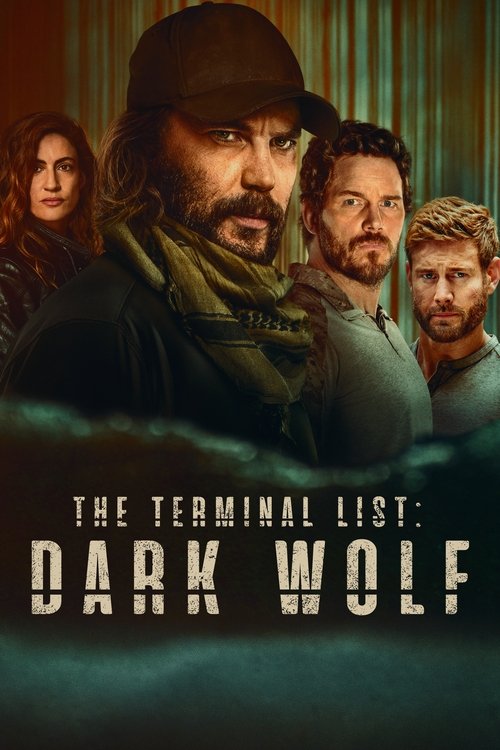
The Terminal List: Dark Wolf
A gritty espionage thriller where a soldier's loyalty is traded for a handler's whisper — brotherhood burning down to ash in the gray smoke between orders, conscience and the shadow work of empire.
The Terminal List: Dark Wolf

The Terminal List: Dark Wolf

"An origin story."

27 August 2025 — 24 September 2025 United States of America 1 season 7 episode Returning Series 7.7 (283)

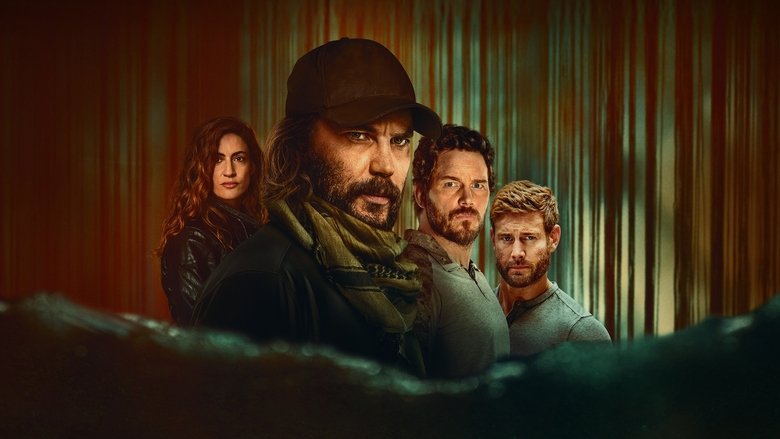
Cast: Taylor Kitsch, Tom Hopper, Robert Wisdom, Dar Salim, Shiraz Tzarfati

Drama Action & Adventure Moral erosion and self-justification Brotherhood and its betrayal Rules of engagement versus conscience The intelligence state and its disposable men Identity, reinvention and the cost of the mask

Overview

The Terminal List: Dark Wolf is a seven-episode Prime Video prequel to The Terminal List, created by Jack Carr and David DiGilio, that traces the origin story of Ben Edwards (Taylor Kitsch) — the character audiences met as James Reece's oldest friend. The season begins with the incident that ends Edwards' Navy SEAL career: after learning that a primary target, Al-Jabouri, is a protected informant, Edwards, Reece and Lieutenant Raife Hastings defy orders and go after him anyway, and Edwards executes the man on the spot. The fallout pushes both Edwards and Hastings out of the Teams.

What follows is less a war show than an espionage one. Edwards is recruited into the orbit of a CIA operative and pulled into the clandestine side of Agency Special Operations, where targets are assets, allies are leverage and the mission is written in language designed to be deniable. Across the season the series follows him through an escalating arms-and-intelligence conspiracy involving figures such as Cyrus, Artem and the handler Haverford, moving between military precision and the improvisational cruelty of tradecraft.

Tonally, the show works as a character study wearing the clothes of an action thriller: a man who was very good at a job with rules learns to be even better at a job that has none. Because viewers of the parent series already know roughly where Edwards ends up, the suspense is moral rather than narrative — the question is not whether he crosses lines, but which crossing is the one he never comes back from. Prime Video released the first three episodes on 27 August 2025, then weekly through the 24 September finale, and the show has been set up to return.

Core Meaning

At its center, Dark Wolf is about the manufacture of a monster by institutions that need one. Carr and DiGilio take a supporting character defined in the parent series by a single act of betrayal and ask the harder question underneath it: what does a country do to a man when it trains him to kill for a rulebook and then teaches him the rulebook was always negotiable?

The season's argument is that the corrosion is not a fall but a series of small, defensible-sounding yes-es. Edwards genuinely believes the crimes he commits serve a greater cause — and the series pointedly gives the same belief to the men who use him, so the difference between an operator and a traitor becomes a matter of who is holding the leash. The title of the finale, "The Wolf You Feed," states the thesis plainly: character is not discovered in a crisis, it is fed daily until one of the two wolves inside a person is strong enough to run the body.

Finally, it is an elegy for brotherhood. The bond between Edwards, Hastings and Reece is the only uncorrupted currency in the show, and the tragedy the prequel builds toward is that the system will eventually spend it.

Thematic DNA

Moral erosion and self-justification 30%
Brotherhood and its betrayal 22%
Rules of engagement versus conscience 18%
The intelligence state and its disposable men 17%
Identity, reinvention and the cost of the mask 13%

Moral erosion and self-justification

The season's spine. Edwards begins by breaking a rule for a reason most viewers will sympathize with — killing a terrorist protected by politics — and ends by rationalizing far worse on the same logic. The series deliberately mirrors his reasoning in the men he hunts: Haverford, too, believes his betrayals served a greater cause. Each episode lowers the bar by a fraction, so that by the finale the audience can no longer locate the moment the line was crossed, only that it is far behind him.

Brotherhood and its betrayal

The Teams are presented as the last honest institution in the show: Edwards, Hastings and Reece cover each other even when it costs them their careers. Across the season that loyalty is steadily converted into an operational asset — something a handler can point at a target. Because viewers of The Terminal List know how Ben's friendship with Reece ends, every scene of loyalty is played as foreshadowing, giving the show its distinctive ache of watching something true being priced.

Rules of engagement versus conscience

The premiere turns on a bureaucratic fact — the target is a protected informant — and the men's refusal to accept that a policy can outrank a moral certainty. From there the show inverts the problem: in the CIA world there are no rules to defy, only deniability to maintain, and Edwards discovers that a man who defines himself by breaking rules is lost when nobody bothers to write any.

The intelligence state and its disposable men

Assets, informants, arms deals and the transactional machinery of covert operations form the show's political texture. Operators are resources to be spent; the conspiracy Edwards unravels reaches into the institution that recruited him. The series is quietly cynical about the chain of command — the higher the rank, the more abstract the body count — and its finale, in which sirens close in on a senior figure, is more bleak than triumphant.

Identity, reinvention and the cost of the mask

Discharge strips Edwards of the uniform that told him who he was, and clandestine work hands him a series of false ones. The season charts what happens when a man's sense of self is rebuilt out of covers, aliases and missions no one will ever acknowledge — and the human cost of warfare conducted by people who officially were never there.

Character Analysis

Ben Edwards

Taylor Kitsch

Archetype: Antihero / tragic protagonist (an origin story for a future villain) Key Trait: Conviction — an unshakeable certainty that he is the good guy, which is precisely what makes him usable

Motivation

Initially moral certainty and loyalty to his brothers; then, after the discharge, a need for purpose and belonging that the Agency is happy to supply. By the end, his motivation has curdled into the conviction that his crimes serve a greater cause — the same belief that damns the men he destroys.

Character Arc

Begins as a lethally capable SEAL whose conscience still outranks his orders — the man who executes a protected informant because he cannot accept that policy should shield him. Discharged, he is recruited into CIA Special Operations, where he is rewarded for exactly the instincts the Navy punished. Across the season he learns tradecraft, absorbs the logic of deniability, and by the finale is scripting the elimination of Cyrus, Artem and the exposure of Haverford before walking back into the Agency. The arc is not redemption but accommodation: he ends the season more powerful, more useful and further from the man who could be shocked.

Raife Hastings

Tom Hopper

Archetype: Brother-in-arms / conscience and foil Key Trait: Steadiness — the one man in the story whose center of gravity does not move

Motivation

Loyalty to the men he served with, and a code that survives the loss of the institution that taught it to him; increasingly, a desire to keep Ben tethered to something.

Character Arc

The lieutenant who defies orders alongside Edwards and Reece and is discharged for it, Hastings shares Ben's starting point but not his trajectory. Through the season he functions as the road not taken — still lethal, still loyal, but retaining a floor beneath which he will not go. He remains at Edwards' side into the endgame, including the elimination of Artem, which makes his moral divergence quieter and more damning than any confrontation would be.

All 4 characters and cast

Symbols & Motifs

The wolf

Meaning:

The show's governing metaphor: the predator a soldier is trained to be, and the parable of the two wolves — the one you feed is the one that wins. "Dark Wolf" names both a call sign and a chosen self.

Context:

Embedded in the title and, most explicitly, in the finale "The Wolf You Feed", which frames the season retrospectively as a series of feedings rather than a single fall.

The protected informant

Meaning:

The obscenity of an enemy made untouchable by policy; the moment moral clarity and institutional logic are revealed as incompatible.

Context:

Al-Jabouri in the premiere — the discovery that he is a protected asset is the hinge on which Edwards' entire life turns, and the template for every later compromise.

The discharge / loss of the uniform

Meaning:

Excommunication from the only moral community the characters trust. Stripped of the Teams, a man becomes available to anyone with a use for him.

Context:

Edwards and Hastings are both pushed out after the premiere's killing, which is precisely what makes them recruitable by the Agency.

The audition

Meaning:

The idea that entry into the clandestine world is a test of willingness, not competence — you are not hired for what you can do but for what you will agree to do.

Context:

The title of episode two, which recasts the recruitment process as a performance staged for an audience of handlers.

The handler and the leash

Meaning:

Control disguised as mentorship. The handler supplies purpose, absolution and targets — the three things the discharged soldier is missing.

Context:

The season-long relationship between Edwards and his CIA superiors, culminating in the confrontation with Haverford, where the mentor is exposed as the manipulator.

Foreign marketplaces and border cities

Meaning:

The crowded, indifferent civilian world in which covert violence happens — a reminder that the show's moral abstractions are settled in places where ordinary people are shopping.

Context:

The globe-hopping production (Morocco, Croatia, Hungary, Czechia) uses real streets and markets as the arena for tradecraft and ambush.

Episode Highlights

Inherent Resolve

S1E1

The premiere stages the raid that ends two careers: after learning that their primary target, Al-Jabouri, is a protected informant, Edwards, Reece and Lieutenant Raife Hastings defy orders and go after him anyway. Pushed past his limit, Edwards executes him on the spot.

Significance:

The originating sin of the entire series. It gets Edwards and Hastings discharged, severs Ben from the institution that gave him a moral framework, and makes him exactly the kind of man the Agency wants to recruit.

The Audition

S1E2

The recruitment episode, whose title reframes entry into CIA Special Operations as a performance to be passed rather than a job to be earned — a test of willingness administered by people who already know the answer.

Significance:

Marks the genre shift from military action to espionage thriller and establishes the handler relationship that will define — and eventually betray — Edwards.

What's Past Is Prologue

S1E3

A pivot episode built around consequences catching up with the characters, ending on a turn involving Ish Reinhart that sent viewers straight to recap articles. The Shakespearean title announces the show's prequel logic out loud.

Significance:

Confirms the series' operating principle: nothing here is backstory for its own sake — every event is the setup for a betrayal the audience has already seen in The Terminal List.

The Sound of Guns

S1E4

The midpoint, leaning hardest into the tactical realism the production built with real veterans as advisors, and into the widening gap between what Edwards is asked to do and what he was trained to do.

Significance:

Escalates the conspiracy from a personnel problem to an operational one and hardens Edwards' new professional identity.

E & E

S1E5

Titled with the military shorthand for escape and evasion, the episode strips the characters of support and forces them to survive on instinct and tradecraft alone.

Significance:

Isolation is the crucible: with the institution unable or unwilling to help, Edwards' trust migrates from the chain of command to himself, which is the psychological precondition for everything he later does.

Pawns & Kings

S1E6

Widely regarded as the strongest hour of the season, the penultimate episode delivers the bulk of the big reveals, exposing how far the conspiracy reaches and who has been moving whom. The chess title names the show's thesis about operators and their masters.

Significance:

The true climax. Critics noted that by unloading the major twists here, the show made the finale feel like housekeeping — but it is the episode where Edwards learns he was a piece, not a player.

The Wolf You Feed

S1E7

The finale: Artem is eliminated by Edwards and Hastings ahead of a planned meeting, Cyrus is taken out by Farooq, and Edwards confronts Haverford over his betrayal. As Ben walks away, sirens close in, implying Haverford is finally exposed and arrested — and Edwards returns to the CIA.

Significance:

Closes the origin story by putting Edwards back inside the machine, now fluent in its methods and convinced his crimes served a greater cause. The two-wolves title retroactively defines the whole season and points directly at the man who will betray James Reece.

Philosophical Questions

If you are certain you are right, does that make your crimes any different from a traitor's?

The season answers by symmetry. Edwards executes a protected informant out of moral certainty, and every escalation afterward runs on the same fuel. The finale then hands the identical justification to Haverford — a man the show clearly wants us to see as corrupt — so the audience is forced to notice that conviction is not a moral distinction, it is a shared symptom.

Can a man be moral without an institution to be moral inside of?

Ben's conscience functions perfectly while the Navy gives it edges to push against. Stripped of the uniform and handed a job with no written rules, he does not become free — he becomes available. The show's clandestine world is the experiment, and Hastings is the control group that makes the result legible.

Which wolf is fed by the work itself?

The finale's title poses character as a daily practice rather than an essence. The series dramatizes this through accumulation: no single mission damns Edwards, but a job that rewards ruthlessness, secrecy and dehumanization feeds one wolf every single day, and the season is the record of which one grew.

What does a state owe the men it trains to kill on its behalf?

Edwards is punished for an act of conscience, discharged, then immediately recruited for the same quality by an agency with fewer scruples — and ultimately betrayed from above. The conspiracy plot literalizes the political point: operators are pawns, and the institutions that spend them are never on the receiving end of the cost.

Is loyalty a virtue or a vulnerability?

Brotherhood is the only uncorrupted value in the show — and it is also the exact handle by which Ben is moved. The prequel's dramatic irony is total: we watch the loyalty that defines him being slowly converted into the mechanism of the betrayal we know is coming.

Alternative Interpretations

Tragedy or apologia? The most contested question about the season is what it thinks of Ben Edwards. One reading takes it as a clear-eyed tragedy: the finale deliberately places Ben's self-justification — the belief that his crimes served a greater cause — in the same sentence as Haverford's, marking him as a man who has become his own antagonist without noticing. The competing reading is that the show, like much of the franchise, is fundamentally sympathetic to its operators and that the villains are always safely external — corrupt officials, foreign arms dealers — so Ben's crimes read as justified rather than indicted.

Full ending explanation

Cultural Impact

Dark Wolf arrived in August 2025 as part of a wave of streaming military-thriller franchising — Prime Video building out Jack Carr's universe much as it did Tom Clancy's with Jack Ryan — and it landed at a moment when American audiences had grown noticeably more ambivalent about the war-on-terror hero. Its answer was to make the ambivalence the subject: rather than another righteous-avenger story, it delivered an origin story for a man audiences already knew as a traitor.

Its most notable achievement within the franchise is critical: the prequel reviewed better than the show that spawned it, holding a 75% critics score and an 80% audience score on Rotten Tomatoes, with a consensus praising it for standing out from the pack with a gritty origin story that 'surpasses the original.' For a spin-off of a series that critics had largely dismissed while audiences embraced it, that inversion was the headline.

Culturally, the show is part of the ongoing conversation about veteran experience in prestige-adjacent television — its use of real veterans as technical advisors and Taylor Kitsch's SEAL training situate it in the same authenticity-first tradition as SEAL Team and Lone Survivor, while its cynicism about the intelligence apparatus draws on the post-Homeland, post-Zero Dark Thirty lineage of morally compromised spycraft. Its clearest legacy so far is structural: it proved the franchise could sustain itself without Chris Pratt in the lead, and it kept the property alive through the long gap before The Terminal List season two.

Audience Reception

Broadly positive, and notably better received than the original. Season one holds a 75% critics score and an 80% audience score on Rotten Tomatoes, with a critics consensus that the prequel 'manages to standout amongst the pack, leading a gritty and thrilling origin story that surpasses the original.' That reversal was widely remarked on — the parent series had been a hit with audiences while taking a critical beating, so a spin-off out-scoring it with reviewers was the story of the launch.

What viewers praised: the tactical authenticity, credited to real veterans working on the production and Taylor Kitsch's training with Navy SEALs; Kitsch's performance in a role that finally explains a character fans had been arguing about since 2022; the shift from revenge thriller to espionage thriller, which gave the franchise a different texture; and the chemistry of the Edwards–Hastings partnership.

Main criticisms: the finale drew the most complaint. Because the penultimate episode, 'Pawns & Kings,' delivered most of the season's big reveals, reviewers found 'The Wolf You Feed' deflated — a hasty, tidy exercise in crossing t's and dotting i's rather than a climax, with one review headlining that there were 'no surprises to be found.' Others noted that the season's plot is essentially self-contained and unconnected to the parent show's story, which cuts both ways depending on whether a viewer wanted franchise payoff or a standalone thriller.

Evolution and verdict: reception warmed as the season went on, peaking at episode six, then split at the finale between viewers who felt cheated of a climax and those who read the anticlimax as the point. Even critics of the ending conceded it left them wanting more — and the show is set to return. Overall verdict: a leaner, grittier, better-reviewed entry that justified the prequel's existence by answering the franchise's longest-running character question.

Interesting Facts

  • The series was created by Jack Carr — author of the novels the franchise is based on — and David DiGilio, who also developed the original The Terminal List for Prime Video.
  • It is a prequel focused on Taylor Kitsch's Ben Edwards, tracing his path from the Navy SEALs into the clandestine side of CIA Special Operations.
  • Chris Pratt returns as James Reece in a smaller, connective role rather than as the lead.
  • Prime Video premiered the first three episodes together on 27 August 2025, then released one episode weekly through the season finale on 24 September 2025.
  • The production used real military veterans as advisors to keep the tactical sequences accurate, which reviewers credited for the show's raw, authentic feel.
  • Taylor Kitsch trained with real Navy SEALs and has described the show as fundamentally a story about brotherhood and authenticity.
  • Filming ranged across Los Angeles, Prague, Morocco and British Columbia, with additional work in Croatia and Hungary; a marketplace sequence was shot at Vostarnica near the center of Zadar, and Budapest's older districts doubled for covert-operations settings.
  • Dark Wolf out-reviewed its parent series with critics — its Rotten Tomatoes critics consensus states that it 'manages to standout amongst the pack, leading a gritty and thrilling origin story that surpasses the original.'
  • The seven episode titles are Inherent Resolve, The Audition, What's Past Is Prologue, The Sound of Guns, E & E, Pawns & Kings and The Wolf You Feed.
  • The Terminal List franchise continued past the prequel: the long-delayed second season of the original series was scheduled to premiere on Prime Video on 21 October 2026, more than four years after its renewal.

Easter Eggs

The premiere's title, "Inherent Resolve"

Borrows the name of Operation Inherent Resolve, the real U.S.-led military campaign against ISIS — grounding the fictional Al-Jabouri raid in an actual, recognizable theater of the war on terror.

Episode 3's title, "What's Past Is Prologue"

A line from Shakespeare's The Tempest, spoken by a conspirator arguing that history exists only to justify the crime he is about to commit — an unusually pointed literary wink for a prequel about a man rationalizing his way toward betrayal.

The finale's title, "The Wolf You Feed"

References the widely told parable of the two wolves fighting inside a person, in which the one that wins is the one you feed. It retroactively names the show's whole design — and echoes the 'Dark Wolf' of the series title.

Episode 5's title, "E & E"

Military shorthand for escape and evasion; the kind of unexplained insider jargon the franchise uses to signal that it is written for and vetted by people who served.

Chris Pratt's appearance as James Reece

A franchise bridge rather than a cameo for its own sake: Reece's presence in the raid that gets Edwards discharged retroactively seeds the friendship and the betrayal that drive The Terminal List.

Raife Hastings' expanded role

Hastings was a name and a presence on the edges of the parent series' mythology; Dark Wolf promotes him to co-lead, filling in franchise backstory that book readers had long tracked across Jack Carr's novels.

Frequently Asked Questions

Explore More About This Movie

Dive deeper into specific aspects of the movie with our detailed analysis pages

Comments (0)

Leave a comment

No comments yet. Be the first to share your thoughts!

Similar Movies