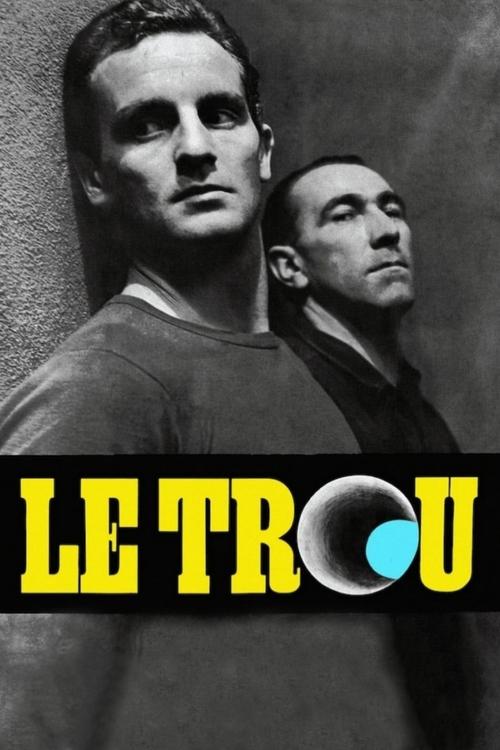
Le Trou
A gripping, documentary-style thriller that meticulously charts the raw physicality and fragile trust of a prison escape, feeling as cold and hard as the concrete being broken.
Le Trou
Le Trou

"Poor Gaspard..."

18 March 1960 France 132 min ⭐ 8.2 (523)
Director: Jacques Becker
Cast: Michel Constantin, Jean Keraudy, Philippe Leroy, Raymond Meunier, Marc Michel
Drama Crime Thriller
Realism and Authenticity Trust and Betrayal Ingenuity and Human Spirit Brotherhood and Solidarity
Box Office: $33,187

Le Trou - Ending Explained

⚠️ Spoiler Analysis

The devastating twist of Le Trou occurs in its final minutes. Just as the four remaining inmates (Geo having decided to stay behind) are about to make their final move to escape through a manhole into the street, they use their periscope to check the corridor one last time. They see it swarming with guards, who are silently waiting for them. The plan has been foiled at the last possible second.

It is revealed that Claude Gaspard is the one who betrayed them. Earlier, he had been unexpectedly summoned to the warden's office. The warden informed him that his wife was dropping the charges of attempted murder, meaning his release was imminent. This news, which should have been joyous, becomes the catalyst for betrayal. The warden likely offered him a deal or assurance of his release in exchange for information. When Gaspard returns to the cell, he claims he still wants to go through with the escape, but his demeanor has changed. The others, particularly Manu, are suspicious, but they ultimately decide to trust him one last time.

The hidden meaning, underscored by the entire film's exploration of trust, is the inherent clash between the prisoners' code of solidarity and individual self-preservation. Gaspard, the outsider, was never fully one of them, and when presented with an easy way out, he reverted to protecting his own interests. The final line, "Poor Gaspard," spoken by Roland as Gaspard is led away to a separate cell, is not an expression of anger but of pity. Roland understands that while the four of them will remain physically imprisoned, Gaspard has sentenced himself to a lifetime of guilt and dishonor, a far worse prison. The betrayal re-contextualizes the entire film, turning a story about a shared struggle for freedom into a tragic parable about human weakness.

Alternative Interpretations

The most debated aspect of Le Trou is the character of Claude Gaspard and the nature of his betrayal. While the film strongly implies he informed the warden, some interpretations entertain a degree of ambiguity.

One perspective is that Gaspard is a straightforward traitor. Lured by the warden's offer of his wife dropping the charges, he chooses the path of least resistance and sacrifices the group for his own guaranteed freedom. His soft-spoken nature and bourgeois background make him inherently different from the others, suggesting he never truly subscribed to their code of honor.

Another interpretation suggests a more complex psychological reading. Gaspard's betrayal might not be a cold, calculated decision but a moment of weakness from a man who was never a hardened criminal. He may have been manipulated or psychologically broken by the warden, making his action tragic rather than purely villainous. Roland's final line, "Poor Gaspard," could support this, suggesting pity for a weak man rather than simple hatred for a traitor.

A less common, though possible, reading questions whether the warden was bluffing. The warden might have already known about the escape attempt through other means and simply used the meeting with Gaspard to sow discord and psychologically torment him, ensuring the group would implode upon capture. In this view, Gaspard's betrayal is real, but it may not have been the direct cause of the guards being alerted.