
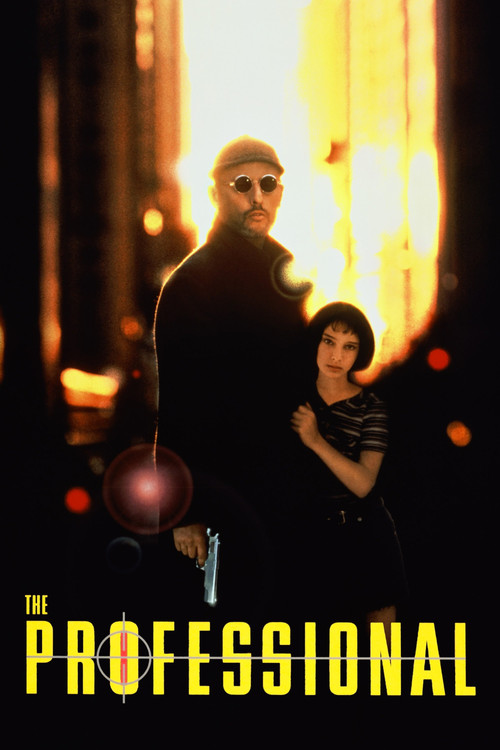
Léon: The Professional
A hauntingly beautiful, action-packed drama where the stark loneliness of a hitman's world collides with the fierce innocence of a young girl, forging an unforgettable bond in the crucible of violence and revenge.
Léon: The Professional

Léon

"If you want the job done right, hire a professional."

14 September 1994 France 111 min ⭐ 8.3 (15,480)
Director: Luc Besson
Cast: Jean Reno, Natalie Portman, Gary Oldman, Danny Aiello, Peter Appel
Drama Crime Action
Loneliness and Connection Loss of Innocence vs. Rediscovered Humanity Revenge and Redemption Moral Ambiguity
Budget: $16,000,000
Box Office: $45,284,974

Léon: The Professional - Ending Explained

⚠️ Spoiler Analysis

The plot of "Léon: The Professional" culminates in a tragic and explosive finale. After Mathilda's reckless attempt to kill Stansfield on her own fails and she is captured, Léon rescues her, killing several more of Stansfield's men in the process. This act enrages Stansfield, who gets Léon's location from his handler, Tony, and launches a full-scale assault on their apartment building with an NYPD ESU team.

During the siege, Léon manages to create an escape route for Mathilda through an air shaft. In a deeply emotional farewell, he tells her he loves her and that she has given him a "taste for life," promising to meet her at Tony's in an hour. This is a lie to ensure she escapes. Wounded, Léon disguises himself as an ESU officer to walk out of the building. However, he is spotted by Stansfield, who shoots him in the back. As Léon lies dying, he calls Stansfield over and opens his hand to reveal a grenade pin, telling him, "This is from Mathilda." Stansfield opens Léon's vest to find it rigged with explosives. The subsequent detonation kills them both.

Following Léon's death, Mathilda goes to Tony, who reveals that Léon had instructed him to hold his life's earnings for her. However, Tony refuses to give her the money or hire her, instead giving her a small amount of cash and telling her to return to school. The film's final scene shows Mathilda at her boarding school, where she is re-admitted after telling the headmistress the truth about her ordeal. She walks out onto a field and plants Léon's houseplant in the ground, symbolically giving him the "roots" he never had. She tells the plant, "I think we'll be okay here, Léon," signifying her choice to abandon the life of a cleaner and begin to heal, finally putting down roots of her own.

Alternative Interpretations

The central relationship between Léon and Mathilda is the primary source of alternative interpretations. While the mainstream reading sees their bond as a complex, largely platonic father-daughter dynamic, some critics and viewers have interpreted it differently, especially concerning the longer international version of the film.

One interpretation, fueled by scenes in the director's cut where Mathilda explicitly asks to be his "lover," posits that the film is a modern, twisted take on the "Lolita" archetype. This reading focuses on the uncomfortable sexual tension and Mathilda's precocious sexuality, suggesting that Léon is wrestling with a forbidden attraction. Jean Reno's portrayal of Léon as emotionally stunted was a deliberate choice to counteract this reading and maintain audience sympathy, but the ambiguity remains.

Another perspective views their relationship less as a literal love story and more as a metaphor for two broken souls finding solace and completing each other. Mathilda represents the life, emotion, and connection that Léon's sterile existence lacks, while Léon provides the stability, protection, and purpose that Mathilda lost with her family. In this reading, their "love" is a desperate, non-sexual bond forged in trauma and survival.

Finally, some see the film as a dual coming-of-age story. Mathilda is forced to grow up and navigate a world of violence, but by the end, she chooses a path back toward childhood by returning to school. Simultaneously, Léon, the man-child, is forced to "grow up" emotionally, learning to love and take responsibility for another person for the first time in his life.