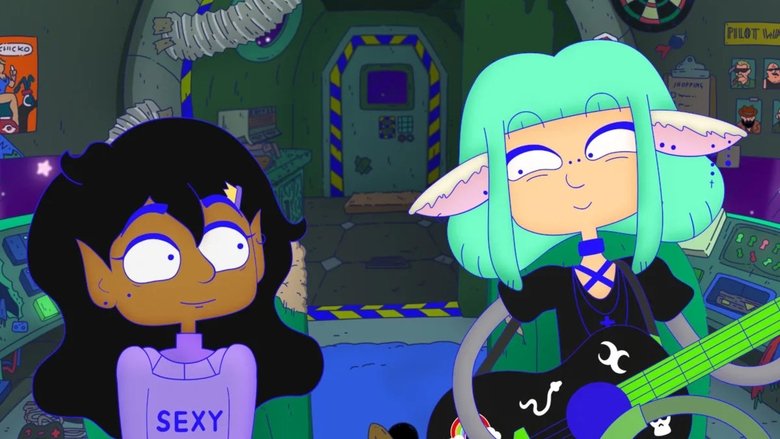
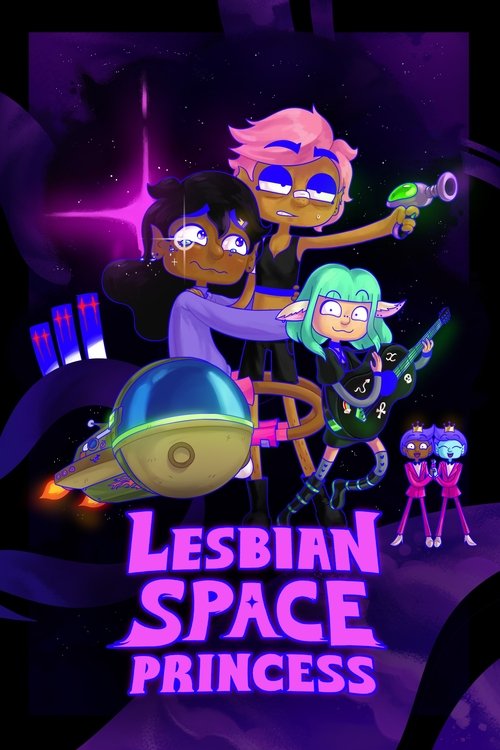
Full spoilers. Saira, a 23-year-old princess of Clitopolis, is publicly and humiliatingly dumped by her girlfriend of two weeks, Kiki, at her own birthday party. Kiki is then abducted by the Straight White Maliens — not out of interest in her, but as bait. What the Maliens actually want is Saira's labrys, which is still unawakened, and they offer a trade: the weapon for the girlfriend.
Saira leaves home for the first time, rescuing the burnt-out ex-gay-pop idol Willow from an abandoned moon crystal mine and joining forces with the drag performer Blade. She reaches the Maliens' planet and hands over the labrys to free Kiki — and here the film detonates its central expectation. Kiki refuses to get back together. The rescue does not buy love. Saira's self-doubt floods back, and because the labrys is powered by self-belief, it dematerialises, leaving her defenceless as the Maliens attack.
She fights her way back to belief, re-summons the axe, and uses it to power the Maliens' own doomsday device — the chick magnet, built to compel women's attention. The machine fails: it does not attract anyone, and instead kills a random woman. Confronted with the emptiness of the thing they wanted, the Maliens conclude they had overvalued being desired by women and decide to date one another as a throuple. The villains are defeated by their own realisation, not by force.
Kiki is left on the planet. Saira returns to Clitopolis happily single, having learned to love herself.
What clarifies in retrospect: the labrys was never a McGuffin the villains could use — it is a self-esteem meter, which is why the film can hand it to the enemy at the midpoint without losing tension. The trade Saira makes is deliberately a bad one, because the story needs her to spend everything on the wrong prize before she can identify the right one. And the chick magnet's malfunction rhymes exactly with Saira's arc: both she and the Maliens spend the film trying to extract love from other people, and both endings insist that it cannot be taken, only grown.