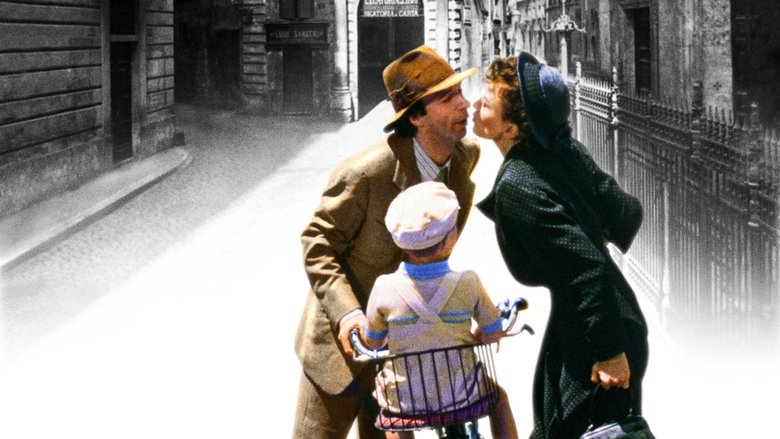
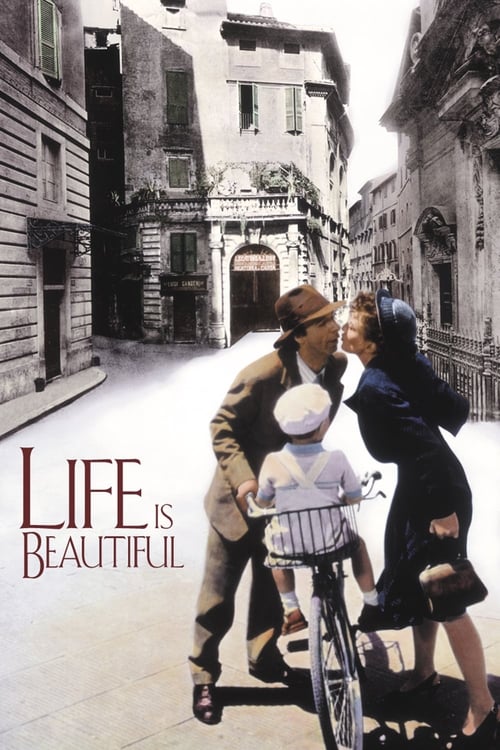
La vita è bella
"Bongiorno Principessa!"
Director: Roberto Benigni
Cast: Roberto Benigni, Nicoletta Braschi, Giorgio Cantarini, Giustino Durano, Sergio Bini Bustric
Life Is Beautiful — Movie Quotes
Memorable Quotes
Buongiorno, principessa!
Context
Guido first says this when Dora literally falls from a barn into his arms. He repeats it throughout his courtship and even uses it over the camp's loudspeaker system to send a message of hope to her, reminding her of their beautiful life together.
Meaning
"Good morning, princess!" This is Guido's signature greeting to Dora. It encapsulates his romantic, fairy-tale view of their love and his ability to bring magic and charm into everyday life. It becomes a recurring motif of their love story.
Questa è la mia storia. Questo è il sacrificio che mio padre ha fatto. Questo è stato il suo regalo per me.
Context
This line is spoken in voiceover at the very end of the film, after young Giosuè is reunited with his mother. It provides a reflective conclusion, looking back on the events with the understanding and gratitude of an adult who now comprehends the full extent of his father's actions.
Meaning
"This is my story. This is the sacrifice my father made. This was his gift to me." This final line reveals the narrator's identity and frames the entire film as a testament to his father's love and sacrifice. It underscores the core meaning of the film: that Guido's actions were a profound gift of life and preserved innocence.
Il silenzio è il grido più forte.
Context
Uncle Eliseo says this to Guido in the hotel early in the film, offering a piece of his gentle wisdom. The quote gains deeper, more somber meaning later as the characters face situations where speaking out is impossible, and their silent endurance becomes a form of protest.
Meaning
"Silence is the most powerful cry." This philosophical statement from Uncle Eliseo suggests that sometimes, the most profound statements are made without words. In the context of the film, it speaks to the unspoken horrors of the Holocaust and the power of quiet dignity and resistance in the face of oppression.
Abbiamo vinto!
Context
After the camp is liberated, Giosuè emerges from his hiding spot to see an American tank. Believing it to be his prize, he joyfully exclaims, "We won!" as he is reunited with his mother.
Meaning
"We won!" These are Giosuè's triumphant words upon seeing the American tank. They are heartbreakingly ironic to the audience, who knows the true cost of this "victory." For Giosuè, however, they represent the successful conclusion of his father's game, a moment of pure, unadulterated joy that proves Guido's sacrifice was, in its own way, successful.
Explore More About This Movie
Dive deeper into specific aspects of the movie with our detailed analysis pages